Chromium X single-cell RNA-seq services — from PBMCs to FFPE

As a 10x Genomics Certified Service Provider, Explicyte delivers Chromium X single-cell and single-nucleus profiling across PBMCs, dissociated tissues and FFPE, with in-house analysis and biological interpretation.

Chromium X CRO services

Why run Chromium X with Explicyte

Flex Apex, Universal 3′/5′ & multiomic options

Flex Apex for fixed/FFPE material and high-throughput multiplexed cohorts, or Universal 3′/5′ for fresh or frozen cells and nuclei. Assay-specific options include surface proteins, TCR/BCR repertoire and antigen specificity.

10x Genomics Certified Service Provider

Explicyte is a 10x Genomics Certified Service Provider for Chromium X, Xenium and Visium HD, with teams trained and qualified by 10x Genomics across single-cell and spatial workflows.

In-house single-cell bioinformatics

Our in-house data science team handles QC, cell-type and state annotation, differential expression, pathway analysis and cohort integration, with biological interpretation alongside the study director.

From your objectives to an interpreted dataset

How we run Chromium X studies

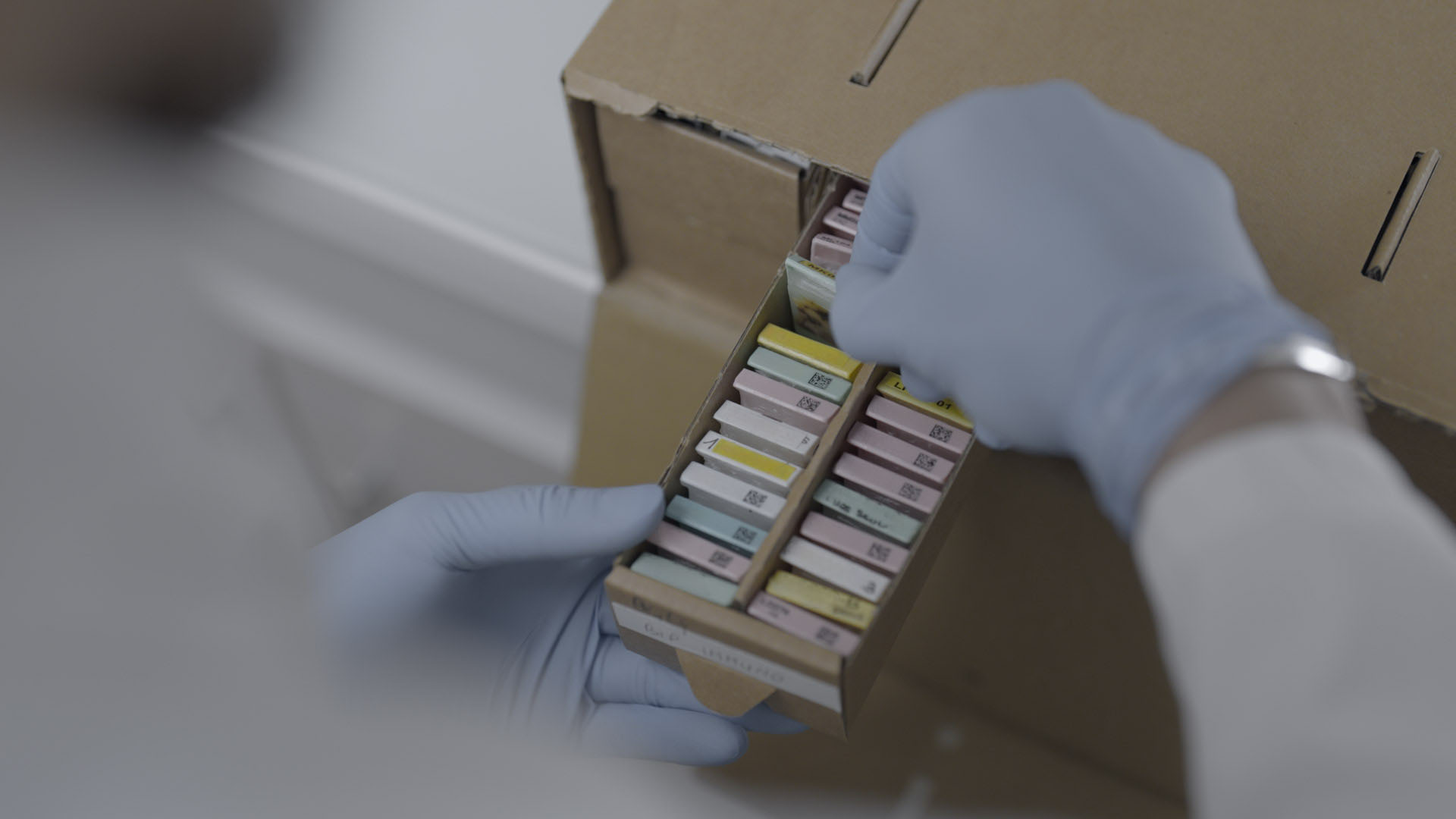
  1. FFPE tissue sourcing for scRNA-seq-analysis CRO Explicyte
    1

    Objectives, samples, and study design

    A PhD study director reviews your biological question, samples, cohort size, timeline and budget, then selects the appropriate workflow — Flex Apex, Universal 3′ or Universal 5′ — and compatible multiomic options.

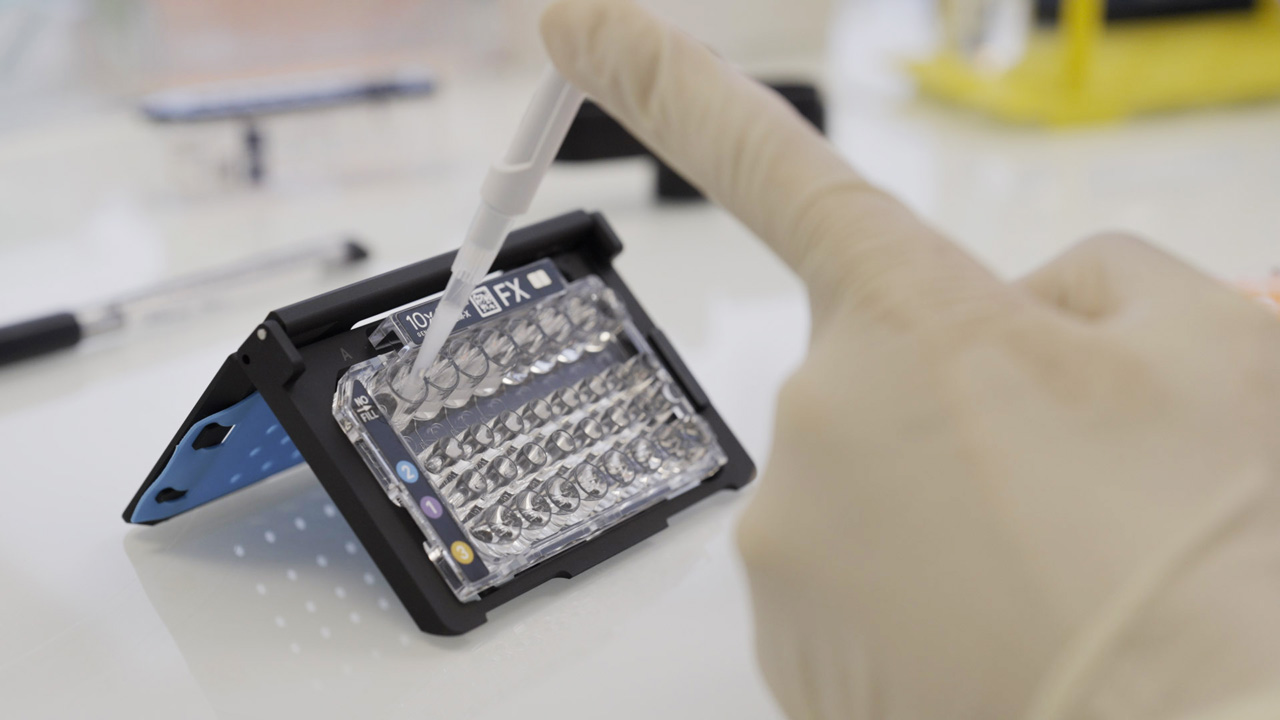
  2. Explicyte technician preparing dissociated tissue samples for Chromium X single-cell RNA-seq
    2

    Sample preparation and QC

    We define sample and shipping requirements upfront. Depending on the material, preparation can include cell or nuclei isolation, counting, viability assessment, and enrichment or depletion steps. Samples are reviewed against predefined QC criteria before library preparation, with borderline material discussed with the Sponsor where appropriate.

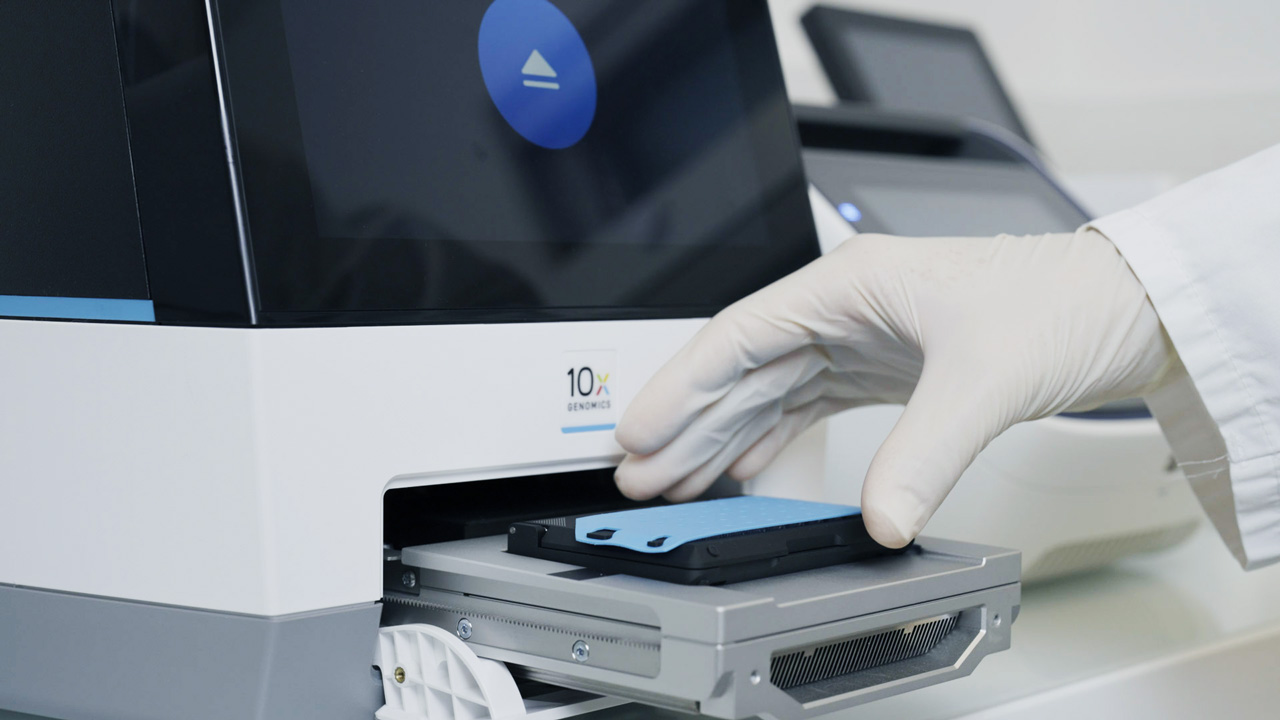
  3. Chromium X library preparation workflow at Explicyte
    3

    Library preparation and sequencing

    Libraries are generated using the workflow selected at scoping, with multiplexing and pool balancing planned to minimize technical variation. Sequencing depth is adapted to the assay, sample type, and biological question.

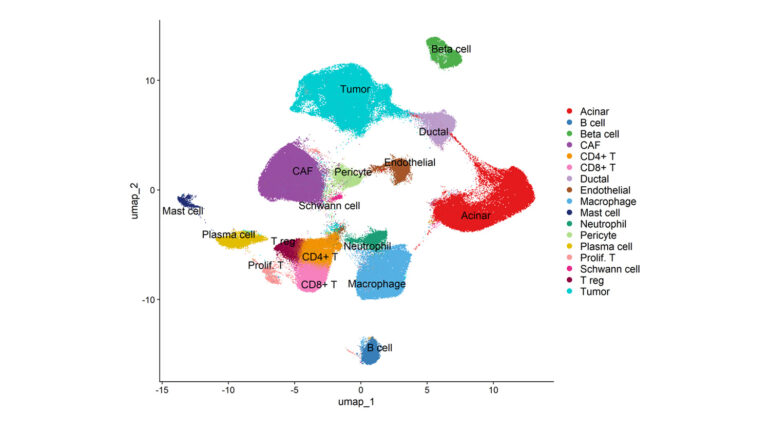
  4. cell-type annotation from a Chromium X single-cell RNA-seq dataset analyzed by Explicyte
    4

    Data analysis and biological interpretation

    We deliver raw and Cell Ranger–processed data, with optional in-house analysis including QC, cell-type and cell-state annotation, differential expression, pathway analysis, cohort integration, and publication-ready outputs.

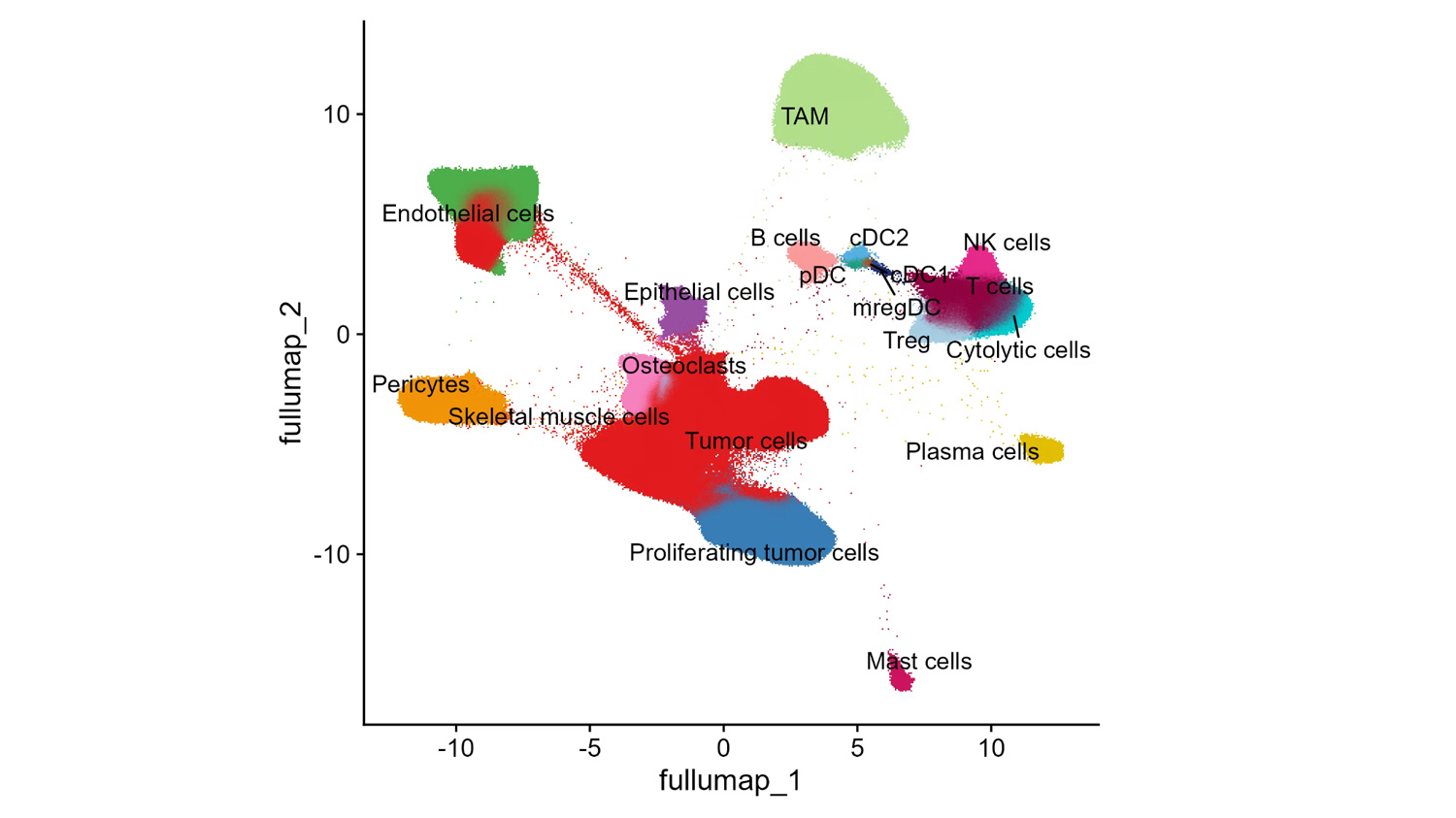
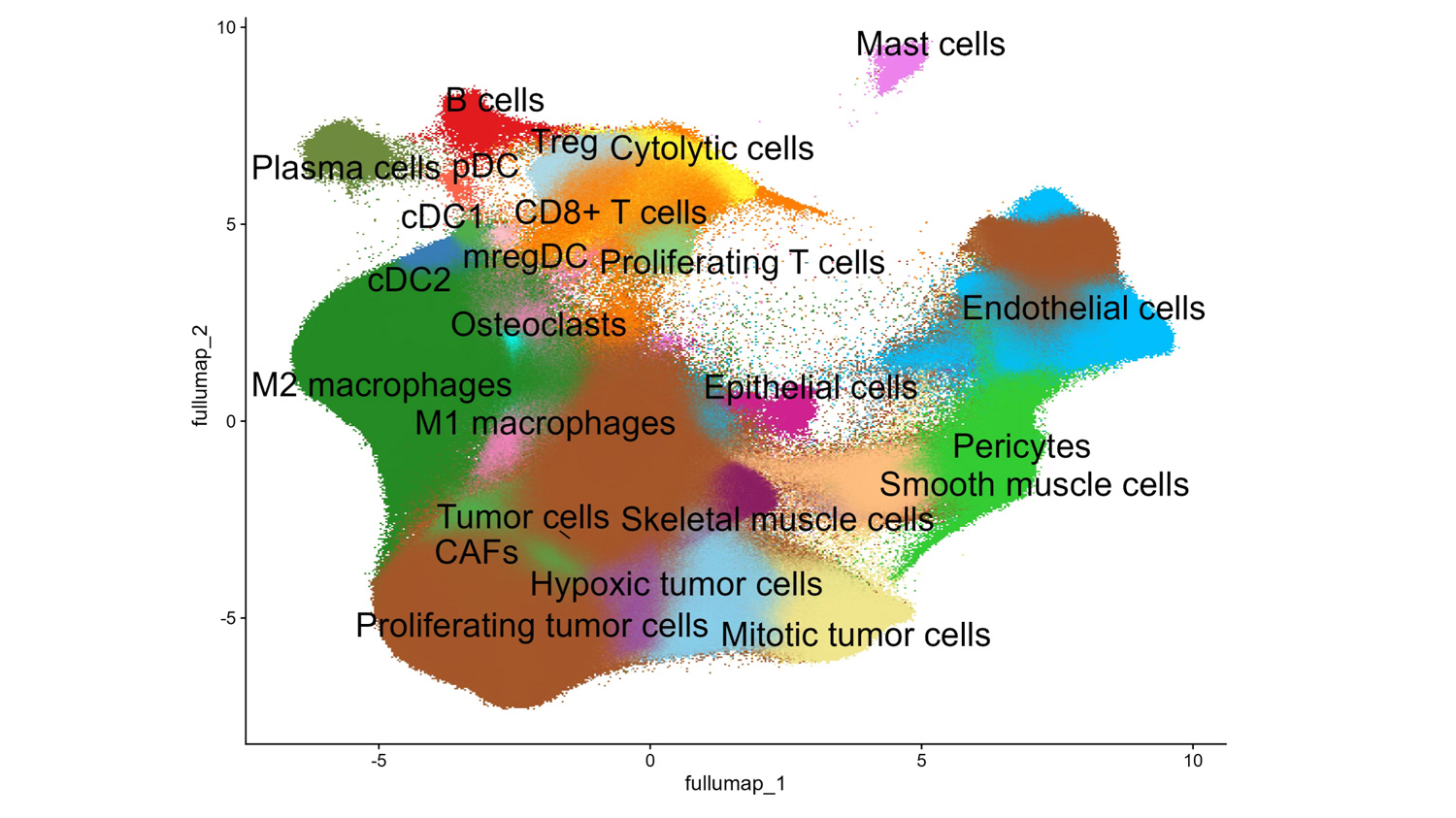
An in-house workflow to clean and standardize single-cell datasets
After preprocessing After preprocessing
Before preprocessing Before preprocessing

Cluster annotation of a Chromium X dataset before and after preprocessing, including doublet filtering, ambient-RNA correction and batch-effect mitigation.

Comprehensive Chromium X deliverables

  • Raw sequencing data and Cell Ranger–processed outputs
  • Raw and filtered cell-by-gene expression matrices
  • Single-cell QC metrics and cleaned, normalized datasets
  • Cell clustering, UMAP visualization and cell-type / cell-state annotation
  • Differential expression and cluster marker analysis
  • Pathway, signature and cell-population analyses
  • Integrated multiomic outputs for V(D)J, surface proteins or antigen specificity where applicable
  • Publication-ready figures and biological interpretation report
Learn more about single-cell data analysis About single-cell data analysis

At a glance

Chromium X at Explicyte

Resolution
Single-cell or single-nucleus molecular profiling. Cell throughput and recovery depend on the selected assay, sample type, and study design.
Workflows
Flex Apex for fixed/FFPE material and high-throughput multiplexed studies, with support for fresh and frozen samples depending on study design; Universal 3′ and Universal 5′ for whole-transcriptome profiling of fresh or frozen cells and nuclei.
Multiomic options
Assay-dependent options include cell-surface protein profiling with compatible workflows, TCR/BCR repertoire and antigen-specificity profiling with Universal 5′, and protein readouts with Flex Apex where compatible.
Sample types
Human or mouse PBMCs, cell and nuclei suspensions, dissociated tumor or normal tissues, organoids, and cell lines. Flex Apex also extends single-cell profiling to fixed and FFPE material.
Sample multiplexing
High-throughput plate-based sample multiplexing with Flex Apex, including 96-well workflows for larger cohort studies.
Sequencing
Sequencing depth is adapted to the selected workflow, sample complexity, cell recovery, and biological question.
Throughput
From focused experiments to large multiplexed cohorts, with run design and batching optimized according to sample number and assay.
Certification
10x Genomics Certified Service Provider for Chromium X.
Compare Xenium, Visium HD and Chromium X Not sure which 10x platform fits your study? Compare Xenium, Visium HD and Chromium X

Representative Chromium X data

Chromium Flex profiling of archival FFPE tumors
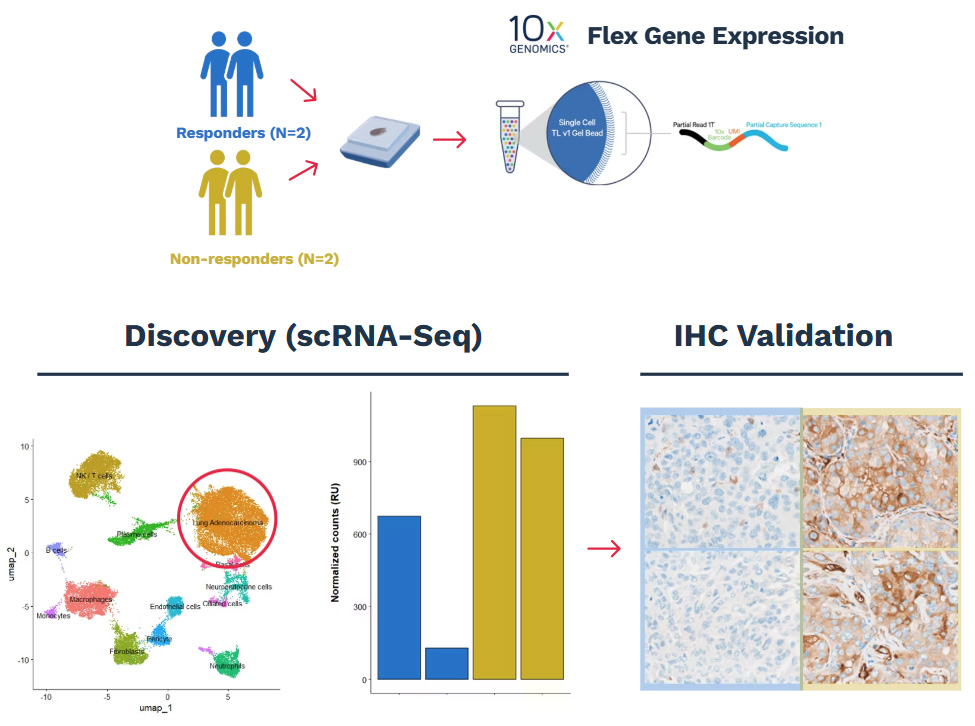
From FFPE NSCLC to a cell-resolved candidate biomarker

Chromium Flex profiling of archival FFPE NSCLC identified a candidate tumor-cell marker differing between immunotherapy responders and non-responders.

Cohort: 4 FFPE NSCLC samples: 2 responders and 2 non-responders.

Single-cell profiling: FFPE samples were profiled with 10x Genomics Flex and analyzed by UMAP and cell-population annotation.

Biomarker discovery: Differential expression in tumor cells identified a candidate response-associated marker.

Tissue confirmation: The marker was subsequently assessed by IHC on the same FFPE blocks.

Chromium Flex single-cell RNA-seq and IHC biomarker analysis in FFPE NSCLC samples
explicyte multiomics transcriptomics CRO team

Paul Marteau, PharmD (study director), Imane Nafia, PhD (CSO), Loïc Cerf, MSc (COO), Alban Bessede, PhD (founder, CEO), Jean-Philippe Guégan, PhD (CTO)

contact our team

Discuss your Chromium X project

Tell us your biological question, sample type and cohort size, and any Chromium workflow or multiomic readouts under consideration. We'll help determine the appropriate workflow and define the study, sequencing and analysis scope.

Answers about Chromium X services

Frequently asked questions

What is Chromium X, and when should I use single-cell RNA-seq?

Chromium X is 10x Genomics’ high-throughput single-cell platform. It enables cell-resolved molecular profiling from fresh or frozen cells and nuclei, as well as fixed and FFPE material with Flex. It is particularly suited to cell-type discovery, cell-state characterization, rare populations, treatment-associated changes, and immune-repertoire studies.

Flex Apex is particularly suited to fixed/FFPE material and high-throughput multiplexed cohorts, while also supporting fresh and frozen material.

Universal 3′ provides whole-transcriptome gene-expression profiling from fresh or frozen cells and nuclei, while Universal 5′ is preferred when gene expression needs to be combined with TCR/BCR repertoire or antigen-specificity profiling.

Yes. Flex Apex extends single-cell profiling to fixed and archival material, including FFPE tissues, using probe-based gene-expression profiling after appropriate sample preparation. Fresh or frozen dissociated samples are generally profiled using Universal 3′ or 5′ workflows.

Yes, depending on the selected assay and sample type. Cell-surface protein profiling is available with several Chromium workflows, while Universal 5′ supports paired TCR/BCR repertoire and antigen-specificity analysis. Compatible readouts remain linked at the single-cell level.

Often, yes. Through our network of biobanks and clinical partners, we can explore access to tumor and normal tissues for selected indications. Feasibility depends on the sample type, indication, cohort size, and inclusion criteria.

QC is adapted to the material and workflow. Fresh cellular samples can include cell counting and viability assessment, while nuclei and fixed samples follow assay-specific quality controls. For challenging dissociated tissues, a pilot preparation can be considered before committing the full cohort.

Chromium X can support focused experiments as well as larger multiplexed cohorts. Flex Apex is particularly suited to high-sample-count studies through plate-based multiplexing, while Universal 3′ and 5′ workflows can be used for more focused single-cell studies. Capacity and turnaround are defined according to the workflow, cohort size, and analysis depth.

Deliverables depend on study scope and can include FASTQ files, Cell Ranger–processed outputs, expression matrices and QC metrics. Downstream analysis can include cleaned and normalized datasets, clustering and UMAP visualization, cell-type and cell-state annotation, differential expression, pathway analysis, multiomic outputs where applicable, and publication-ready figures with biological interpretation.

Yes. Explicyte is a 10x Genomics Certified Service Provider for Chromium X, as well as Xenium and Visium HD. 10x Genomics Service Providers receive platform-specific training and qualification. 

Yes. Our in-house data science team can analyze Chromium datasets generated by Explicyte, your laboratory, another CRO or a core facility. Depending on the available files and study objectives, analysis can include Cell Ranger processing, QC, annotation, differential and pathway analyses, cohort integration and publication-ready outputs.

Explicyte Oncology CRO logo

Capabilities

Modalities