
Preclinical immuno-oncology
Immuno-Oncology Cell-Based Assays: Functional Efficacy & MoA
For over ten years, our team has supported drug developers from early screening through mechanism-of-action studies.
Our cell-based assays run on primary human immune cells and tumor cell co-cultures, benchmarked against standard-of-care oncology drugs — a solid starting point we customize to each program.
From early screening to mechanism of action
Functional in vitro data
that de-risks your next decision
Behind every readout are three things we hold constant — models built on characterized human donors, assays designed to scale, and a setup we tune to each program.
Characterized models
Primary human immune cells from characterized PBMC donors, co-cultured with tumor cells across 100+ lines. Benchmarked against standard-of-care oncology drugs.
Scalable assays
Target and effector responses captured at once, in non-destructive formats — supernatant and cells can be saved for secretome, FACS, or transcriptomic downstream analysis.
Assay customization
With over 10 years of experience across drug modalities, we tune donor panel, cell subsets, ratios, exposure, readouts, and assay window to each program.
Tumor killing and cytotoxicity ASSAYs
Measure how effectively your candidate kills tumor cells
Several assay formats for direct and effector-mediated tumor killing — from a candidate's intrinsic cytotoxicity to redirected, antigen-specific, and antibody-dependent killing.

Tumor cells only
Tumor killing
Measure a candidate's direct cytotoxicity against tumor cells
Direct killing for ADCs and cytotoxic payloads
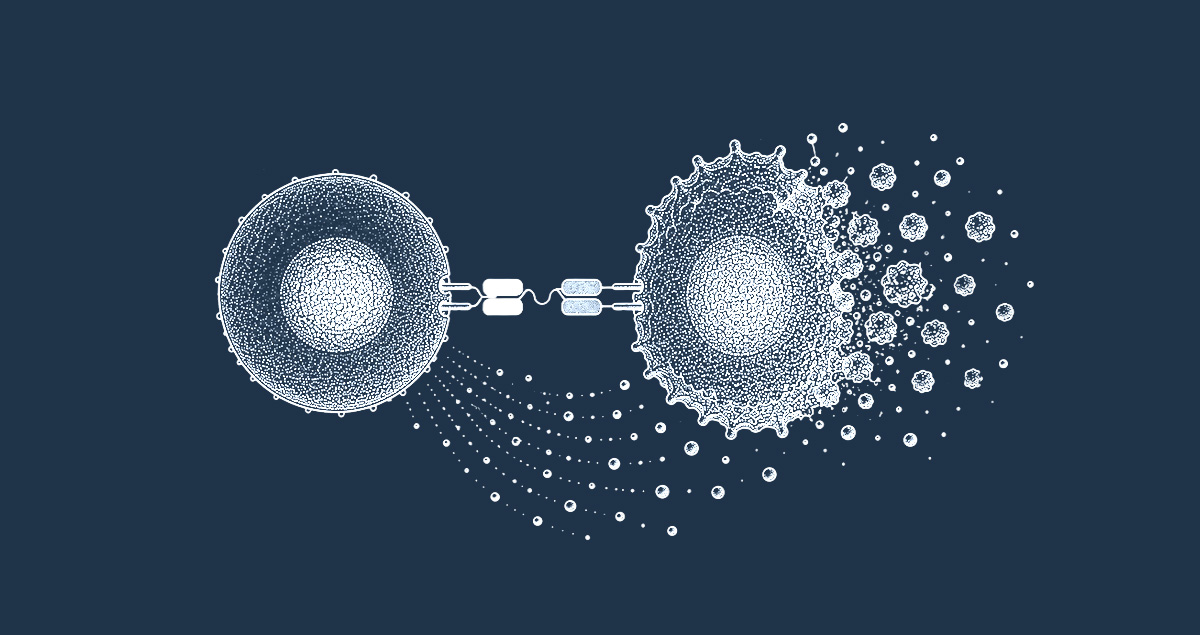
Immune-tumor cell cultures
T-cell mediated tumor killing
Assess candidate-induced tumor killing by T cells
For mAbs, bispecific T-cell engagers, CAR-Ts

Antigen-primed T-cell co-cultures
Tumor antigen-specific killing
Assess antigen-specific T cell priming and resulting killing activity
For cancer vaccines, TCR-T and neoantigen programs
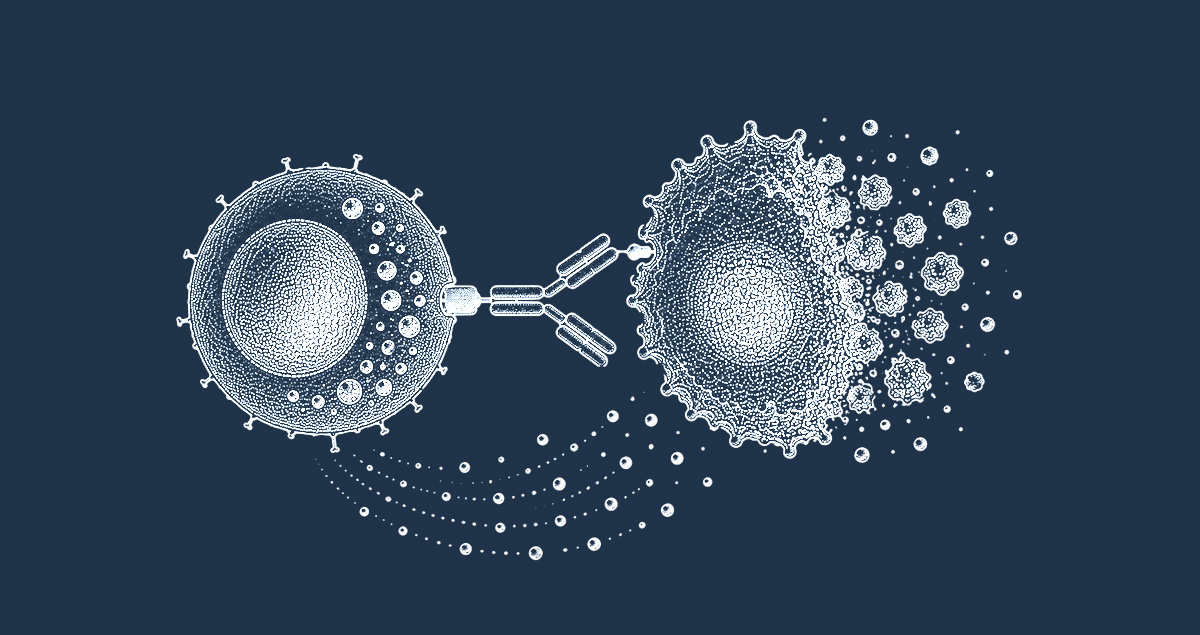
NK effector co-cultures
ADCC
Antibody-dependent killing of tumor cells by NK effectors
Primary NK effectors across donor panels
Immune modulation and function ASSAYS
Show how your candidate reshapes the immune response
Cell-based assays to resolve mechanism of action — how a candidate activates, recruits, and reprograms immune cells across the tumor microenvironment.

Primary T & NK cells
Immune cell activation
Quantify activation markers, proliferation and effector function in isolated immune-cell or tumor co-culture systems, depending on the therapeutic mechanism.
For agonists, cytokines and engagers

Chemotaxis & infiltration
Immune cell migration
Assess directed migration and infiltration of immune cells toward chemokine gradients or tumor targets.
For chemokine-axis and trafficking programs

Multiplex secretome
Cytokine release
Profile the cytokine response to a candidate across immune populations, resolving the signaling signature of its mechanism.
Multiplex cytokine, secretome and proteomic readouts

Monocyte-derived macrophages
Macrophage assays
Measure how compounds shift macrophage polarization between pro-tumor and anti-tumor states.
For myeloid checkpoints and repolarizing agents

Allogeneic donor co-cultures
MLR (Mixed Lymphocyte Reaction)
Measure allogeneic T-cell activation and proliferation driven by antigen-presenting cells across mismatched donors.
For checkpoint inhibitors and immune activators
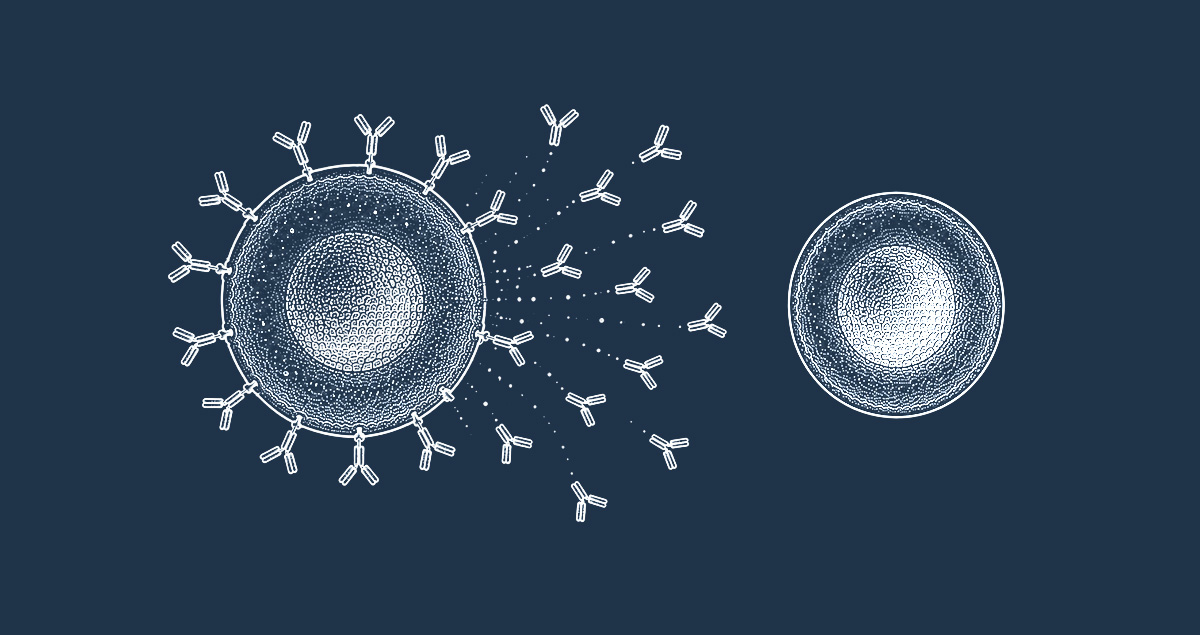
B-cell & TLS modeling
Germinal center reaction
Model B-cell activation and germinal-center dynamics relevant to tertiary lymphoid structures and antibody responses.
For B-cell engagers and TLS-directed strategies
IN VITRO TESTIMONIALS
Sponsor stories





Paul Marteau, PharmD (study director), Imane Nafia, PhD (CSO), Loïc Cerf, MSc (COO), Alban Bessede, PhD (founder, CEO), Jean-Philippe Guégan, PhD (CTO)
Start a conversation
Tell us about your program & request a quote
Bring us your candidate and the mechanism you need to characterize — we'll propose an assay design matched to your program.