
Tumor killing assays
Antibody-Dependent Cell Cytotoxicity (ADCC) Assay
Does your tumor-targeting antibody trigger NK cells to kill antibody-coated cancer cells? Specialized in preclinical immuno-oncology, our team measures your candidate's ADCC potential directly — using real-time imaging of tumor apoptosis alongside NK activation.
ADCC assay format and readouts
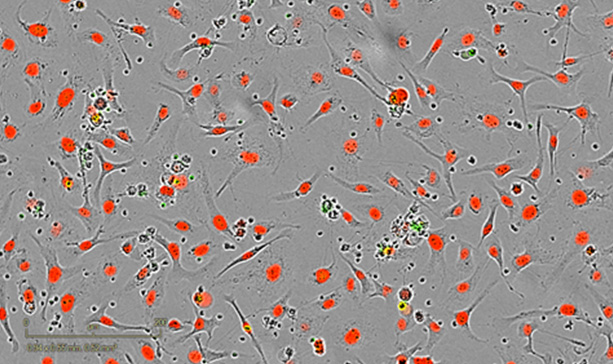 Treated – 24h post-coculture
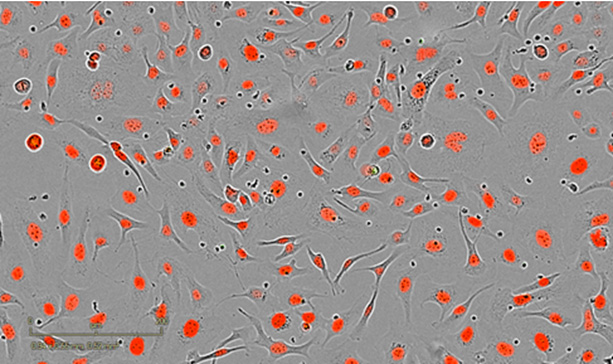 Control – 24h post-coculture
SKOV3 ovarian tumor cells co-cultured with stimulated NK cells for 24 hours. Cetuximab exposure triggers ADCC, driving apoptotic death of antibody-coated tumor cells.

Assay principle
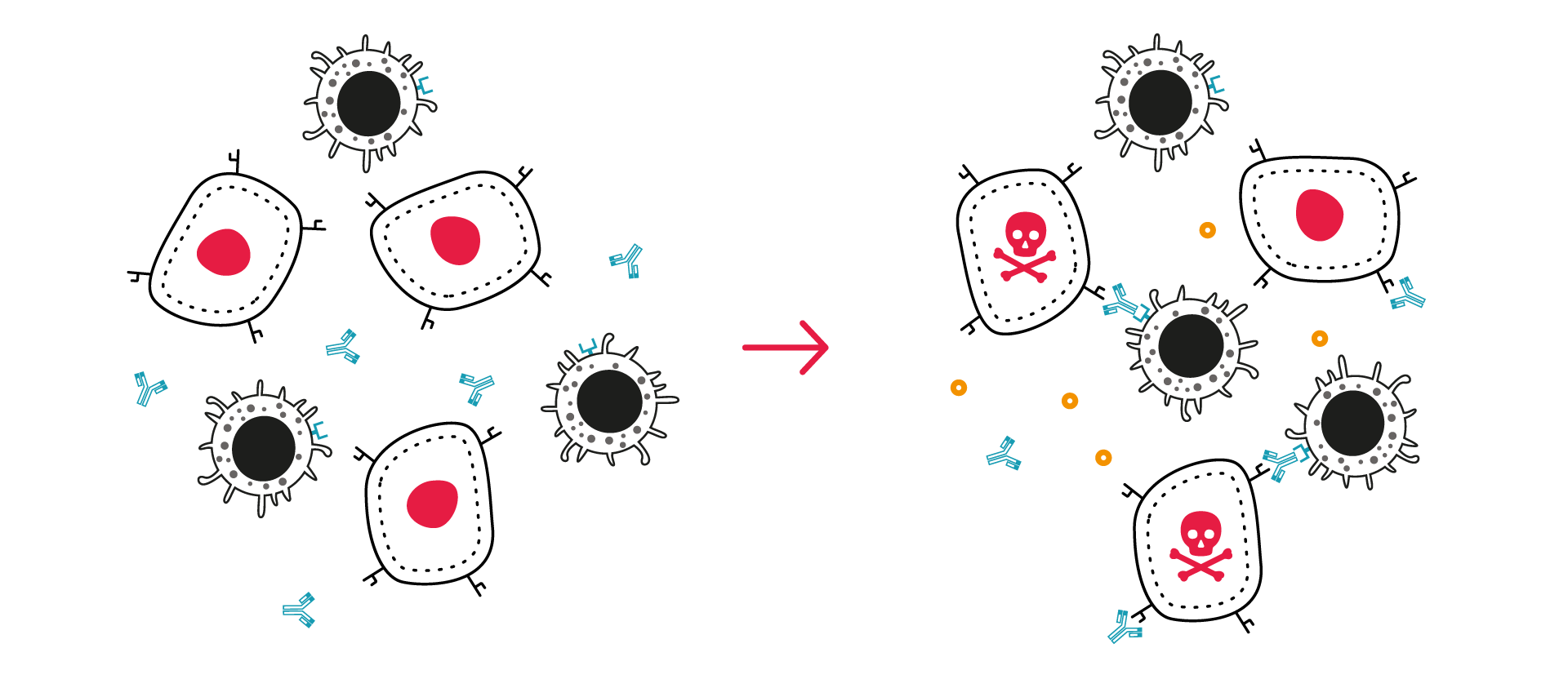
How the ADCC assay works
1
Challenge tumor cells with candidate antibodies
2
Track the tumor and immune response in parallel
3
Segment and analyze automatically
illustrative ADCC data
NK cell-mediated killing: example results
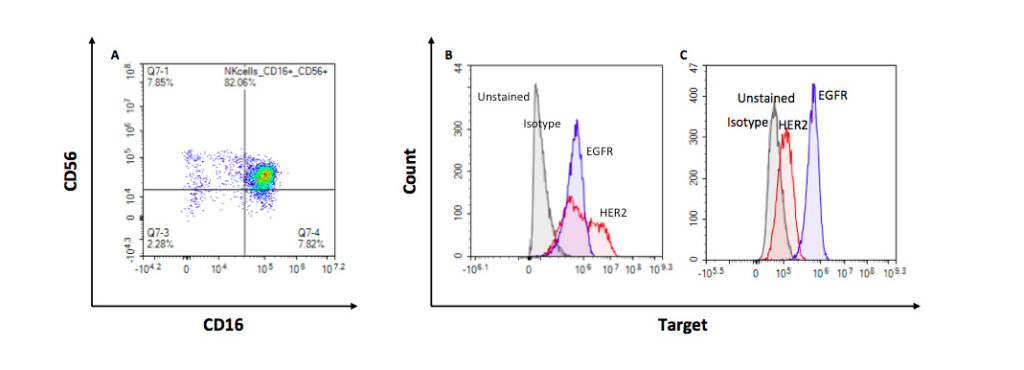
Target and effector cell characterization
Flow cytometry confirms CD16 expression on primary NK cells isolated from PBMCs (A), and HER2/EGFR expression levels on ovarian SKOV3 (B) and lung A549 (C) tumor cell lines used in the assay.
IFNγ release confirms antibody-specific ADCC
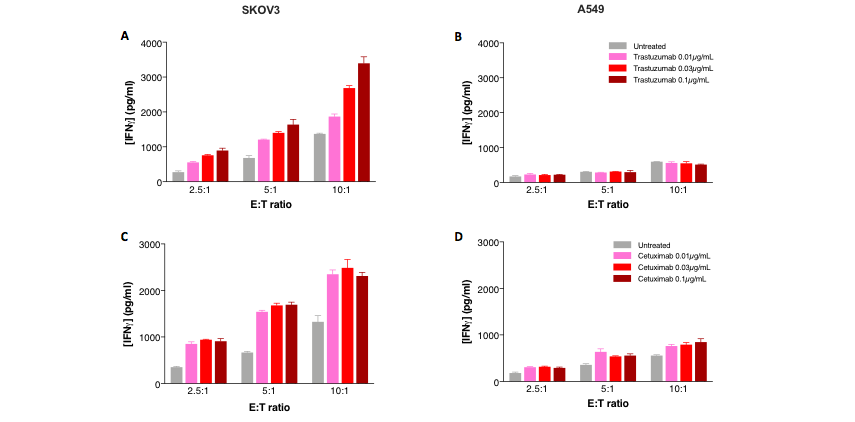
SKOV3 (HER2+/EGFR+) and A549 (EGFR+/HER2−) tumor cells were treated with trastuzumab or cetuximab, then co-cultured with activated NK cells at increasing E:T ratios. IFNγ release, measured in supernatants 24 hours later, rose with NK ratio in all conditions — but cetuximab boosted it further on both cell lines, while trastuzumab did so only on HER2+ SKOV3. The assay correctly discriminates target-specific ADCC from basal NK activity.
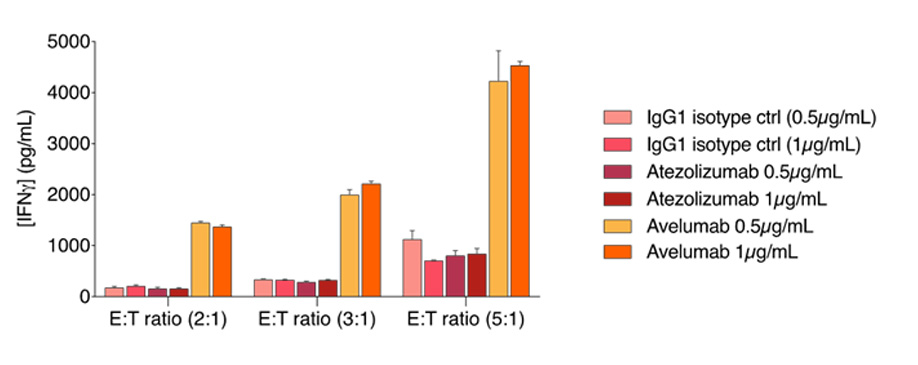
Avelumab drives NK-mediated killing of triple-negative breast cancer cells
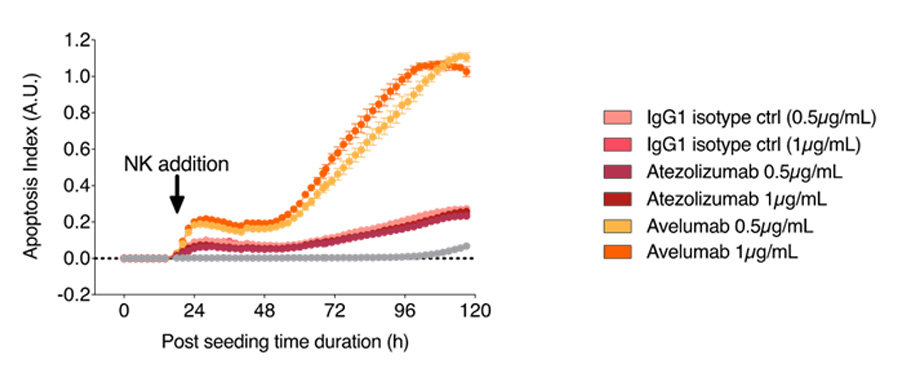
MDA-MB-231 (TNBC) cells were treated with atezolizumab or avelumab, then co-cultured with activated NK cells at increasing E:T ratios. IFNγ release rose with NK ratio in all conditions, but only avelumab drove a further increase. Live-cell imaging confirmed the effect functionally, with avelumab-treated cells showing a corresponding rise in tumor cell apoptosis following NK addition. The assay distinguishes antibody-specific ADCC from basal NK activity, with cytokine and functional readouts in agreement.
Making a difference as a preclinical CRO in oncology
Why work with Explicyte
Proven experience
Built around your program
Beyond functional readouts
Reports you can act on

Paul Marteau, PharmD (study director), Imane Nafia, PhD (CSO), Loïc Cerf, MSc (COO), Alban Bessede, PhD (founder, CEO), Jean-Philippe Guégan, PhD (CTO)
Contact our team
Discuss your ADCC assay
Tell us about your antibody, its target antigen, and the tumor models you're considering — we'll scope the right assay design, readouts, and reporting, and send a fit-for-purpose proposal.