SAFETY & IMMUNOGENICITY

Cytokine release assays for preclinical CRS risk assessment

Could your biologic trigger excessive immune activation as you move toward IND and first-in-human studies?

Explicyte uses primary human immune-cell models to characterize cytokine-release liability across donors, concentrations and time points, with mechanistic follow-up when deeper investigation is needed.

FROM PRECLINICAL SAFETY TO FIRST-IN-HUMAN

Characterize cytokine-release liability before clinical exposure

For immune-activating biologics, the question is not simply whether cytokines are released, but how strongly, at what concentrations, with what kinetics, and how consistently across donors. When needed, complementary cellular readouts can help identify the immune-cell populations and biological programs associated with the response.

A fit-for-purpose human-cell assay helps characterize cytokine-release liability in the context of the molecule’s mechanism of action before first-in-human studies.”

Imane Nafia, PhD, Chief Scientific Officer at Explicyte

Imane Nafia, PhD

Chief Scientific Officer, Explicyte

Cytokine release assay: format and readouts

Relevant modalities
T-cell engagers · multispecific antibodies · immune agonists · immunomodulatory antibodies · other immune-stimulating biologics
Model
Primary human PBMCs from multiple healthy donors.
Format
Concentration-response testing in soluble and/or immobilized formats.
Donors & kinetics
Multi-donor assessment across early, intermediate and late time points.
Readouts
Multiplex cytokine profiling, including IL-6, TNF-α, IFN-γ, IL-2 and IL-10.
Controls
Fit-for-purpose positive and negative controls, including TGN1412 where relevant.
On request
Flow cytometry, effector profiling and Xenium STAMP mechanistic analysis.

ASSAY PRINCIPLE

How the cytokine release assay works
How the cytokine release assay works

1

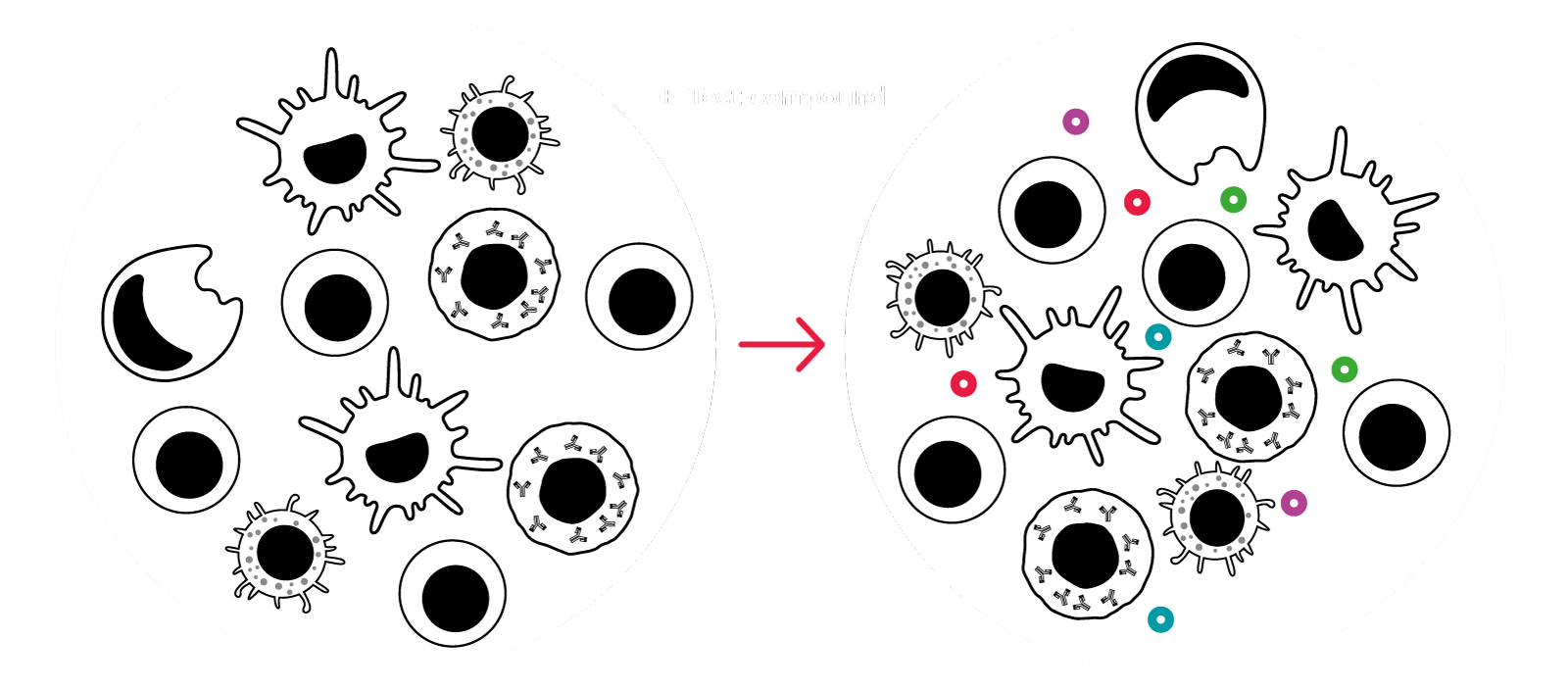
Expose primary human PBMCs to the drug candidate

Healthy-donor PBMCs are treated across a defined concentration range using the assay format best suited to the molecule.

2

Capture cytokine release over time

Supernatants are collected at selected time points and profiled for key CRS-associated cytokines using multiplex assays.

3

Interpret magnitude, kinetics & donor variability

Cytokine responses are compared across concentrations, time points, donors and controls to characterize the cytokine-release liability.

ANALYTICAL DEPTH

From cytokine-release screening to mechanistic characterization

01 · CORE ASSESSMENT

Cytokine-release hazard assessment

Characterize cytokine release across healthy donors, concentrations and time points using fit-for-purpose controls.

  • Primary human PBMCs
  • Multi-donor testing
  • Dose-response & kinetics
  • Multiplex cytokine profiling
02 · CELLULAR PROFILING

Resolve the immune-cell response

Add cellular readouts to identify responding immune populations and characterize their activation and functional state.

  • Multiplex flow cytometry
  • Immune-cell activation markers
  • Intracellular effector markers
  • Cytotoxic effector profiling
03 · MECHANISTIC DEPTH

Identify cells & programs driving the response

Use Xenium STAMP to connect secreted cytokines with responding immune-cell populations and transcriptional programs.

  • Cell-state resolution
  • Cytokine-source identification
  • Differential-expression analysis
  • Pathway analysis by cell population

REPRESENTATIVE DATA

Representative cytokine-release studies
Characterizing cytokine-release liability in healthy-donor PBMCs

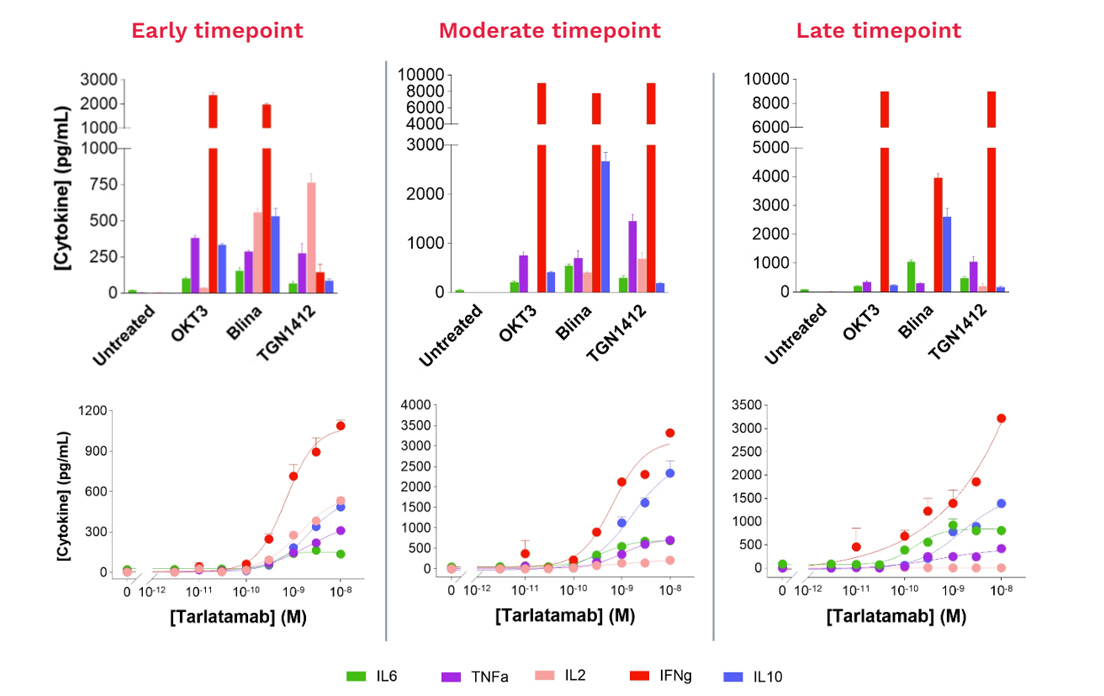
A multi-donor PBMC assay was used to compare the cytokine-release profile of tarlatamab with reference biologics across concentrations and time points, independently of target-positive tumor cells.

Study design: Healthy-donor PBMCs were exposed to tarlatamab and benchmark biologics in dose-response format, with early, intermediate and late sampling time points.

Multiplex Readout: A broad cytokine panel captured pro-inflammatory, T-cell activation and regulatory responses, including key CRS-associated cytokines such as IL-6, TNF-α and IFN-γ.

Key finding: Strong positive controls induced broad cytokine release, whereas tarlatamab produced a lower response under the healthy-PBMC conditions tested, with low-to-moderate IL-6 and TNF-α induction.

evaluation of CRS hazard on healthy PBMC

Resolving cytokine-release mechanisms at single-cell resolution

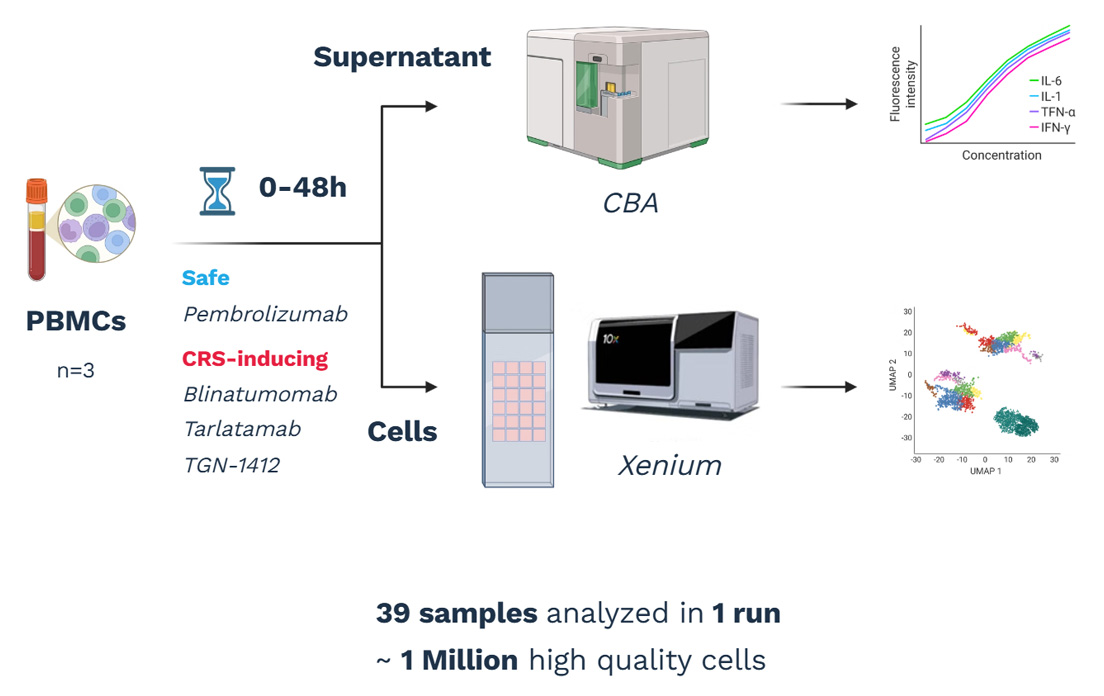
Xenium STAMP was combined with secreted cytokine measurements to connect cytokine release with the immune-cell populations and transcriptional programs driving the response.

Study design: PBMCs from three donors were profiled from 0–48 hours across benchmark biologics, with 39 samples analyzed in a single Xenium run.

Multimodal readout: Cytokine profiling of culture supernatants was integrated with Xenium analysis of approximately one million high-quality cells.

Mechanistic insight: STAMP resolved changes in immune populations and cell states, identified cellular sources of cytokine expression and enabled differential-expression and pathway analysis at cell-type resolution.

Resolving cytokine-release mechanisms at single-cell resolution

Regulatory context

Human-cell cytokine release assays in first-in-human risk assessment

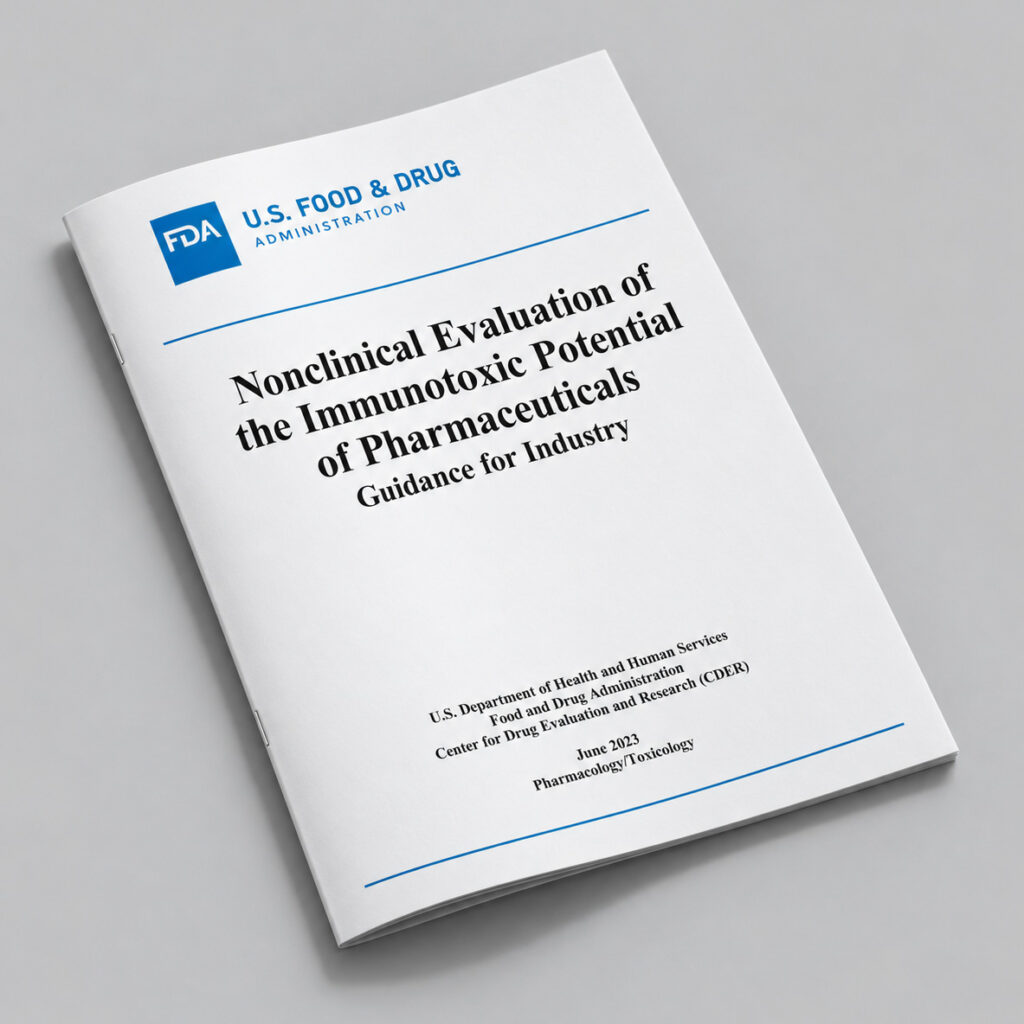
For immune-stimulating biologics, cytokine-release assessment should be tailored to the molecule’s mechanism of action and the biological context of immune activation. FDA guidance recognizes soluble and immobilized PBMC or whole-blood assays, as well as more complex co-culture formats, and emphasizes fit-for-purpose methods with appropriate controls and measurable outcomes.

Interpretation should consider response magnitude and duration, the cytokines affected, donor variability and the underlying pharmacology. Together, these data can inform the broader first-in-human risk assessment, including starting-dose rationale, clinical monitoring and dose-escalation strategy.
See FDA guidance
regulatory guidance cytokine release assay

Making a difference as a preclinical CRO in oncology

Why work with Explicyte for cytokine-release studies

Human primary-cell expertise

Multi-donor PBMC studies designed around immune responsiveness, assay sensitivity and inter-donor variability.

Fit-for-purpose study design

A PhD-level study director adapts donor number, exposure format, concentrations, controls, time points and readouts to the molecule’s mechanism.

One program, from efficacy to safety

For immune-redirecting biologics, connect tumor-cell killing and target-dependent immune activation with cytokine-release liability assessment.

The Explicyte team at their Bordeaux laboratory

Paul Marteau, PharmD (study director), Imane Nafia, PhD (CSO), Loïc Cerf, MSc (COO), Alban Bessede, PhD (founder, CEO), Jean-Philippe Guégan, PhD (CTO)

Contact our team

Discuss your cytokine-release study

Tell us your modality, target, development stage and the cytokine-release question you need to address. We'll help define the donor panel, assay format, concentration range, controls, kinetics and mechanistic readouts for a fit-for-purpose study.

CYTOKINE RELEASE ASSAY FAQ

Frequently asked questions about cytokine-release risk assessment

What does a cytokine release assay measure?

A cytokine release assay evaluates whether a drug candidate induces cytokine secretion from primary human immune cells. Responses are assessed across concentrations, donors and time points to characterize the magnitude, kinetics and inter-donor variability of cytokine release.

No single in-vitro assay can predict whether a patient will develop CRS or its clinical severity. Cytokine release assays are used to identify and characterize immune-activation hazards under defined experimental conditions and contribute to the broader nonclinical risk assessment before first-in-human studies.

We use multi-donor panels of primary human PBMCs to capture inter-individual variability. The number of donors is defined according to the molecule, study objective and development stage to provide a fit-for-purpose assessment of cytokine-release liability.

We use multiplex cytokine profiling covering key pro-inflammatory, T-cell activation and regulatory signals. Panels can include CRS-associated cytokines such as IL-6, TNF-α, IFN-γ, IL-2 and IL-10 and can be adapted to the biology of the drug candidate.

Yes. Drug candidates can be evaluated in soluble and/or immobilized formats depending on their mechanism of action and on whether receptor clustering or cross-linking may influence immune activation. The exposure format, concentration range, controls, and kinetics are defined during study design.

Yes. When relevant to the mechanism of action, healthy-donor PBMC assays can be complemented with tumor–immune co-cultures incorporating target-positive and target-negative tumor cells. This can help distinguish cytokine release associated with target-dependent pharmacology from broader immune activation.

The study can be extended beyond secreted cytokine measurements using flow-cytometry immunophenotyping, activation and effector markers, additional kinetic measurements or Xenium STAMP. These complementary approaches can help identify responding immune-cell populations, characterize changes in cell state over time and resolve transcriptional programs associated with the cytokine response.

Positive and negative controls are selected according to the molecule’s mechanism of action and the assay format. Reference immune-activating biologics, including TGN1412 where relevant, can be incorporated to confirm assay responsiveness and support interpretation of the test article response.

Explicyte Oncology CRO logo

Capabilities

Modalities