PRECLINICAL SINGLE-CELL PROFILING

Xenium STAMP single-cell profiling for preclinical studies

Need to resolve how individual cell populations respond to your drug across conditions and time points?

Explicyte applies STAMP (Single-cell Transcriptomics Analysis and Multimodal Profiling), an imaging-based workflow published in Cell, to fixed dissociated cells. Cells are immobilized directly onto Xenium slides and profiled for targeted gene expression at single-cell resolution, without a sequencing step. This enables high-cell-count, multi-condition studies with the mechanistic depth of single-cell transcriptomics.

Up to 48 conditions/run · ~5,000 genes · no sequencing

XENIUM STAMP

Add single-cell transcriptomic depth to functional cell assays

Functional assays tell you whether a drug produces a response. Xenium STAMP helps resolve which cells respond, how their abundance and state change, and which gene-expression programs accompany that response.

Up to 48 conditions within a single run

Two Xenium slides are processed within the same run, allowing multiple treatments, donors, concentrations or time points to be profiled together. This creates economies of scale while limiting inter-run variability.

~1 million cells per run for deep population coverage

High cell capture provides the depth needed to resolve immune and tumor-cell subsets, treatment-induced states, and rare populations within heterogeneous samples.

Transcriptomic depth without sequencing

Profile targeted gene expression at single-cell resolution, with focused panels or Xenium Prime 5K plus custom genes, then resolve differential expression and pathways within defined cell populations.

At a glance

Xenium STAMP: format and readouts

Samples
Fixed dissociated cells, including PBMCs, cultured cell lines and cells dissociated from tissues.
Scale & multiplexing
Two Xenium slides are processed per run, enabling up to 48 experimental conditions to be profiled together.
Profiling
Targeted RNA expression at single-cell resolution using an imaging-based Xenium workflow, without a sequencing step.
Panels
Focused Xenium IO panels or Xenium Prime 5K (~5,000 genes), with up to 100 custom add-on genes where required.
Analysis
Cell annotation, rare-population analysis, population shifts, differential expression, pathway analysis and treatment comparisons.
Integration
Flow cytometry, cytokine profiling and functional assay readouts can be integrated to connect phenotype with mechanism.

WORKFLOW

From functional assay to cell-resolved mechanism
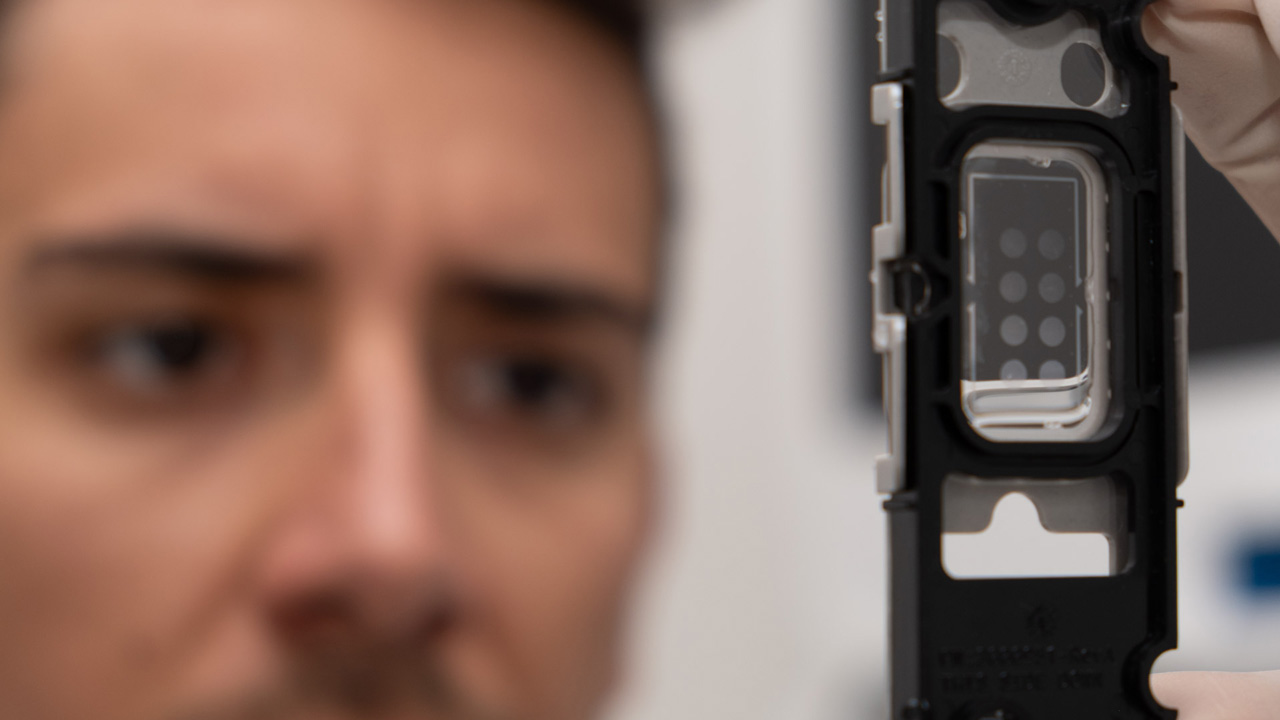
Preparation of fixed dissociated cells for Xenium STAMP profiling
01 · Prepare the cells

Cells from an in vitro assay or ex vivo sample are fixed after the selected treatment, condition or time point.
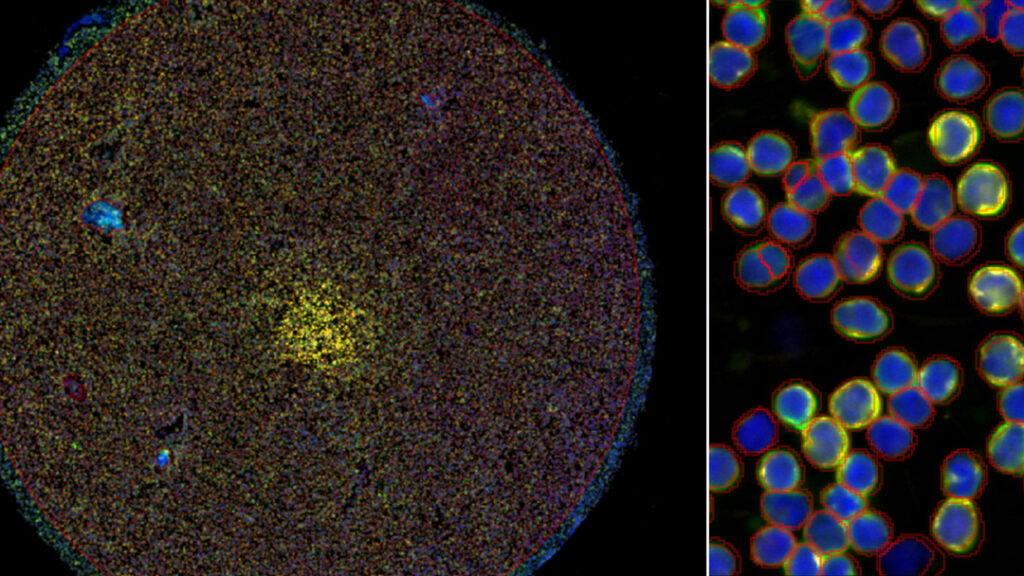
Fixed dissociated cells profiled using the Xenium STAMP workflow
02 · Profile with Xenium STAMP

Fixed cells are immobilized on Xenium slides and profiled for targeted gene expression at single-cell resolution.
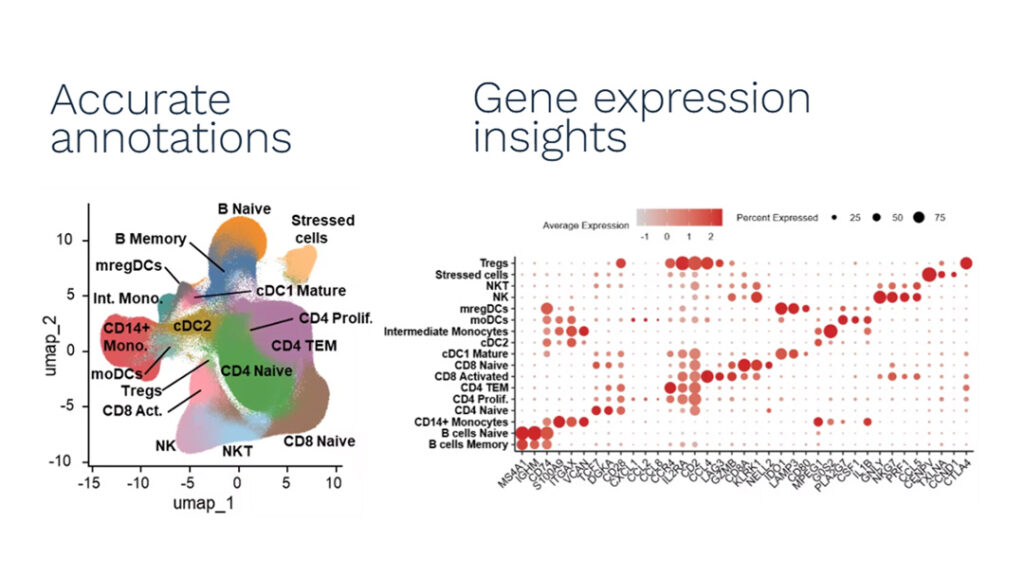
Single-cell clustering and treatment-response analysis from Xenium STAMP data
03 · Resolve the biological response

We identify cell populations and states, quantify treatment-induced shifts and analyze differential expression and pathways within relevant populations.

PRECLINICAL APPLICATIONS

Use STAMP where functional readouts need deeper mechanistic resolution

Cell-based efficacy & mechanism of action

Resolve treatment-dependent changes in tumor and immune-cell populations, cell states and gene-expression programs across 2D or 3D models.

Immune activation & safety-related responses

Go beyond secreted cytokines or flow-cytometry readouts to identify the populations and programs associated with immune activation.

Ex vivo pharmacodynamic profiling

Profile fixed dissociated cells collected from preclinical in vivo studies to characterize treatment response and mechanism at single-cell resolution.

CHOOSING THE RIGHT READOUT

Xenium STAMP, flow cytometry or scRNA-seq?

Approach Flow cytometry Xenium STAMP Chromium X scRNA-seq
Primary readout Targeted protein phenotyping Targeted single-cell RNA expression Whole-transcriptome single-cell RNA profiling
Sample format Dissociated cells Fixed dissociated cells Cells or nuclei, with fixed-cell workflows available
Gene / marker coverage Defined protein-marker panel Targeted RNA — up to ~5,000 genes + custom add-ons Whole-transcriptome RNA profiling
Sequencing required No No Yes
Best suited for Rapid phenotyping and protein-marker analysis Multi-condition MoA studies, cell states and targeted pathways Transcriptome-wide discovery and unbiased characterization of cell populations and states.
Biological resolution Cell populations and marker expression Cell populations, rare states and targeted gene-expression programs Cell populations, states and transcriptome-wide programs
Study scale Well suited to large sample series High-cell-count, multi-condition studies; >1M cells and 48 conditions per run Best suited to focused cohorts requiring broad discovery

These approaches are complementary. Xenium STAMP is particularly useful when a defined biological question needs to be tested across many cells and experimental conditions, while Chromium X is better suited to broader transcriptomic discovery.

REPRESENTATIVE DATA

Representative Xenium STAMP data
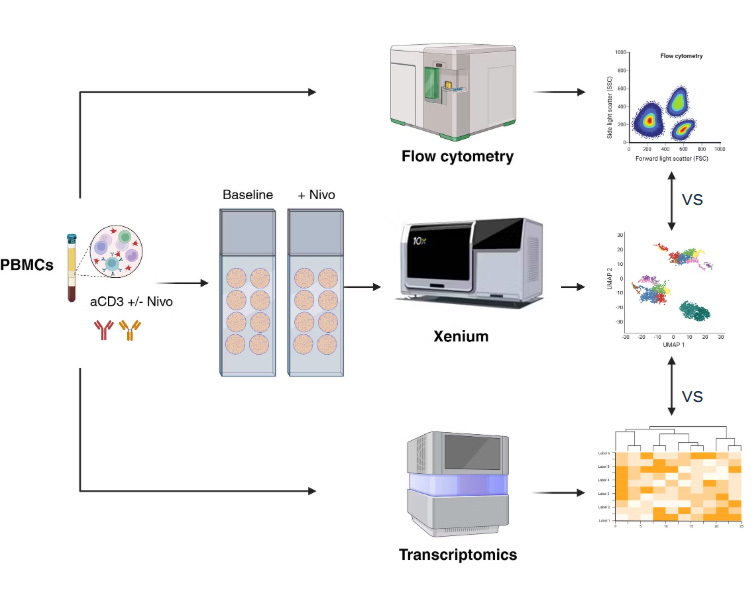
Benchmarking Xenium STAMP against flow cytometry and transcriptomics

Activated PBMCs were profiled ± nivolumab using the Xenium IO panel to assess whether STAMP could combine robust immune-cell phenotyping with treatment-dependent gene-expression analysis.

Study design: Eight PBMC samples were analyzed with and without treatment, with more than one million cells profiled across two Xenium slides.

Cross-platform validation: Xenium-derived cell proportions correlated with flow cytometry (R = 0.803), while gene-expression measurements showed strong correlation with bulk transcriptomic data (R = 0.86).

Biological insight: STAMP resolved treatment-associated shifts in immune-cell composition and enabled deeper characterization of dendritic-cell subpopulations and transcriptional states.

STAMP Xenium Cell-based assays pbmc immunoprofiling immunotherapy CRO

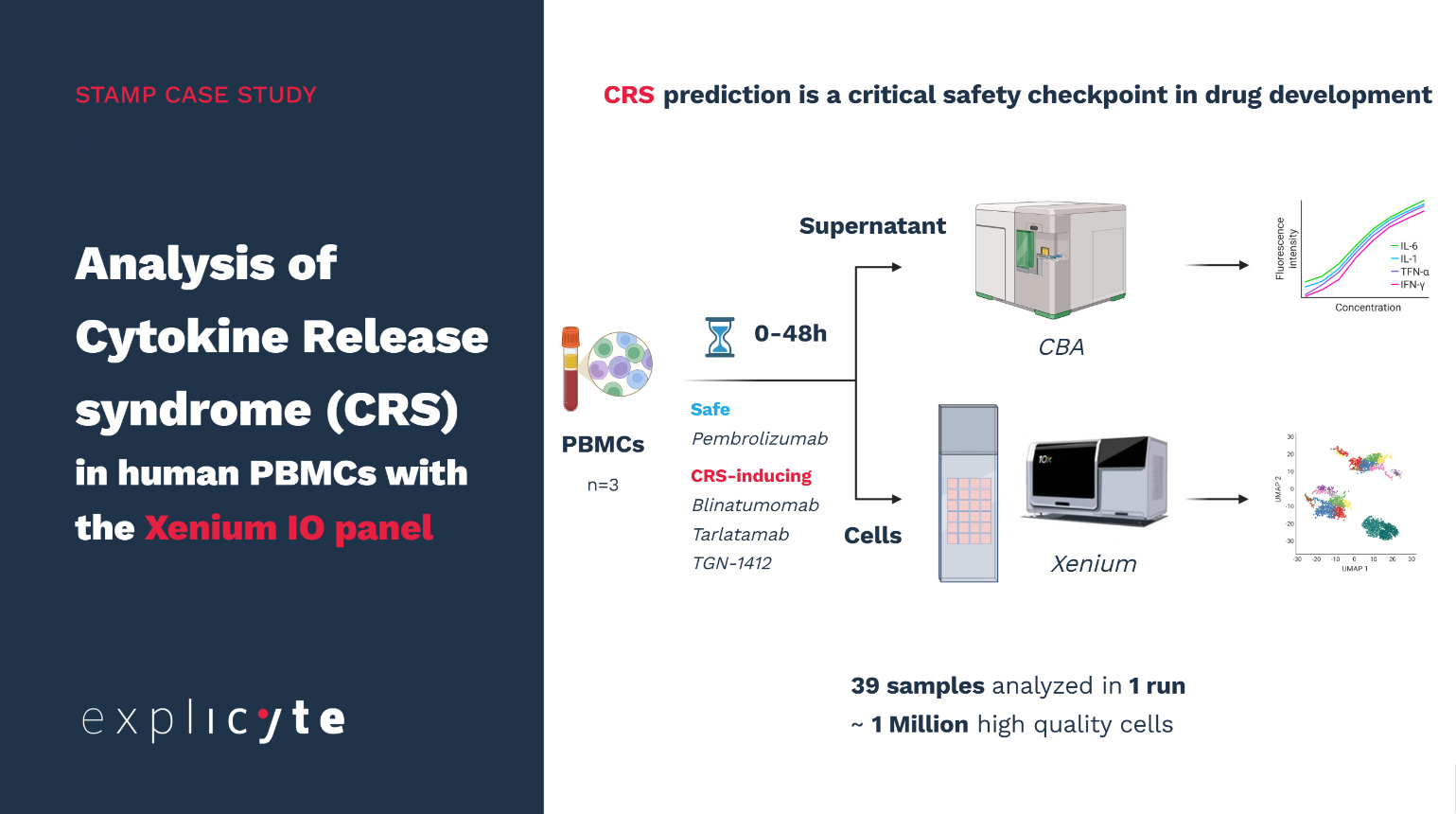
Resolving cytokine-release mechanisms at single-cell resolution

Secreted cytokine profiling was combined with Xenium STAMP to determine not only what was released, but which immune-cell populations and transcriptional programs were associated with the response

Study design: PBMCs from three donors were profiled over 0–48 hours across biologics with contrasting cytokine-release profiles.

Scale: Thirty-nine samples were analyzed in one Xenium run, generating approximately one million high-quality cells.

Mechanistic insight: STAMP tracked changes in immune populations and states and linked secreted cytokine measurements with cellular sources and cell-specific transcriptional programs.

Xenium stamp for CRS analysis

FROM ASSAY TO INTERPRETATION

Why work with Explicyte for Xenium STAMP studies

Preclinical study design

STAMP is integrated into the biological experiment — including treatment conditions, donors, time points and functional readouts — rather than run as an isolated platform service.

Integrated functional & single-cell readouts

Combine Xenium STAMP with flow cytometry, cytokine profiling, tumor-killing assays and other functional measurements within the same program.

In-house biological interpretation

Our bioinformatics team takes the dataset from QC and cell annotation through treatment comparisons, differential expression, pathway analysis and biological interpretation.

The Explicyte team at their Bordeaux laboratory

Paul Marteau, PharmD (study director), Imane Nafia, PhD (CSO), Loïc Cerf, MSc (COO), Alban Bessede, PhD (founder, CEO), Jean-Philippe Guégan, PhD (CTO)

Contact our team

Discuss your Xenium STAMP study

Tell us your model, cell type, treatment conditions, time points and the biological question you want to resolve. We'll help determine whether STAMP, flow cytometry, Chromium X — or a combination — is the best fit for your study.

XENIUM STAMP FAQ

Frequently asked questions about Xenium STAMP

What is STAMP and how does it work with Xenium?

STAMP stands for Single-cell Transcriptomics Analysis and Multimodal Profiling. It immobilizes fixed dissociated cells on imaging slides so targeted RNA expression can be measured at single-cell resolution using platforms such as Xenium, without a sequencing step. The method was published by Pitino et al. in Cell in 2025.

Fixed dissociated cells can be profiled, including PBMCs, cultured cell lines and cells dissociated from tissues.

Standard Xenium preserves the spatial organization of cells within a tissue section. STAMP instead profiles dissociated cells immobilized on a slide, making it particularly suited to cell-based assays, perturbation studies and ex vivo profiling where native tissue spatial context is not required.

STAMP uses targeted imaging-based gene-expression profiling and does not require sequencing. It is well suited to high-cell-count studies with predefined biological questions and multiple conditions. Chromium X is more appropriate when broad or whole-transcriptome discovery is required.

Yes. Functional, flow cytometry and secretome readouts can be integrated with STAMP to connect an observed phenotype with specific cell populations and transcriptional programs.

Panel choice depends on the biological question. Xenium Prime 5K provides approximately 5,000 targeted genes with up to 100 custom add-on genes; more focused panels can also be used where appropriate.

Its high cell throughput makes STAMP particularly attractive for rare-population analysis, provided the selected gene panel contains appropriate markers. The original publication specifically demonstrated ultra-rare population detection.

Yes. Explicyte is a 10x Genomics Certified Service Provider for Xenium, combining platform expertise with preclinical immuno-oncology, functional assays and in-house bioinformatics.

Explicyte Oncology CRO logo

Capabilities

Modalities