GeoMx DSP services: spatial RNA & high-plex proteomics by region and compartment

Explicyte delivers GeoMx DSP studies across selected tissue regions and compartments, combining RNA, high-plex protein and RNA–protein multiomic workflows with in-house analysis.

GeoMx data generated by Explicyte have been published in

Clinical cancer research journal logoCell Reports Medicine journal logoMolecular Cancer Research journal logoClinical cancer research journal logoNature medicine journal logo
Clinical cancer research journal logoCell Reports Medicine journal logoMolecular Cancer Research journal logoClinical cancer research journal logo
Clinical cancer research journal logoCell Reports Medicine journal logoMolecular Cancer Research journal logoClinical cancer research journal logoNature medicine journal logoJournal for ImmunoTherapy of Cancer (JITC)

GeoMx CRO services

Why run GeoMx with Explicyte

GeoMx experience, certified provider since 2020

Explicyte is a certified NanoString partner (now part of Bruker Spatial Biology) with years of GeoMx experience and a peer-reviewed publication track record across translational oncology.

Flexible ROI & compartment selection

Define the tissue regions that matter, with ROI/AOI selection based on your own criteria, pathologist input, or developed jointly with the Explicyte team.

Spatial RNA + high-plex proteomics

Profile broad RNA programs, high-plex protein expression and signaling states, or combine both modalities within selected spatial regions

HOW WE RUN GEOMX STUDIES

From study design to compartment-resolved molecular data

  1. GeoMx study design, region and sample strategy
    1

    Study design & ROI/AOI strategy

    A PhD study director reviews your biological objectives, cohort and available tissue, then defines the molecular readout and ROI/AOI strategy with your team. Depending on the study, this can include WTA, CTA, high-plex protein profiling or an integrated RNA–protein workflow. ROI/AOI criteria can be sponsor-defined, Explicyte-defined or jointly established.

  2. GeoMx services: Sample logistics, preparation, and QC
    2

    Samples, preparation, and QC

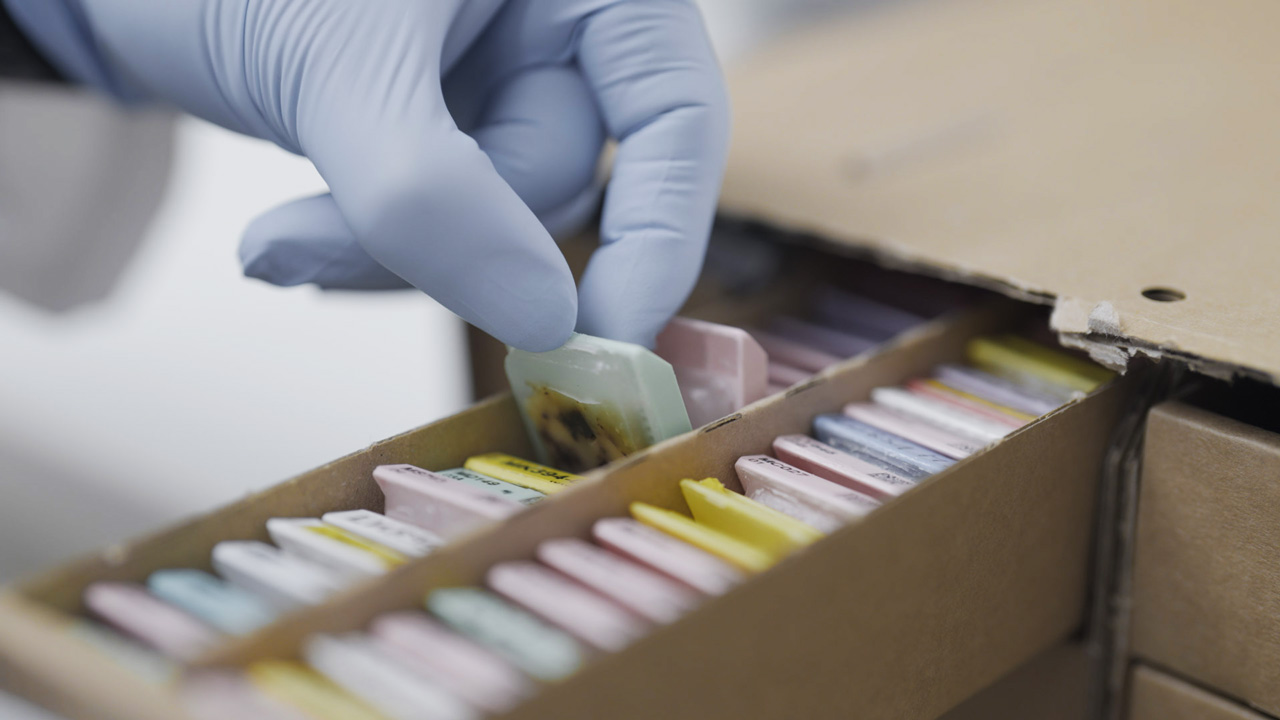
    We provide sample and shipping requirements and can support tissue sourcing where needed. FFPE or fresh-frozen material is prepared and qualified according to the selected RNA or protein assay before proceeding to GeoMx profiling.

  3. Staining, imaging, and region selection on GeoMx DSP
    3

    Imaging, ROI/AOI selection & molecular readout

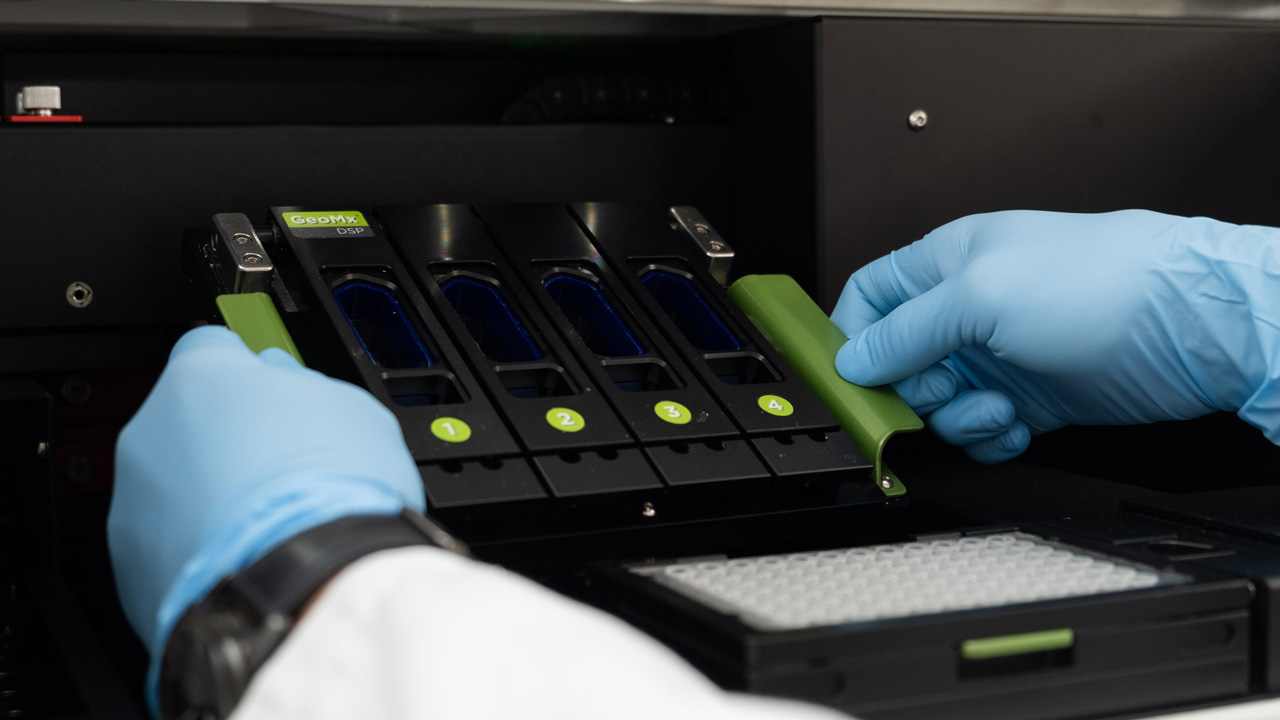
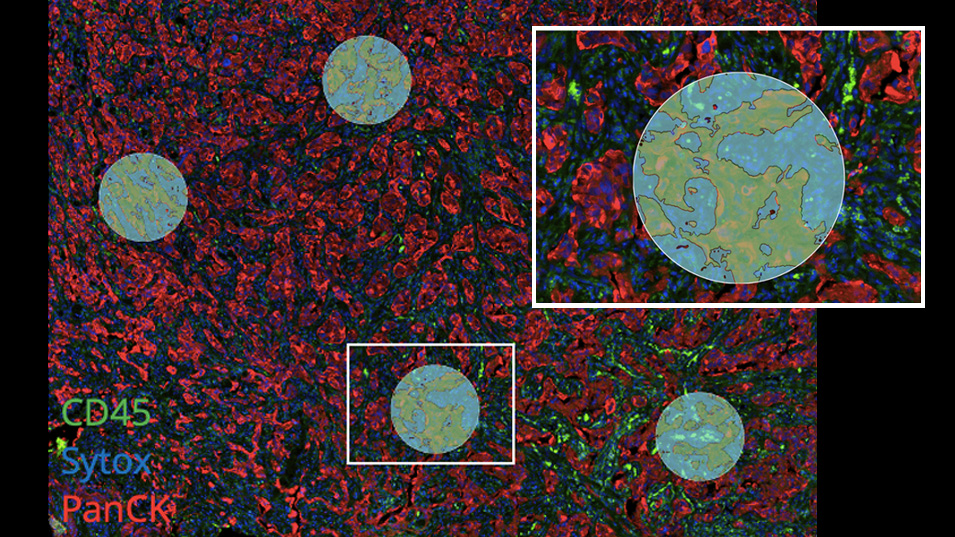
    Sections are stained with fluorescent morphology markers together with assay-specific RNA probes and/or oligo-tagged antibodies. After imaging, ROIs and AOIs are selected according to the predefined study strategy, either by the sponsor team, Explicyte or collaboratively. UV illumination then releases the indexing oligos from each selected area for downstream molecular readout.

  4. spatial transcriptomics CRO services DSP geomx nanostring data analysis
    4

    Data processing, analysis & delivery

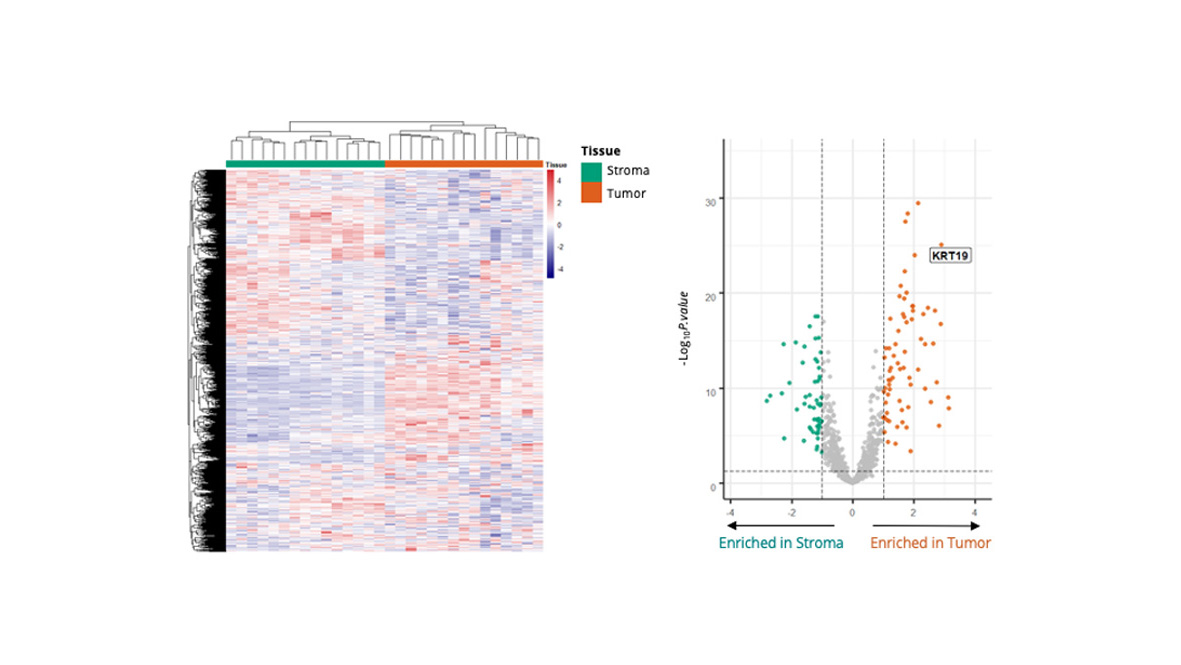
    Raw outputs include FASTQ and DCC files. Our in-house data science team can then perform QC, normalization, differential RNA and/or protein expression, pathway and signature analysis, immune-cell deconvolution where appropriate, compartment comparisons and integrated RNA–protein analysis.

GEOMX ASSAYS & SPECIFICATIONS

Spatial RNA, high-plex proteomics & multiomics

Readout principle
Study-defined regions of interest (ROIs) and areas of illumination (AOIs), selected using tissue morphology and fluorescent markers—for example tumor versus stroma or selected immune compartments.
RNA content
Whole Transcriptome Atlas — 18,000+ protein-coding genes, human or mouse. Cancer Transcriptome Atlas — 1,800+ targets across cancer-related pathways.
IO Proteome Atlas
570+ human protein targets for broad immuno-oncology and translational biomarker discovery, with up to 40 additional custom protein targets.
Discovery Proteome Atlas
1,200+ pre-validated human protein targets, including 130+ post-translational modifications.
Spatial multiomics
Integrated RNA–protein study designs combining GeoMx transcriptomic and high-plex protein assays, with workflow configuration depending on the selected assay combination.
Sample types
FFPE, fresh-frozen and TMAs, including biopsies. Compatibility depends on the selected RNA or protein assay.
Morphology guidance
Up to four fluorescent morphology channels to guide ROI/AOI selection and compartment enrichment.
Certification
NanoString Certified Service Provider for GeoMx DSP, now part of Bruker Spatial Biology.

GeoMx data & analysis deliverables

Raw & standard outputs

  • FASTQ and DCC files for NGS-based workflows
  • ROI/AOI annotations and QC metrics
  • Normalized RNA and/or protein expression matrices

Downstream analysis, according to study scope

  • Differential RNA and/or protein expression
  • Pathway and gene-set analysis
  • Protein-signaling and PTM analysis where applicable
  • Immune-cell deconvolution where relevant
  • Tumor-versus-stroma and other compartment-level comparisons
  • Integrated RNA–protein analysis for spatial multiomic studies

Study outputs

  • Processed datasets
  • Publication-ready figures
  • Results review with your study director
Explore GeoMx data analysis

Peer-reviewed studies using Explicyte GeoMx data

Explore our GeoMx publications
explicyte multiomics transcriptomics CRO team

Paul Marteau, PharmD (study director), Imane Nafia, PhD (CSO), Loïc Cerf, MSc (COO), Alban Bessede, PhD (founder, CEO), Jean-Philippe Guégan, PhD (CTO)

Contact our team

Discuss your GeoMx project

Tell us your tissue type, cohort size, biological question and desired RNA or protein readout. We'll help define the appropriate GeoMx assay, ROI/AOI strategy, sample requirements and analysis plan.

Frequently asked questions about GeoMx DSP services

GeoMx FAQs

What is GeoMx digital spatial profiling?

GeoMx Digital Spatial Profiling measures RNA and/or protein expression within selected regions of tissue. ROIs and AOIs are defined using tissue morphology and fluorescent markers and can follow sponsor-defined criteria, Explicyte-defined study rules or a jointly agreed selection strategy. Depending on the study, GeoMx can profile whole-transcriptome RNA, targeted RNA content, high-plex protein expression or integrated RNA–protein spatial multiomics.

GeoMx is particularly useful when the biological question focuses on molecular profiling of selected tissue regions or compartments—for example tumor, stroma or defined immune-rich areas—and when RNA, protein or both need to be measured within those regions.

Visium HD is better suited to broad whole-transcriptome spatial discovery across tissue, while Xenium provides targeted cell-resolved and subcellular RNA localization.

GeoMx is especially differentiated by flexible ROI/AOI selection, high-plex proteomics and RNA–protein multiomic study designs.

GeoMx profiles selected ROIs/AOIs and can combine spatial RNA with high-plex protein measurements.

Atera profiles whole-transcriptome RNA directly across tissue at single-cell sensitivity.

The choice therefore depends on whether the study prioritizes selected-region profiling and protein biology or broad in situ transcriptomic coverage.

GeoMx is primarily a region- and compartment-based spatial profiling technology. RNA workflows such as WTA and CTA typically measure selected ROIs/AOIs rather than generating an unbiased cell-by-cell map of the tissue. Some high-plex protein workflows can interrogate very small or highly enriched cellular regions depending on study design, but GeoMx should not be presented as equivalent to whole-tissue single-cell imaging platforms.

ROI/AOI selection is defined during study design and can be performed by the sponsor team, by Explicyte or collaboratively. Fluorescent morphology markers are used to identify relevant tissue structures or cellular compartments—for example tumor versus stroma or selected immune-rich regions. Pathologist input can be incorporated when histological interpretation is useful, but it is not required for every GeoMx study.

For RNA, Explicyte offers the Whole Transcriptome Atlas with 18,000+ protein-coding genes and the Cancer Transcriptome Atlas with 1,800+ cancer-related targets. For protein profiling, the IO Proteome Atlas measures 570+ human proteins, while the Discovery Proteome Atlas expands coverage to 1,200+ proteins, including 130+ post-translational modifications. DPA can also be customized with up to 40 additional protein targets.

Yes, depending on the selected assay combination and study design. GeoMx supports integrated RNA–protein workflows, including same-section or matched-section approaches depending on the assays used. We define the appropriate configuration during study setup

The GeoMx Discovery Proteome Atlas (DPA) is a 1,200+ plex antibody-based spatial proteomics assay for human tissue. Its curated targets span major signaling and disease pathways and include 130+ post-translational modifications. DPA can resolve protein expression and can be integrated with GeoMx WTA for spatial RNA–protein analysis.

RNA expression does not always reflect functional pathway activity. DPA includes 130+ post-translational modifications, including phosphorylation and other regulatory protein states, allowing studies to investigate signaling activity directly in spatially defined tissue compartments. This can be particularly valuable for mechanism-of-action studies, target discovery and pharmacodynamic biomarker research.

GeoMx studies can support FFPE and fresh-frozen tissue, including biopsies and TMAs. Compatibility depends on the selected RNA or protein assay and species. We review sample type, tissue dimensions and material quality during study setup.

After region selection, UV light releases barcoded oligos from each segment; those are collected and read out by NGS (Illumina).

Depending on study scope, deliverables can include FASTQ and DCC files, ROI/AOI annotations and QC, normalized RNA and/or protein expression matrices, differential expression, compartment-level comparisons, pathway and signaling analyses, immune-cell deconvolution where appropriate, and integrated RNA–protein analyses. Processed datasets and publication-ready figures can be reviewed with your study director.

Explicyte has been a certified NanoString partner since 2020 (now part of Bruker Spatial Biology) and runs GeoMx DSP directly.

Explicyte Oncology CRO logo

Capabilities

Modalities