Bulk RNA-seq & GeoMx DSP data analysis services

Explicyte provides standalone bioinformatics for bulk RNA-seq and GeoMx DSP datasets, whether generated by Explicyte, another provider or your own lab.

From raw data and QC through differential expression, pathway analysis and spatial interpretation, our bioinformaticians tailor the analysis to your biological question.

WHY EXPLICYTE

Your transcriptomic dataset is in the right hands

Deep FFPE experience

Since 2019 we've analyzed FFPE transcriptomic datasets and published the results in peer-reviewed oncology and immunology journals.

Reproducible analysis pipeline

In-house workflows for data QC, normalization, batch-effect correction and downstream analysis, adapted to bulk RNA-seq and GeoMx DSP datasets.

Scientists, not just scripts

We automate everything that adds speed and consistency. But each dataset is interpreted by an experienced bioinformatician.

REPRESENTATIVE STUDY

Integrating GeoMx DSP and bulk RNA-seq analysis

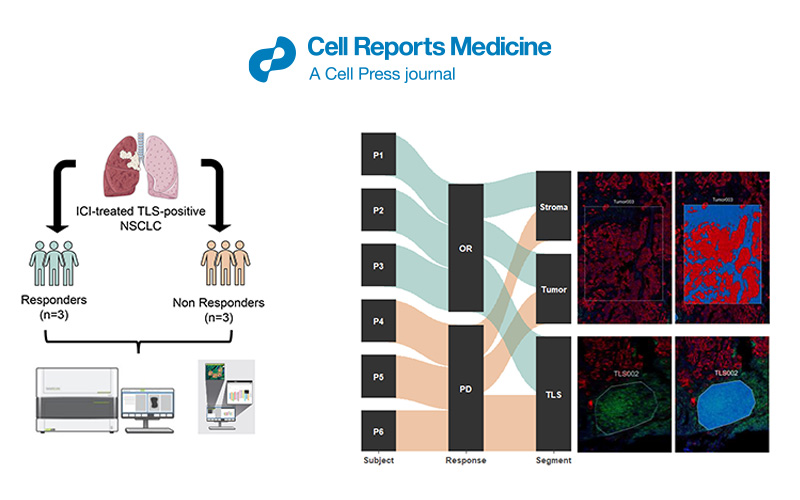
Transcriptomic analysis of lung cancer patients with mature tertiary lymphoid structures (mTLS)

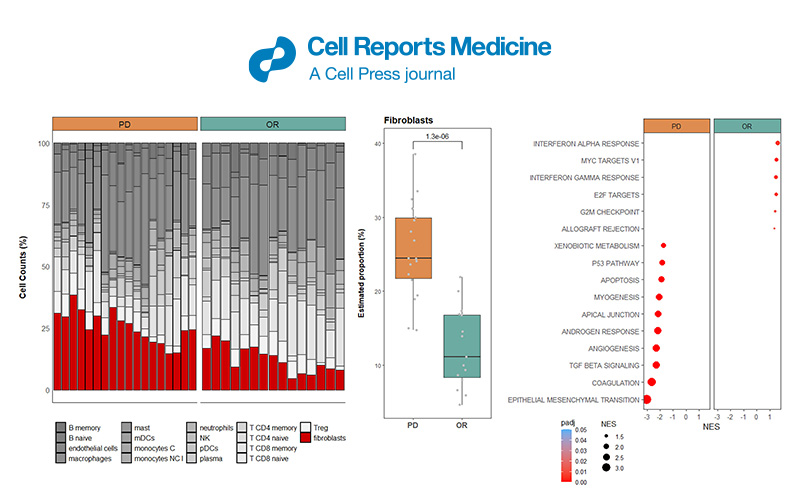
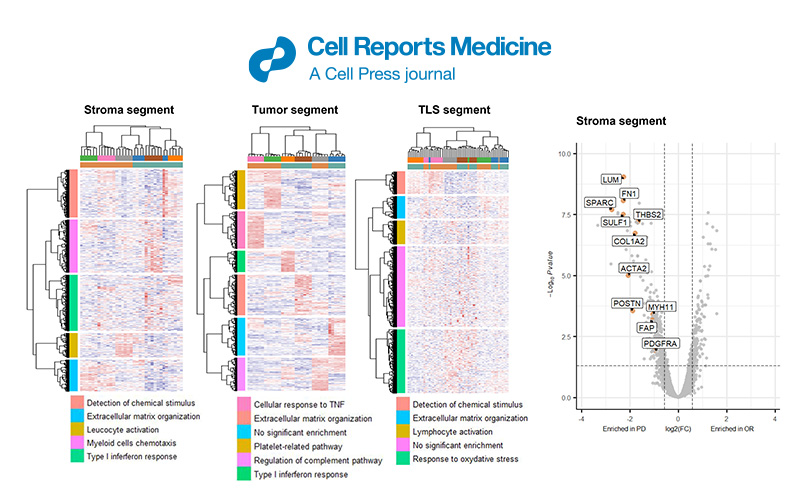
We analyzed six mTLS-positive tumors from NSCLC patients with extreme responses to immunotherapy, and found stromal fibroblasts enriched in the non-responders.

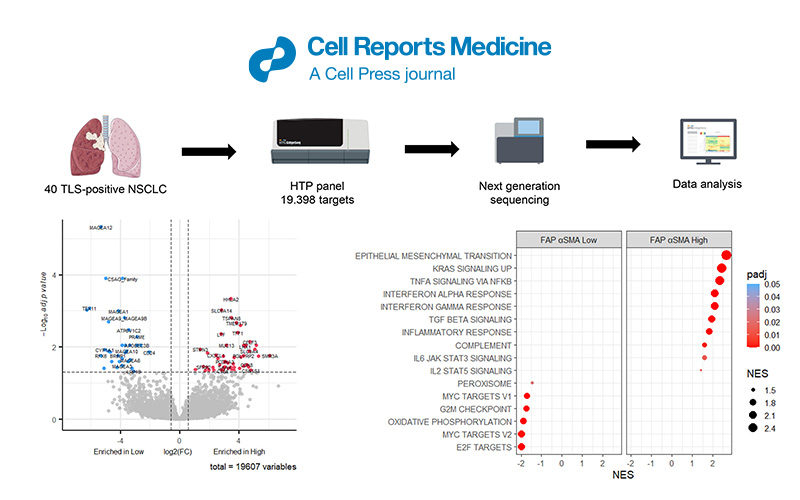
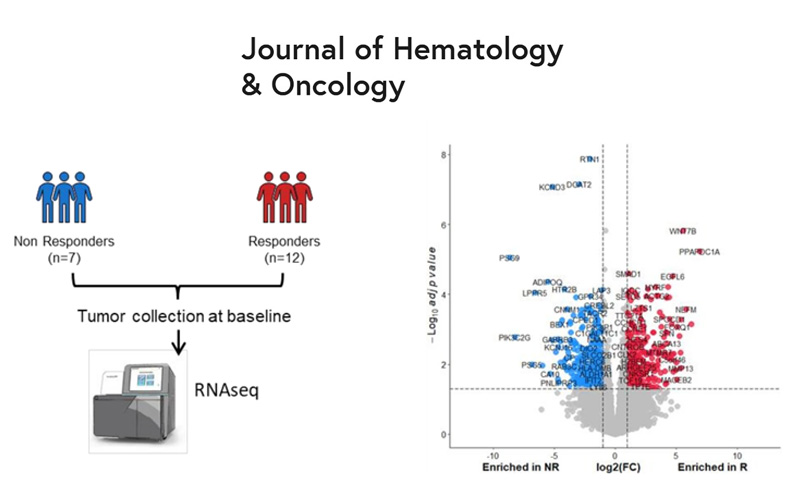
Bulk RNA-seq of 40 TLS-positive NSCLC samples then confirmed two cancer-associated fibroblast (CAF) populations at scale, along with their immunosuppressive signatures.
More about this paper

Our recent papers based on bulk RNA-seq or GeoMx DSP

Cancer Cell journal logoClinical cancer research journal logoCell Reports Medicine journal logoCell Reports Medicine journal logoMolecular Cancer Research journal logo
All publications

ANALYSIS DEPTH

Choose the level of analysis you need

One workflow, three depths Choose the level that matches your project. Level 1 · QC ~1 week Quality-controlled data, ready for analysis. Level 2 · Primary ~2 weeks Processed dataset with major patterns defined. Level 3 · In-depth ~4 weeks Biological interpretation and publication-ready outputs.
Alignment / probe mapping to reference
Data quality control
Raw count matrices
Dataset QC report & initial summary
Full preprocessing & normalization
Batch-effect correction & outlier / ROI filtering
Exploratory analysis (PCA / clustering)
Sample & ROI-level characterization
Differential expression (conditions / regions)
Gene-set enrichment & pathway analysis
Biomarker & gene-signature identification
Immune-cell estimation & deconvolution
Spatial expression analysis (GeoMx)
Publication-ready figures, report & analysis scripts

Also available on request

Gene regulatory network inference · multi-omics integration · combined bulk + spatial analysis in one framework. Tell us what you're after and we'll scope it.

PLATFORM-SPECIFIC OUTPUTS

Bulk RNA-seq & GeoMx DSP deliverables

Bulk transcriptomics

Bulk RNA-seq analysis
Deliverables

  • FASTQ and/or BAM files, where available
  • Processed gene expression matrices (raw and normalized counts)
  • QC report — sequencing metrics, mapping statistics, sample QC
  • Exploratory analysis — PCA, clustering, sample relationships
  • Differential expression results with statistical metrics
  • Gene-set enrichment and pathway analysis
  • Biomarker and gene-signature identification
  • Publication-ready figures and analysis report

Spatial transcriptomics

GeoMx DSP data analysis
Deliverables

  • FASTQ and DCC files
  • Processed ROI-level gene expression matrices
  • ROI metadata tables — sample ID, region annotation, segmentation
  • QC report — sequencing metrics, ROI filtering, probe performance
  • Normalized spatial gene expression dataset
  • Spatial clustering and ROI classification
  • Differential expression between regions or biological conditions
  • Spatial pathway enrichment and cell-type deconvolution
  • Spatial visualization maps + publication-ready figures and report

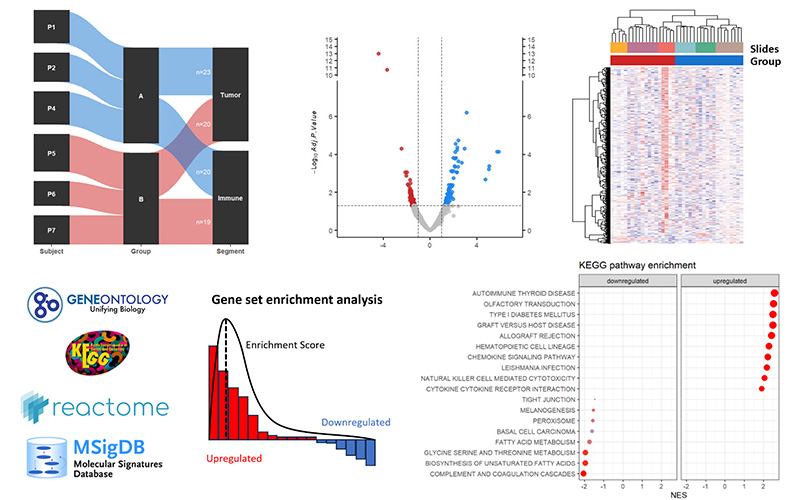
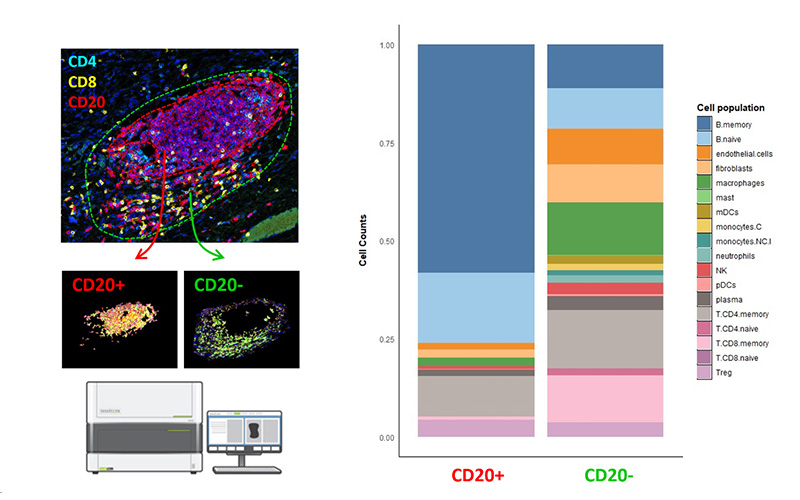
Example of a GeoMx analysis pipeline (6-patient sarcoma cohort, Whole Transcriptome Atlas panel): differential gene expression analysis, pathway analysis, and estimation of immune cell composition in tertiary lymphoid structures.

explicyte multiomics transcriptomics CRO team

Paul Marteau, PharmD (study director), Imane Nafia, PhD (CSO), Loïc Cerf, MSc (COO), Alban Bessede, PhD (founder, CEO), Jean-Philippe Guégan, PhD (CTO)

Contact our team

Discuss your dataset or project

Tell us the dataset type, files available, cohort size and biological question. A bioinformatician will review your data and propose the appropriate analysis level, timeline and deliverables.

FAQ

Frequently asked questions about transcriptomic data analysis

Can Explicyte analyze bulk RNA-seq or GeoMx DSP datasets generated outside Explicyte?

Yes. Our data analysis is a standalone service, so we can support projects even when the wet-lab work was done by another CRO, a core facility, or your internal team. We regularly work on externally generated datasets and adapt the workflow to the study design, data quality, and scientific objectives.

You can upload data to our secure EU-based server (AES-encrypted storage, high-speed transfer).

For bulk RNA-seq: raw FASTQ, BAM alignment files, and gene count matrices. For GeoMx DSP: raw FASTQ, GeoMx DSP count matrices, and ROI metadata. Optional sample metadata — experimental design, treatment, clinical variables, batch — improves downstream interpretation.

We offer three levels of analysis depending on the depth required.

Level 1 — QC focuses on alignment or probe mapping, data-quality assessment, raw count matrices and a QC summary.

Level 2 — Primary adds full preprocessing and normalization, batch-effect correction where appropriate, outlier or ROI filtering, and exploratory analyses such as PCA and clustering.

Level 3 — In-depth addresses the biological question through differential expression, pathway analysis, biomarker and signature identification, immune-cell estimation, spatial analysis for GeoMx where relevant, and publication-ready figures and reporting.

As a general guide, QC analysis takes about 1 week, Primary analysis about 2 weeks, and In-depth analysis about 4 weeks. Larger, multi-cohort or more complex projects receive a defined timeline at kickoff.

Yes. FFPE transcriptomics is a core area of experience for our team. We routinely work with FFPE-derived bulk and spatial transcriptomic datasets and account for the specific quality and technical constraints associated with archival material during QC, preprocessing and downstream interpretation.

Yes — it’s one of the most common objectives. We compare biological groups across bulk RNA-seq datasets, or across GeoMx DSP regions and sample classes, to find differentially expressed genes, pathways, and spatially enriched programs linked to response, resistance, progression, or metastasis.

Yes. Our workflows support biomarker discovery: differential expression, pathway analysis, immune signatures, spatial compartment analysis, and prioritization of candidate genes or molecular programs tied to the phenotype of interest.

Yes. When it helps, we analyze both data types in one framework — bulk RNA-seq gives a global view of transcriptomic change across samples, while GeoMx DSP adds spatial resolution across selected compartments or regions of interest.

Explicyte Oncology CRO logo

Capabilities

Modalities