10x Genomics single-cell & spatial data analysis services

Explicyte provides standalone bioinformatics for Chromium X, Visium HD, Xenium and Atera datasets, whether generated by Explicyte, another provider or your own lab.

We can start from FASTQ files or platform-generated outputs and take the dataset through data QC, preprocessing, clustering, annotation and spatial interpretation, with analysis tailored to the biological question.

Analyzing single-cell and spatial transcriptomics datasets

Your dataset is in the right hands

10x Genomics Certified Service Provider

Certified for Chromium X, Visium HD and Xenium, with analysis workflows also supporting Atera datasets.

In-house preprocessing & QC pipeline

Platform-specific workflows for data QC, dataset cleaning, batch-effect correction and segmentation optimization where relevant.

Scientist-led interpretation

We automate processing where it improves speed and consistency, but each dataset is systematically reviewed and interpreted by an experienced bioinformatician.

Jean-Philippe Guégan, PhD, Chief Technology Officer at Explicyte

With high-dimensional single-cell and spatial data, preprocessing is where a project’s quality is decided. That’s why we built our own pipeline — and why we run it on every dataset, not just the messy ones.

Jean-Philippe Guégan, PhD

Chief Technology Officer, Explicyte

10x DATASET PREPROCESSING & QC

An in-house workflow that puts analysis on solid ground

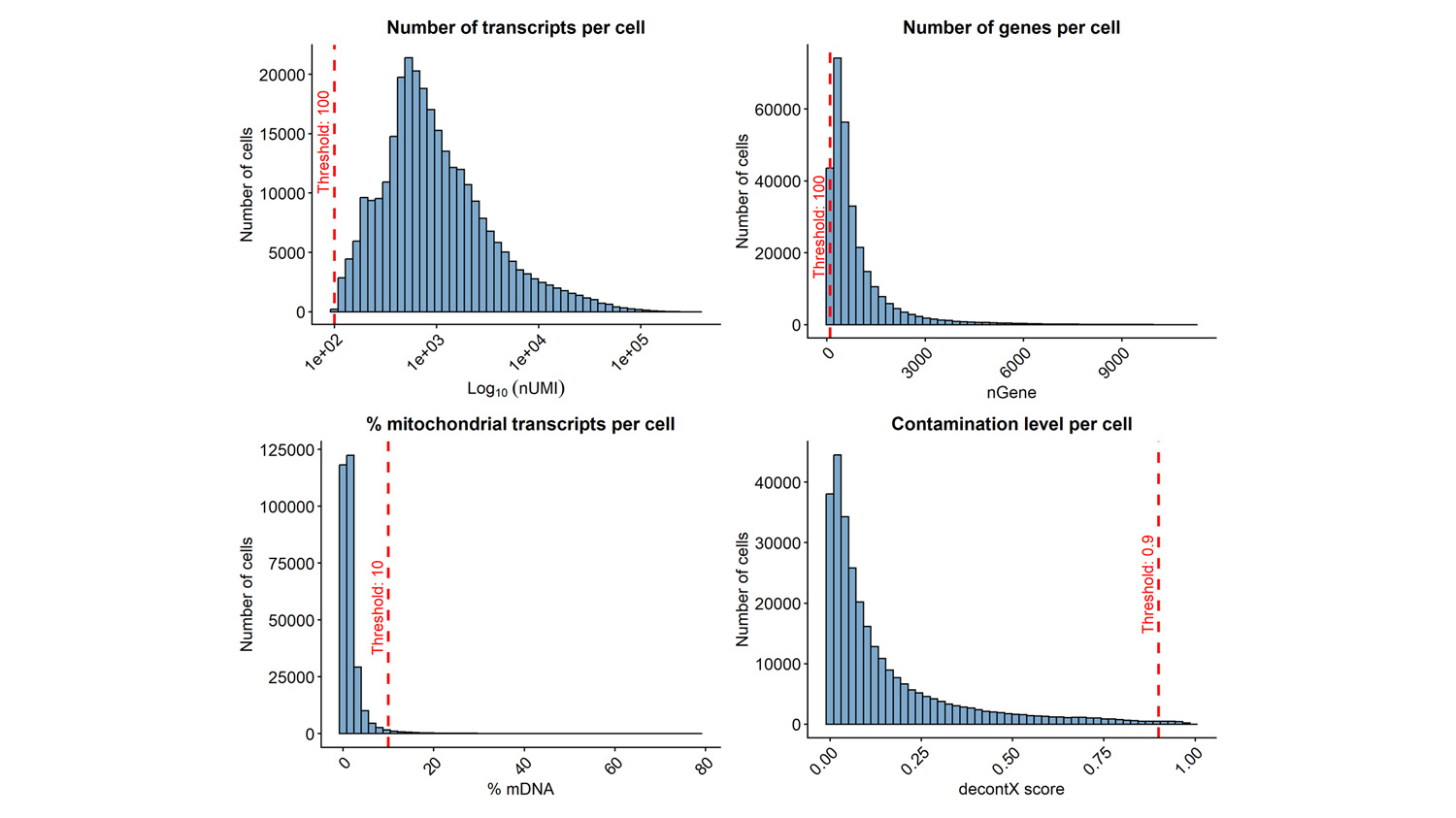
Before interpretation, each dataset follows a platform-appropriate QC and preprocessing workflow. Depending on the technology, this can include low-quality cell or barcode detection, technical-artifact filtering, batch-effect assessment and correction, segmentation optimization and cohort-level harmonization.
What the workflow does

  • Data QC and low-quality cell/barcode detection
  • Technical-artifact filtering where relevant
  • Batch-effect assessment and correction across samples
  • Segmentation optimization and remapping for imaging-based spatial datasets
  • Standardized cohort-level preprocessing
  • Analysis-ready datasets for clustering, annotation and spatial interpretation
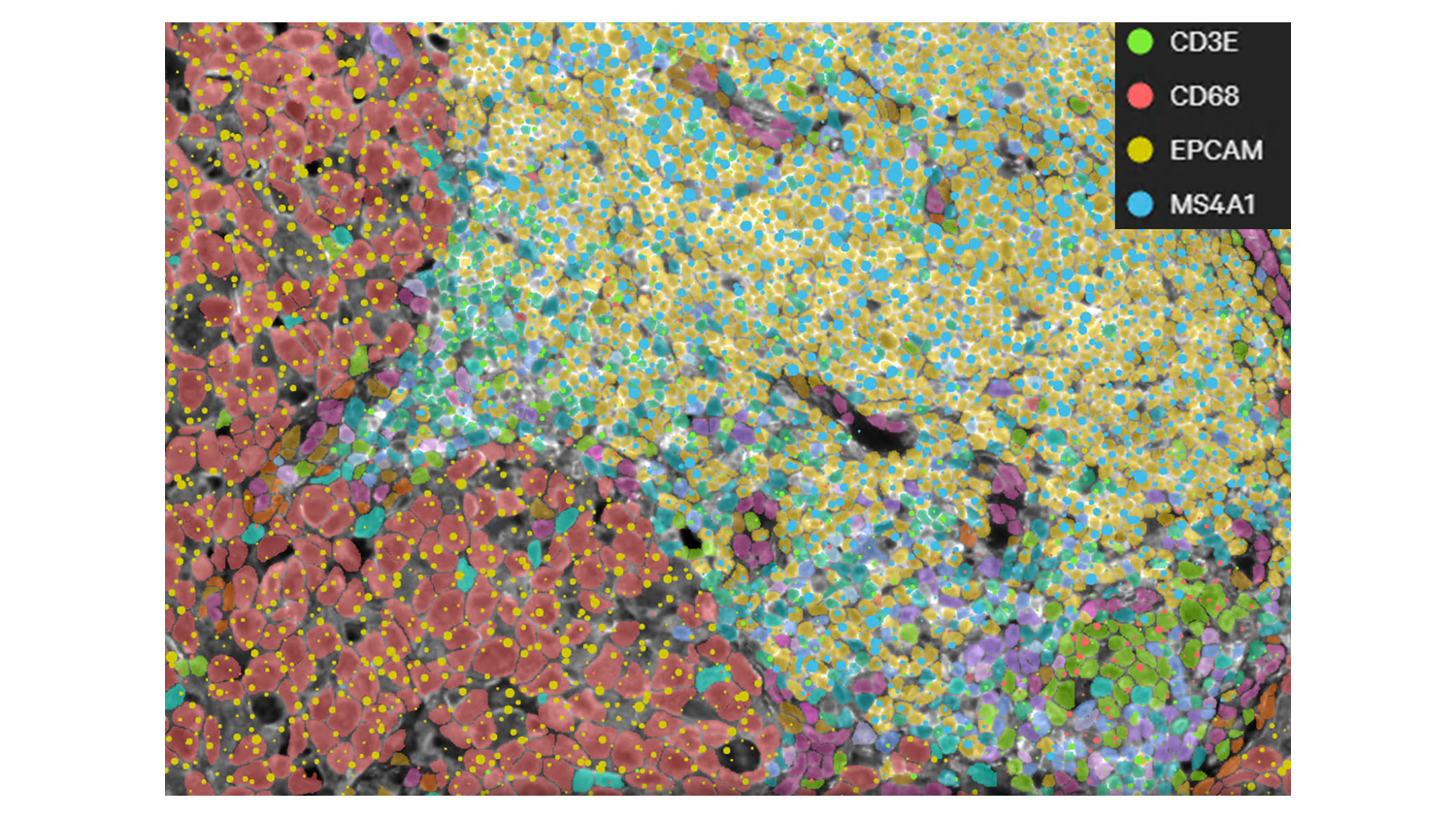
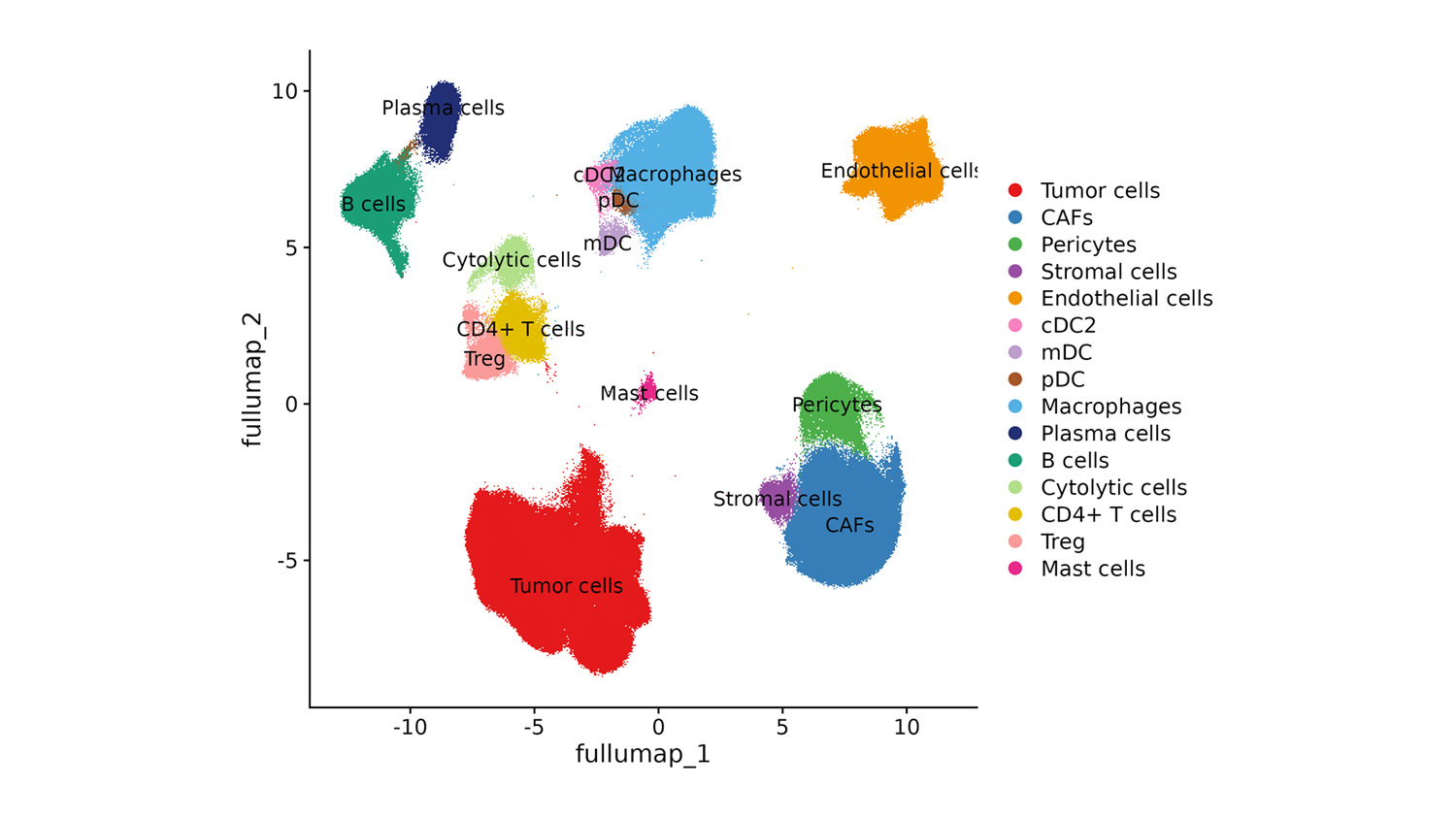
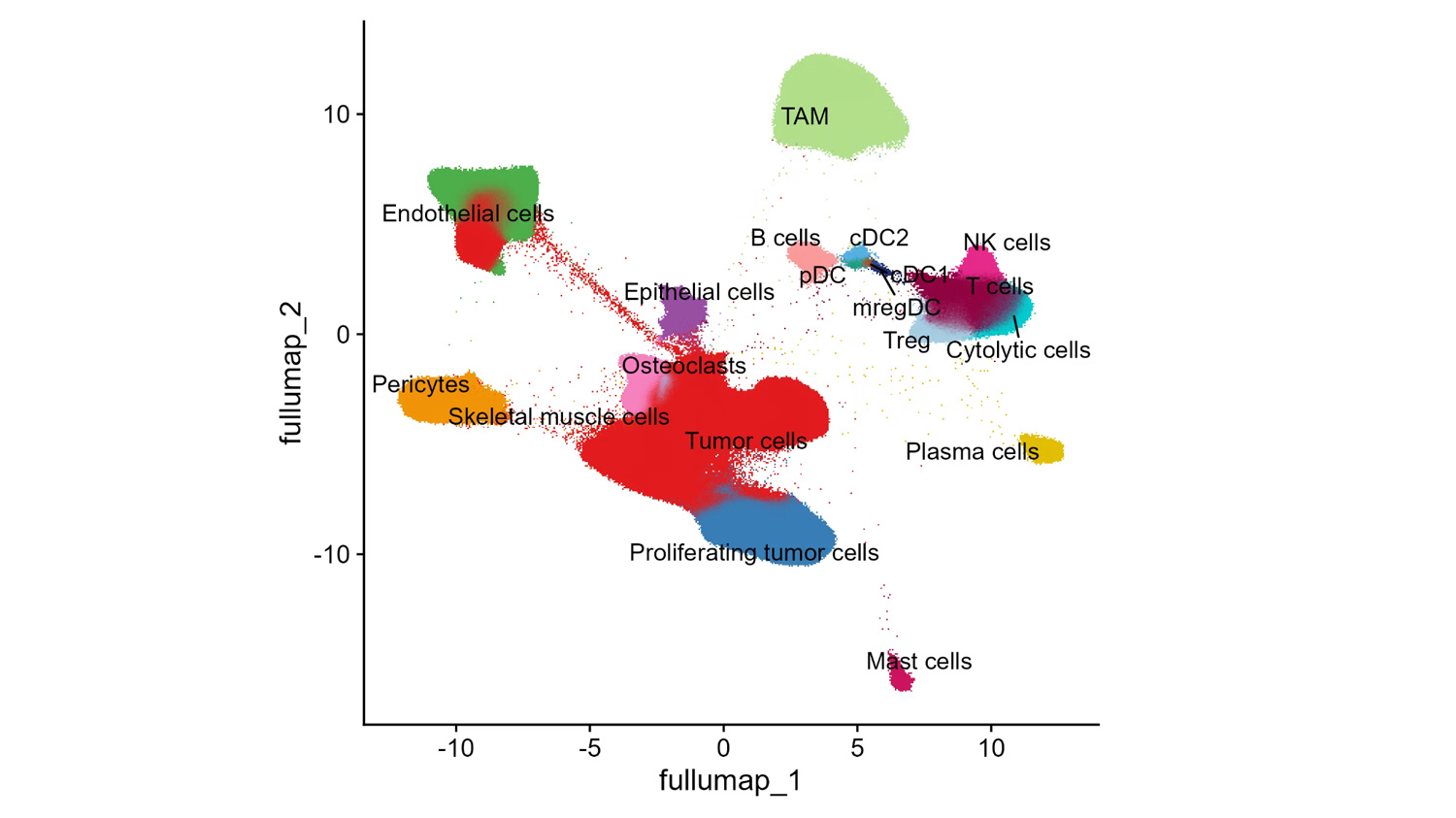
After preprocessing After preprocessing
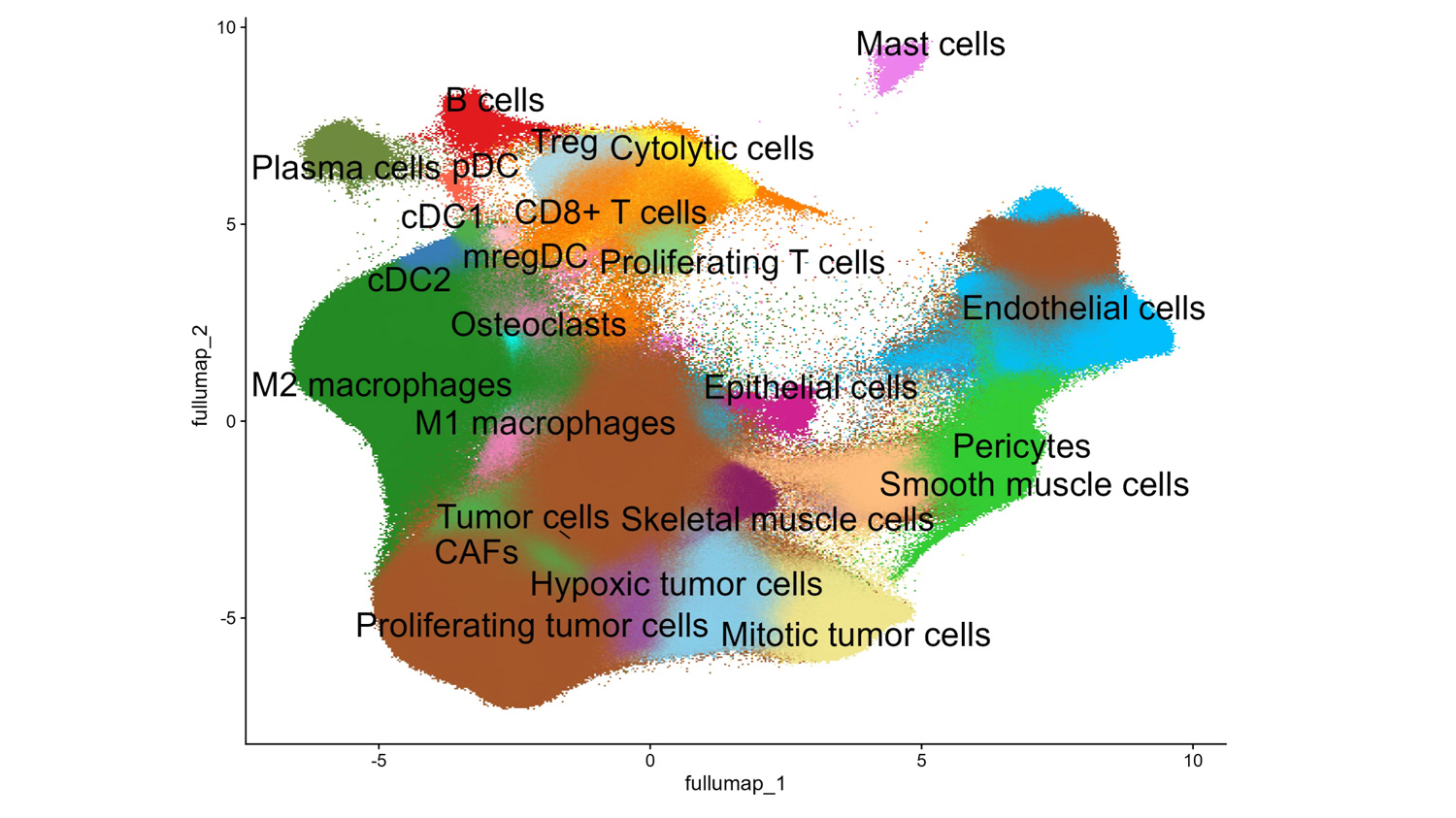
Before preprocessing Before preprocessing

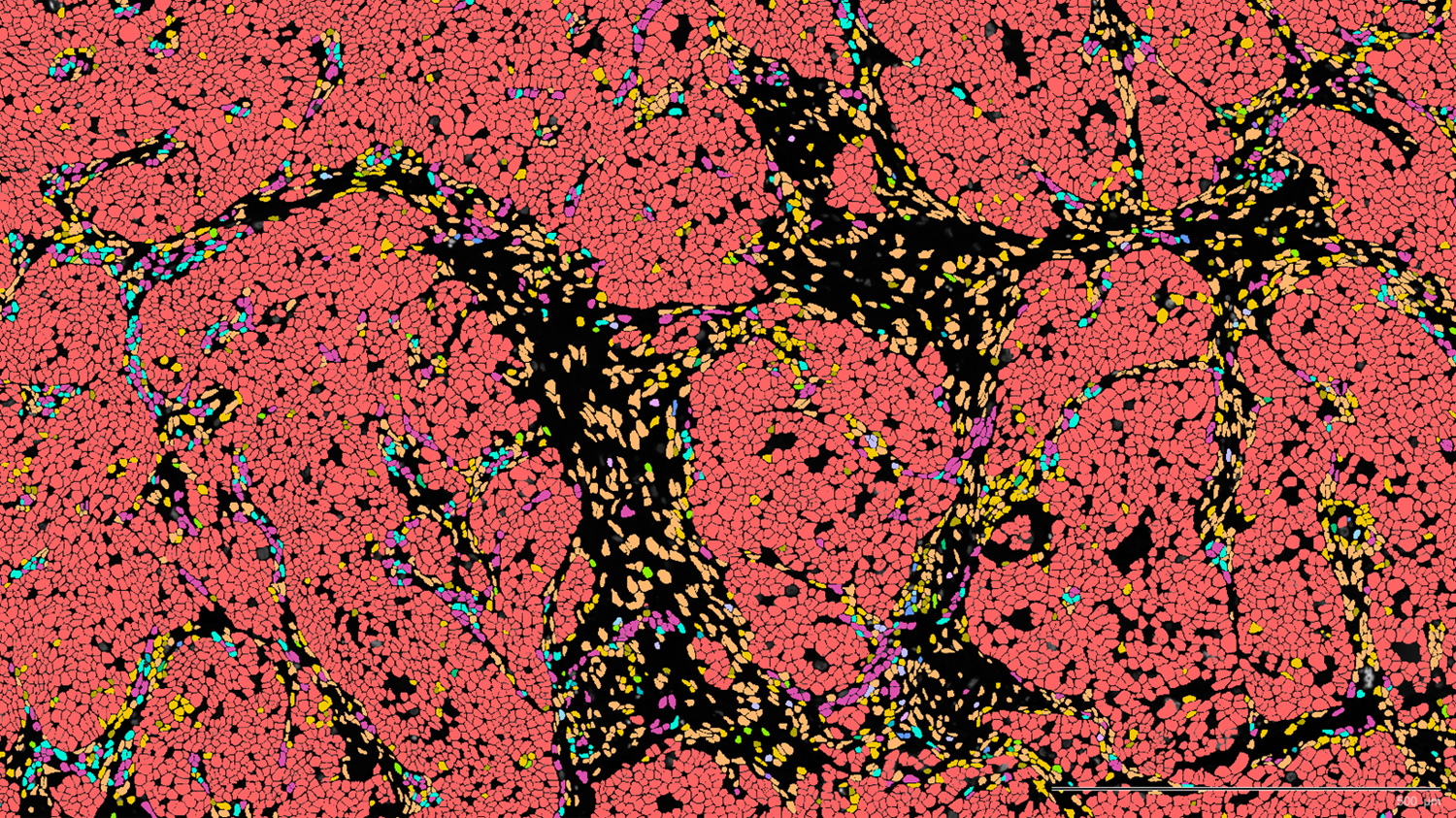
Xenium dataset — cluster annotation before and after our preprocessing workflow.

ANALYSIS DEPTH

Choose the level of analysis you need

One workflow, three depths Choose the level that matches your project. Level 1 · Primary ~1 week Processed data and quality assessment. Level 2 · Annotation ~2 weeks Processed, clustered and annotated dataset. Level 3 · In-depth ~4 weeks In-depth biological and spatial interpretation.
Mapping and Alignment to reference
Data Quality Control
Low-quality cell / barcode detection
Raw gene count matrices
Optimized cell segmentation & remapping, where applicable
Full preprocessing & dataset cleaning
Clustering & dimensionality reduction
Cell-type & cell-state annotation
Differential expression
Gene-set enrichment & pathway analysis
Cross-sample population comparison
Marker genes & functional signatures
Spatial neighborhood & cell–cell interaction analysis, where applicable
Publication-ready figures & analysis report

Indicative timelines for a typical two-slide spatial project. Timelines for Chromium X datasets and larger or more complex cohorts are defined at project kickoff.

Also available on request

Gene regulatory networks, trajectory analysis (pseudotime and velocity), and integrative single-cell analysis across datasets, public atlases, and multi-omics.

10x Genomics Data Analysis Services

Your deliverables by platform

Single-cell transcriptomics

Chromium X data analysis
Deliverables

  • Cell Ranger outputs + FASTQ
  • Raw + filtered gene-expression matrices
  • QC report (sequencing metrics, cell filtering, dataset stats)
  • Cleaned, normalized single-cell dataset
  • Clustering + UMAP / t-SNE
  • Cell-type annotation (curated references + AI-assisted)
  • Cluster marker genes
  • .cloupe file for the 10x Loupe Browser
  • Publication-ready figures + report

Spatial whole-transcriptomics

Visium HD data analysis
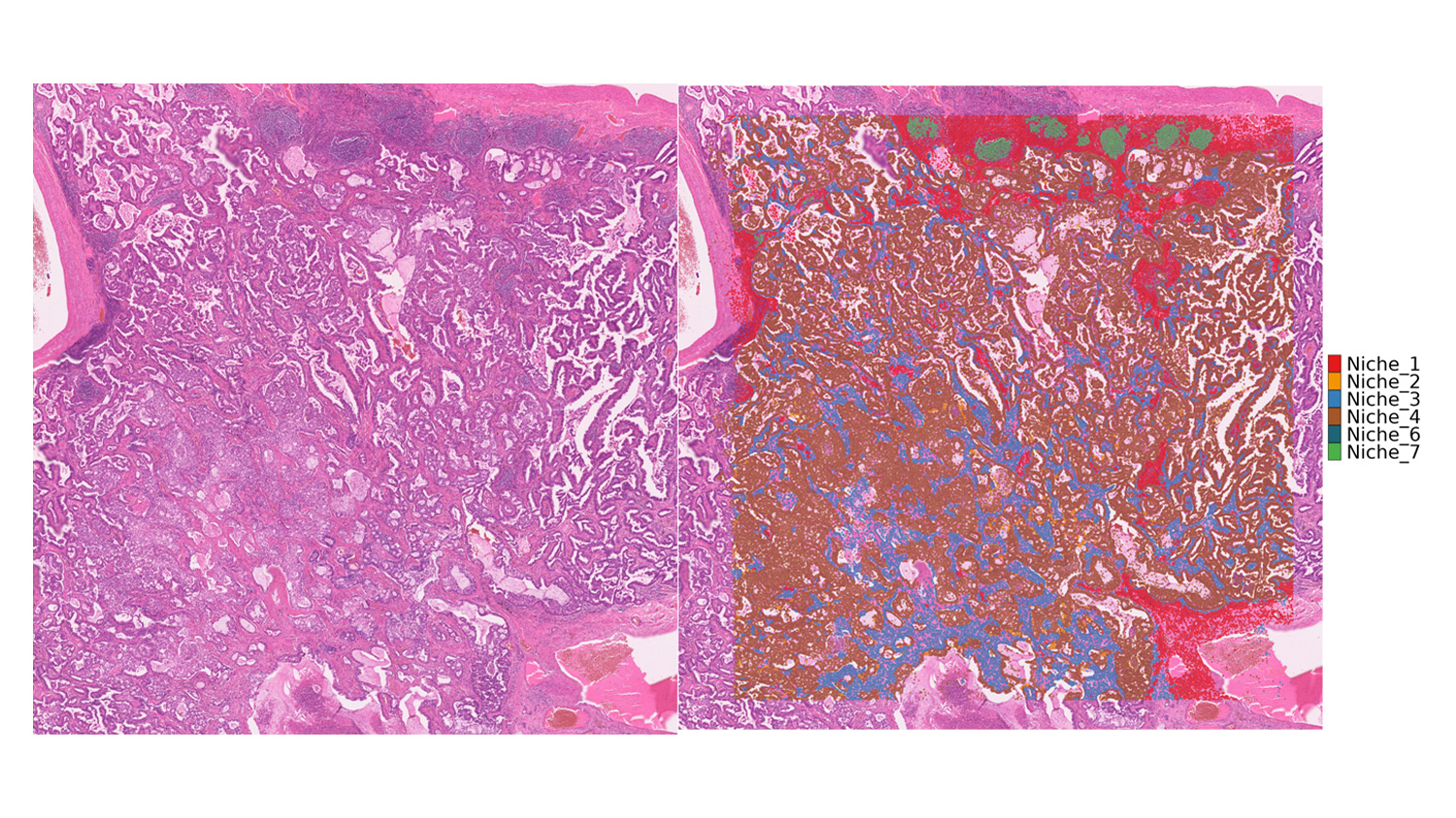
Deliverables

  • Space Ranger outputs + FASTQ
  • Processed spatial gene-expression matrices
  • QC report (spot filtering, dataset stats)
  • Spatial clustering + tissue-domain identification
  • Spatially variable gene detection
  • Cell-type mapping from reference single-cell data
  • CytAssist + high-resolution microscopy images
  • .cloupe file for the Loupe Browser
  • Publication-ready spatial maps + figures

Single-cell spatial transcriptomics

Xenium data analysis
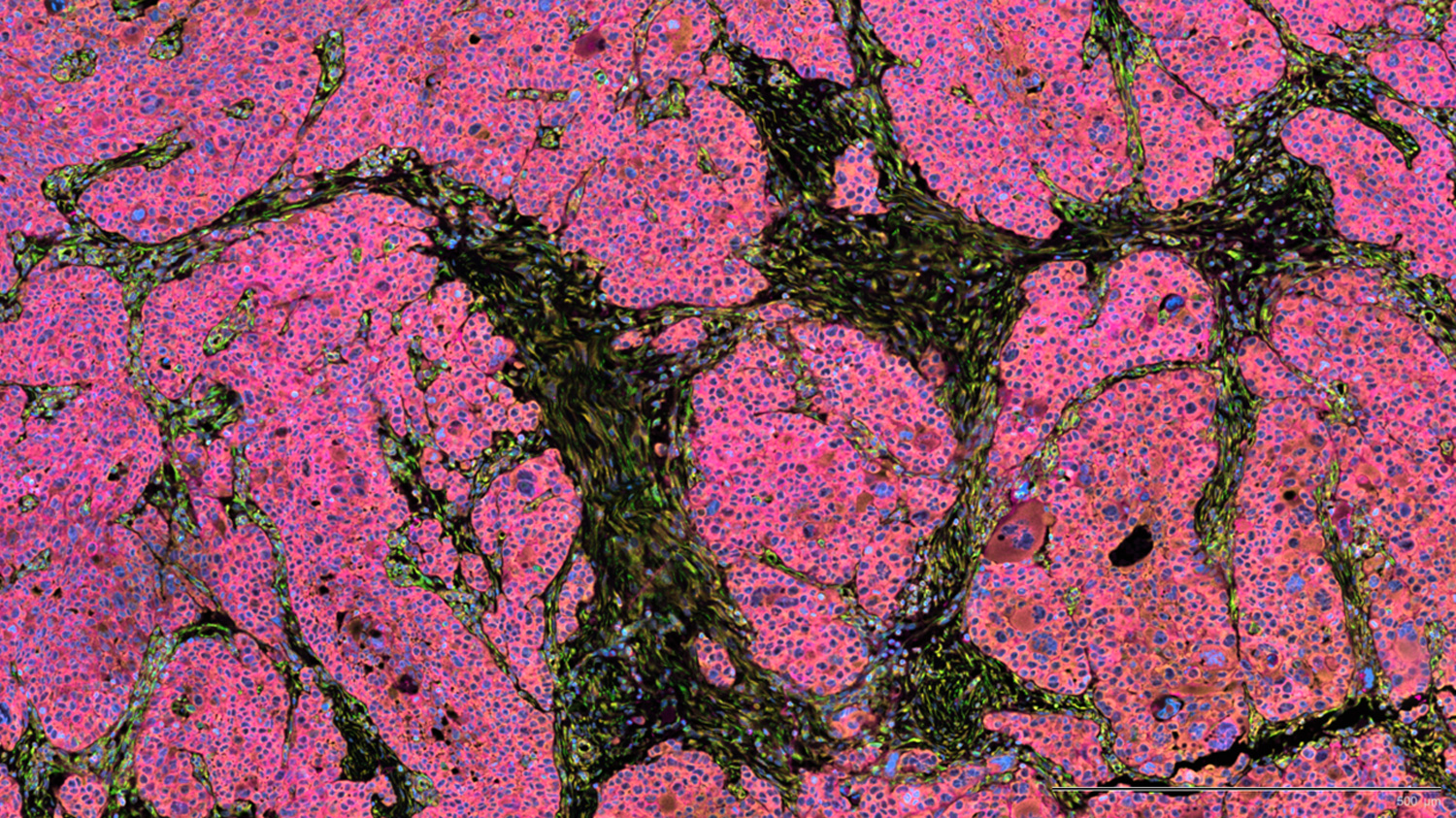
Deliverables

  • Xenium Ranger output
  • Single-cell gene-expression matrices
  • Cell segmentation masks + boundary files
  • Transcript coordinate tables (molecule-level)
  • Cell metadata (area, transcript counts, QC)
  • Clustering + cell-type annotation
  • Spatial mapping of cell populations
  • Cell–cell interaction / neighborhood analysis
  • Files compatible with Xenium Explorer
  • Publication-ready figures and analysis report

Whole-transcriptome in situ spatial transcriptomics

Atera data analysis

Deliverables

  • Cell-feature matrices
  • Transcript coordinates and segmentation boundaries
  • Tissue images and spatial metadata
  • Data QC and dataset cleaning
  • Cell-type annotation and spatial mapping
  • Tissue-domain and neighborhood analyses where relevant
  • Differential-expression and pathway analyses according to study scope
  • Publication-ready figures and analysis report
Bioinformatics analysis of Atera whole-transcriptome spatial data

FEATURED WORK

10x data analysis in practice
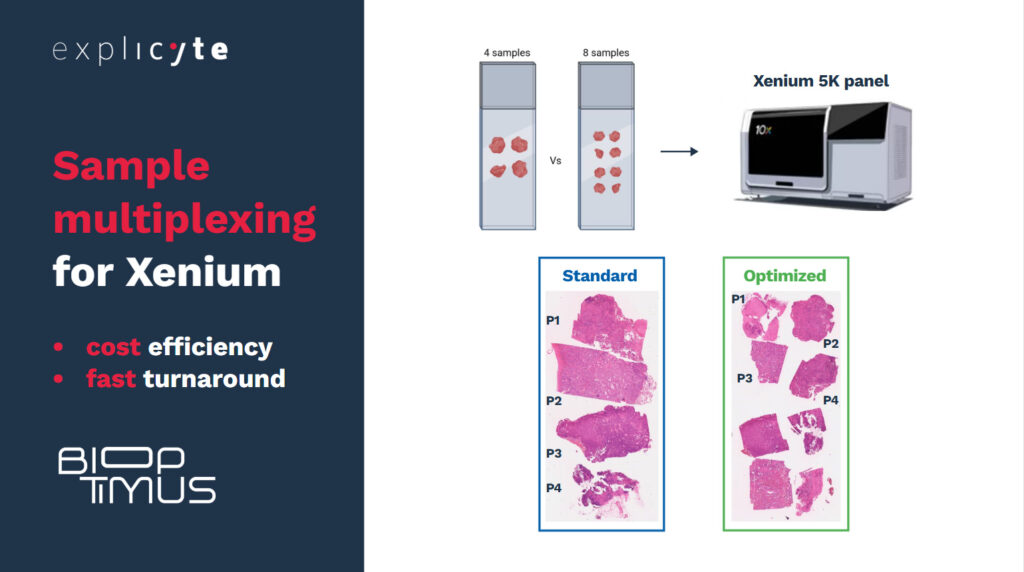
Sample multiplexing for Xenium – Bioptimus x Explicyte Case Study

This study in partnership with AI company Bioptimus addresses cost and throughput. We doubled the number of FFPE samples per Xenium slide and ran a rigorous head-to-head against the “standard…

Sample multiplexing Xenium Bioptimus

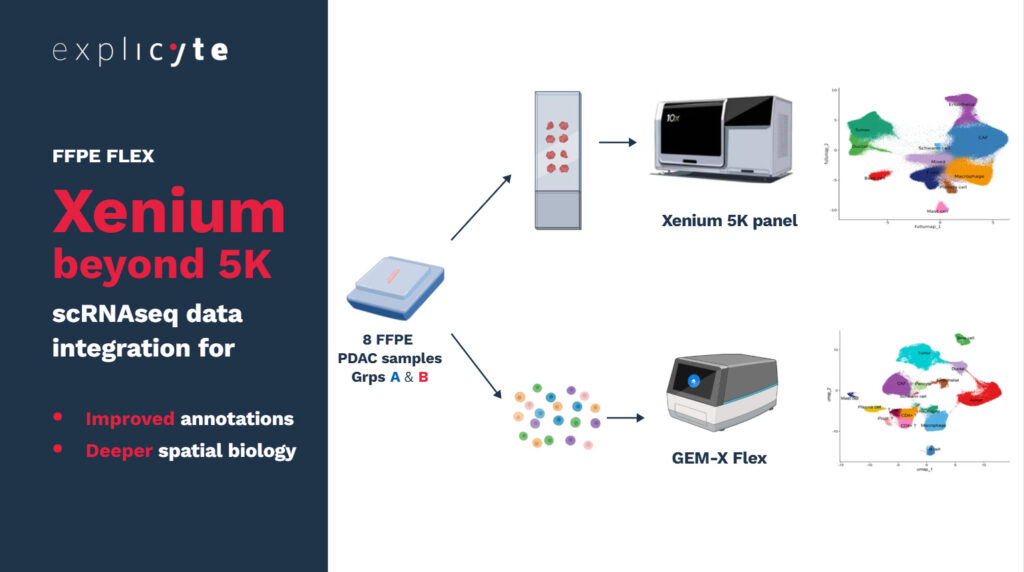
Xenium beyond 5k

On a cohort of FFPE PDAC samples, we tested whether matched scRNAseq data could unlock biology hidden from the Xenium 5K panel. By integrating scRNA-seq data with Xenium, we substantially improved …

Xenium beyond 5K

FFPE Transcriptomics: Visium HD vs. Xenium vs. Chromium — Choosing and Running 10x Genomics Platforms for Tumour Spatial and Single-Cell Analysis

Formalin-fixed, paraffin-embedded (FFPE) tissues remain the backbone of oncology biobanking, with vast archives of clinically annotated samples. With 10x Genomics’ probe-based workflows —Chromium F…

10x Genomics for FFPE Tumor Analysis Visium vs Chromium vs Xenium

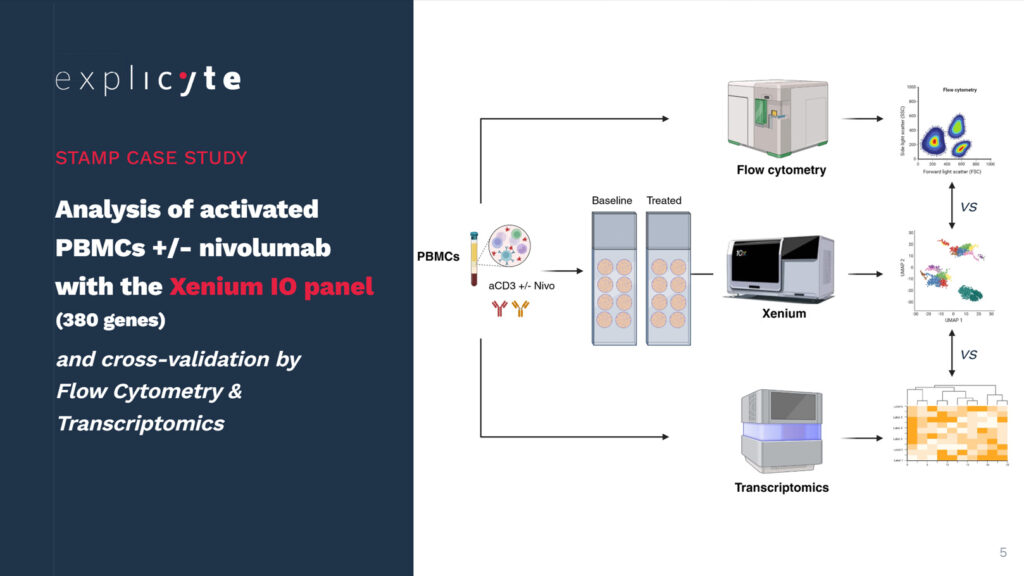
Xenium-STAMP case study: Analysis of activated PBMCs +/- nivolumab with the Xenium IO panel (380 genes)

In the context of a 10x Genomics webinar in September 2025, Explicyte presented an in vitro proof-of-concept using Xenium, demonstrating how the STAMP workflow (Pitino et al., Cell 2025) enables si…

Analysis of activated PBMCs +/- nivolumab with the Xenium IO panel (380 genes) and cross-validation by Flow Cytometry & Transcriptomics
explicyte multiomics transcriptomics CRO team

Paul Marteau, PharmD (study director), Imane Nafia, PhD (CSO), Loïc Cerf, MSc (COO), Alban Bessede, PhD (founder, CEO), Jean-Philippe Guégan, PhD (CTO)

Contact our team

Talk to a bioinformatician

Tell us which platform generated your data, the files available, cohort size and biological question. A bioinformatician will review your dataset and propose the appropriate analysis depth, timeline and deliverables.

FAQ

Frequently asked questions about 10x data analysis

How do I send you my dataset?

You can send raw sequencing data or processed outputs to our infrastructure — EU-based servers, AES-encrypted storage, and high-speed transfer. We share credentials and access instructions once the project is scoped.

We accept FASTQ files for sequencing-based single-cell and Visium studies, Cell Ranger or Space Ranger outputs, Xenium outputs, Atera platform-generated outputs, and associated sample metadata. Exact input requirements are reviewed at project kickoff according to the platform and analysis scope.

For a typical two-slide spatial project, primary analysis takes about 1 week, dataset annotation about 2 weeks, and in-depth analysis about 4 weeks. Timelines for Chromium X datasets and larger or more complex cohorts are defined at project kickoff.

Depending on the package, deliverables include processed matrices, QC reports, annotated datasets, spatial maps, and publication-ready figures. In-depth projects come with a structured analysis report you can share with collaborators or use directly in manuscripts.

Your data remains on our EU-based infrastructure for the duration of the project and is retained for a maximum of 6 months after delivery. The exact retention period is defined at project kickoff, after which the files are deleted. We do not reuse client data for other projects or internal training.

Yes. This is a standalone service. We regularly analyze datasets produced by another provider, a core facility, or your own lab, and we fit the workflow to your study design, objectives, and dataset quality.

We support Chromium X, Visium HD, Xenium and Atera datasets. Chromium X supports single-cell and single-nucleus transcriptomics, Visium HD whole-transcriptome spatial profiling, Xenium targeted single-cell spatial profiling, and Atera whole-transcriptome single-cell spatial profiling. Each dataset can be analyzed independently or integrated with complementary datasets where scientifically appropriate.

Yes. The plan is shaped around your objectives, the dataset type, and the depth you need — whether that’s characterizing cell populations, comparing treatment groups, finding biomarkers, or preparing figures for publication.

Yes. We have strong experience with FFPE-derived transcriptomic datasets, including spatial and targeted approaches, and know the specific challenges of FFPE material.

Yes. We can combine several single-cell datasets, compare multiple Xenium samples, or integrate your data with public references and cell atlases to strengthen interpretation.

Biotech and pharma teams, academic groups, and translational research labs that need fast, expert interpretation of complex transcriptomic datasets — whether as a full bioinformatics partner or targeted help on specific datasets.

No. We use current, well-established computational tools, but every project is reviewed and interpreted by an experienced data scientist. Expert interpretation is what turns a complex dataset into biologically meaningful conclusions.

We offer three levels of analysis depending on how far you want to take the dataset.

Level 1 — Primary analysis converts raw data into a quality-controlled dataset. It includes mapping and alignment to the reference, data quality control, detection of low-quality cells or barcodes, and generation of raw gene count matrices.

Level 2 — Dataset annotation adds platform-appropriate preprocessing and biological annotation. Depending on the technology, this can include optimized cell segmentation and remapping, full dataset cleaning, clustering and dimensionality reduction, and cell-type or cell-state annotation.

Level 3 — In-depth analysis addresses the biological questions behind the study. It can include differential expression, pathway and gene-set enrichment, cross-sample population comparisons, marker and functional-signature analysis, and spatial neighborhood or cell–cell interaction analysis where applicable, together with publication-ready figures and an analysis report.

For a typical two-slide spatial project, indicative timelines are approximately 1 week for Level 1, 2 weeks for Level 2, and 4 weeks for Level 3. Timelines for Chromium X datasets and larger or more complex cohorts are defined at project kickoff.

10x-certified expertise, a dedicated bioinformatics team, single-cell and spatial experience, and a track record in translational oncology and FFPE-based work — analyses that are rigorous, efficient, and aligned with the decisions you need to make.

Explicyte Oncology CRO logo

Capabilities

Modalities