Immune function & modulation

Germinal Center Reaction Assay

Does your compound strengthen or suppress the germinal center reaction behind tertiary lymphoid structure (TLS) activity?

This in vitro assay recapitulates the TLS reaction — co-culturing autologous T follicular helper and memory B cells and reading secreted IgG as a surrogate for plasma-cell differentiation — to show which way, and how far, your candidate moves the Tfh–B cell synapse.

Germinal center reaction assay: format & readouts
Format
96-well plate co-culture
Model
Autologous T follicular helper cells (Tfh, CD4+/CXCR5+) and memory B cells (Bmem, CD19+/CD27+) isolated from human tonsil
Activation
Staphylococcal enterotoxin B (SEB)
Readouts
Secreted IgG at day 7 by HTRF, as a surrogate for memory B cell differentiation into plasma cells
Direction
Reads both ways — compounds that enhance and compounds that suppress the reaction
Standards
SEB activator; checkpoint inhibitors anti-PD-1 (nivolumab), anti-PD-L1 (atezolizumab), anti-CTLA-4 (ipilimumab); anti-CD40 (bleselumab)
On request
Flow cytometry immunophenotyping, cytokine release, mechanism-of-action and signaling studies, proteomics, transcriptomics
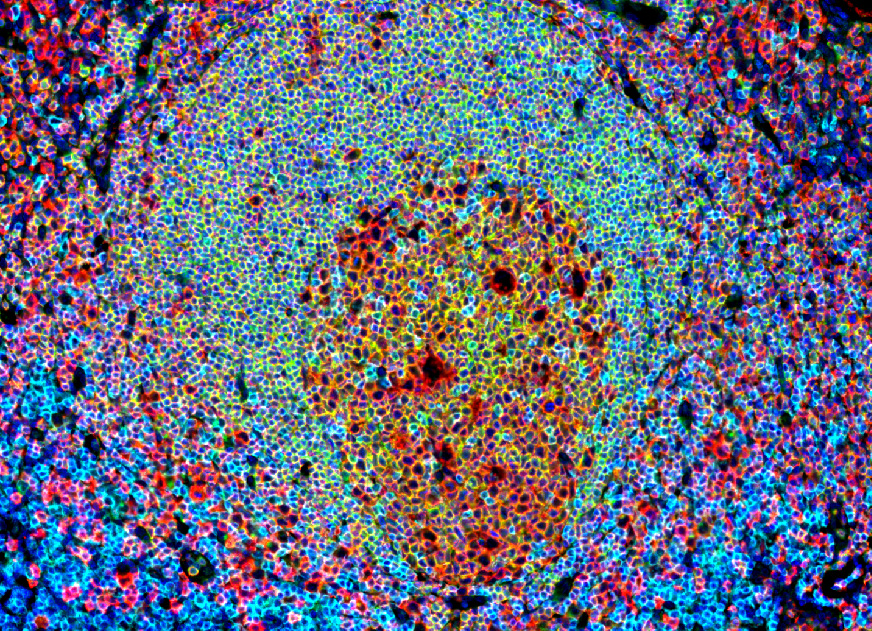
Immunohistofluorescence field of a human tonsil section illustrating the germinal center in a lymphoid structure.

Immunohistofluorescence field of a human tonsil section illustrating the germinal center in a lymphoid structure.
This image, obtained on our digital pathology platform, highlights the presence and organization of interactive Tfh (CD4+/CXCR5+) and B cells (CD20+). These features make tonsils our tissue of choice for isolating Tfh (CD4+/CXCR5+) and memory B (CD19+/CD27+) cells for our in vitro assay.

Imane Nafia, PhD, Chief Scientific Officer at Explicyte

The recent literature has brought B cells and the germinal center reaction to the forefront of how patients respond to immunotherapy. This assay measures that biology directly: partners can see whether their compound increases or decreases antibody output from a human Tfh–B cell co-culture, and read the effect against known checkpoint inhibitors.

Imane Nafia, PhD

Chief Scientific Officer, Explicyte

Assay principle

From a human tonsil co-culture to an IgG readout
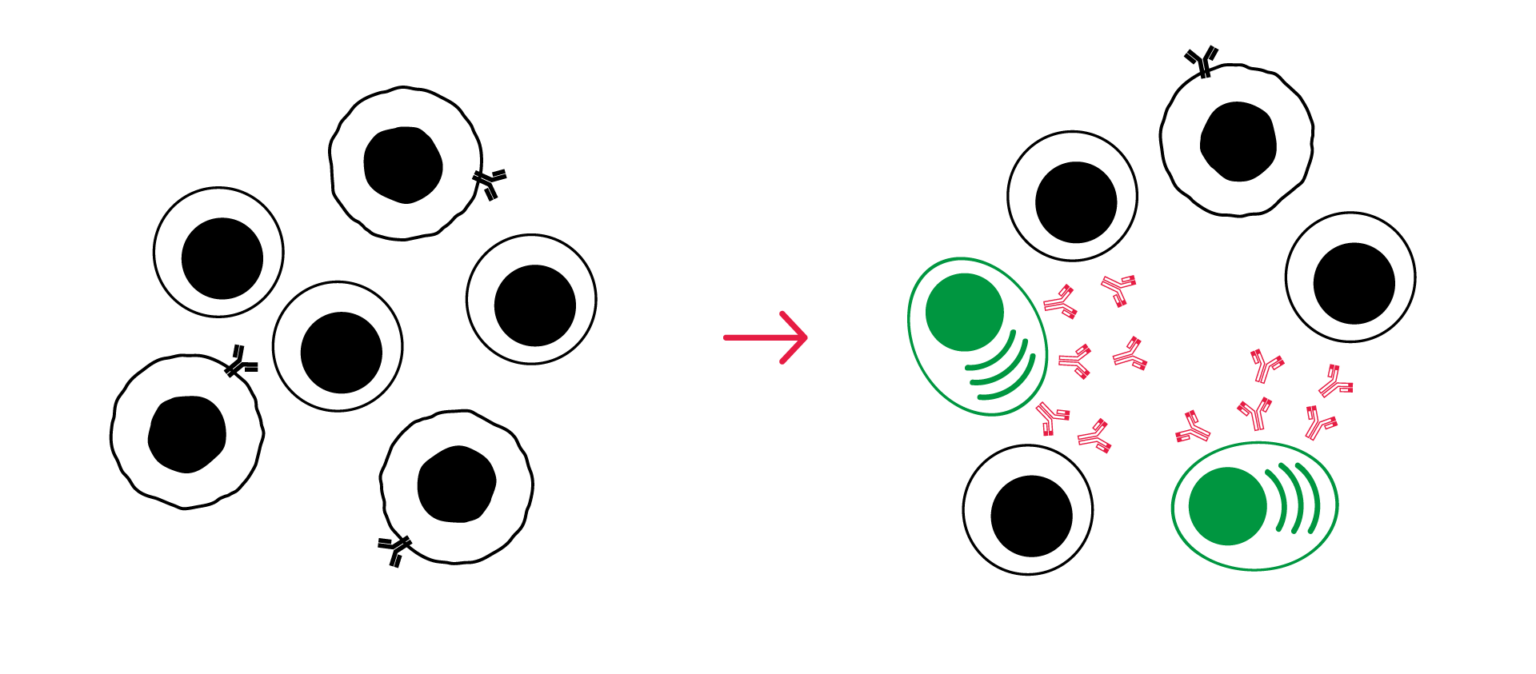
Germinal center reaction assay workflow: Tfh and memory B cell co-culture, SEB activation, day-7 IgG readout by HTRF

1

Isolate and co-culture

Autologous T follicular helper cells (Tfh, CD4+/CXCR5+) and memory B cells (Bmem, CD19+/CD27+) are isolated from human tonsil and co-cultured in a 96-well plate with the test compound — alone, or in combination with immune checkpoint inhibitors or chemotherapies.

2

Activate the synapse

Staphylococcal enterotoxin B (SEB) triggers the Tfh–Bmem synapse, driving the germinal center reaction that the compound is tested against.

3

Measure IgG at day 7

Secreted IgG is quantified in the supernatant after seven days by HTRF, as a surrogate for memory B cell differentiation into plasma cells — showing whether the compound raised or lowered antibody output.

illustrative Germinal center reaction data

Tfh–B cell co-culture: example results

Isolating and Characterizing the two cell types

Freshly isolated follicular helper (Tfh) T and memory B (Bmem) cells were characterized by multiplexed flow cytometry. Tfh cells were identified as CD4+/CXCR5+, and Bmem cells as CD19+/CD27+, both before and after isolation, confirming their enrichment.
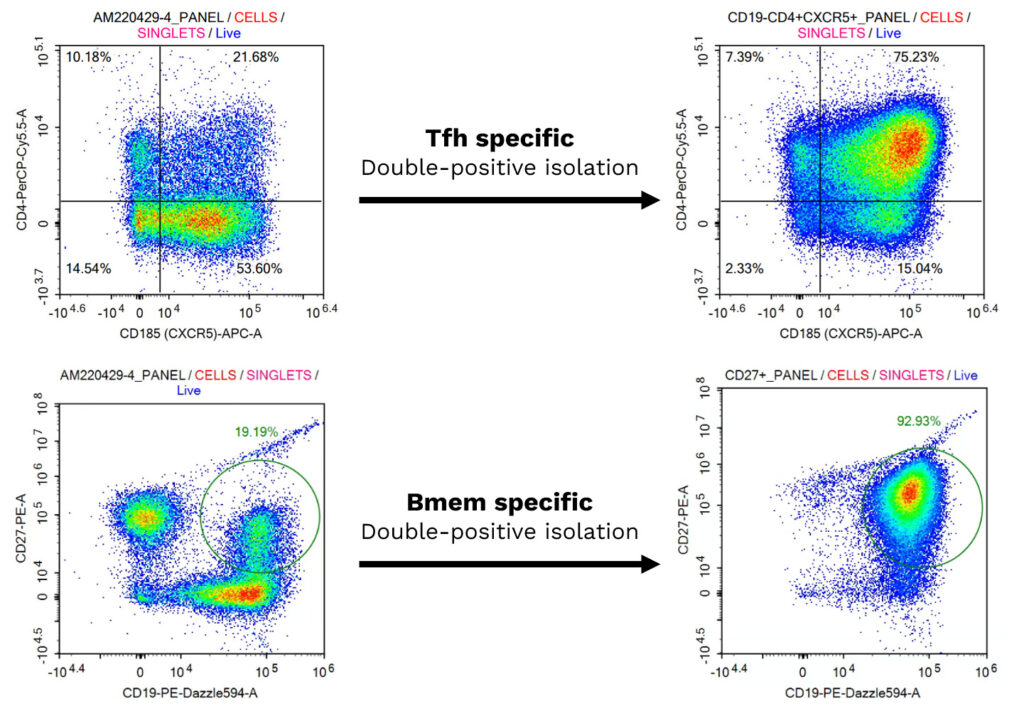
Flow cytometry characterization of Tfh (CD4+/CXCR5+) and memory B (CD19+/CD27+) cells before and after isolation

Reading both directions against known antibodies

Tfh and Bmem cells were co-cultured and supernatant IgG measured at day 7 by HTRF, with SEB as the activator. Anti-PD-1 (nivolumab), anti-PD-L1 (atezolizumab) and anti-CTLA-4 (ipilimumab) raised Tfh-driven activation of Bmem cells, while anti-CD40 (bleselumab) lowered it — showing the assay resolves both enhancement and suppression.
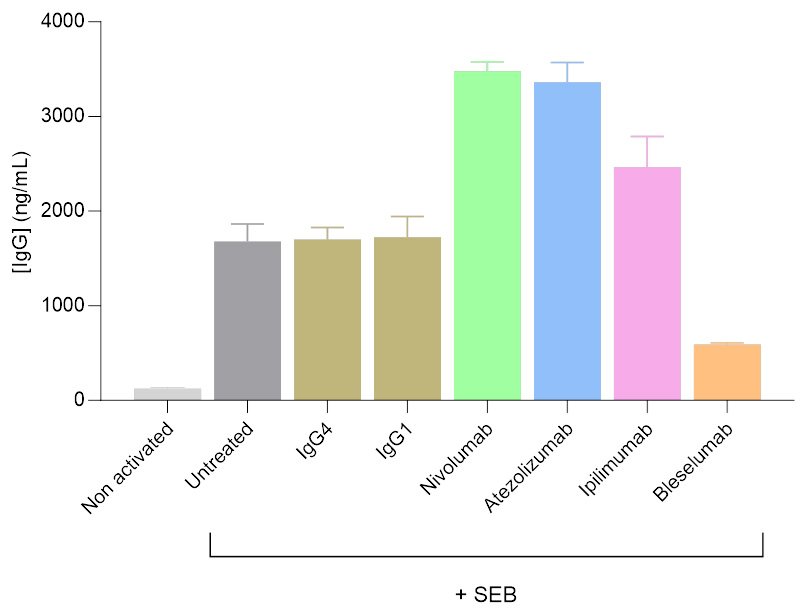
IgG secretion from an SEB-activated Tfh/Bmem co-culture modulated by anti-PD-1, anti-PD-L1, anti-CTLA-4 and anti-CD40 antibodies

Resolving a dose-dependent suppressor

In the same SEB-activated system, kynurenine produced a dose-dependent decrease in IgG secretion, both with and without anti-PD-1 (nivolumab) — an example of the assay quantifying a graded inhibitory effect.
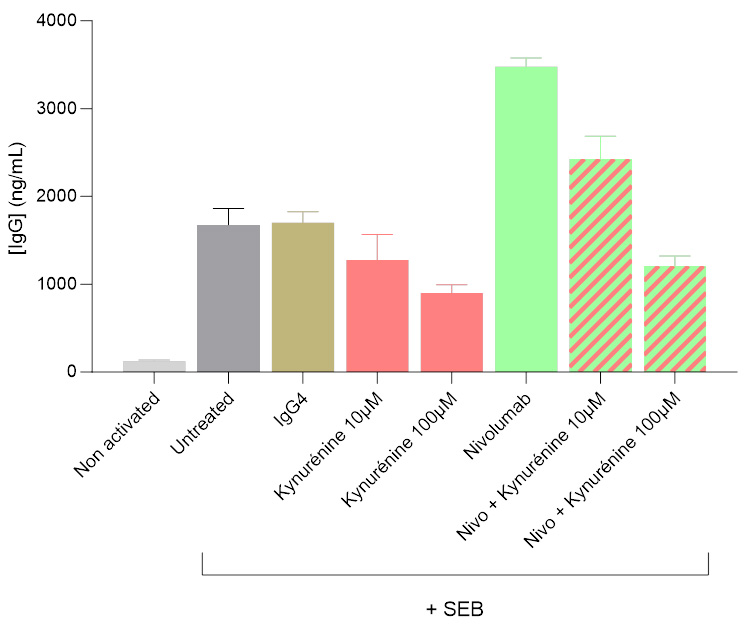
Dose-dependent decrease in IgG secretion from a Tfh/Bmem co-culture treated with kynurenine, with and without anti-PD-1

Making a difference as a preclinical CRO in oncology

A functional readout of the germinal center reaction, benchmarked and built to extend

100+ in vitro campaigns

Ten years running functional immuno-oncology assays for pharma and biotech partners, with a PhD-level study director on every program from design to final report.

More about us →

Depth in TLS and B cell biology

Co-authors of peer-reviewed publications on the role of TLS in immunotherapy response, we have also developed ISO-certified pathology services for TLS scoring for IO trials.

Explore TLS detection & scoring →

Benchmarked in both directions

Every campaign runs against known modulators — checkpoint inhibitors that raise the IgG readout and antibodies that lower it — so your compound’s effect is placed on a scale, not reported in isolation.

Discuss your controls →

Extend past the IgG readout

Add flow cytometry immunophenotyping, cytokine release, proteomics, or transcriptomics to the same co-culture when you need mechanism-of-action detail, not just the functional result.

See our platforms →

The Explicyte team at their Bordeaux laboratory

Paul Marteau, PharmD (study director), Imane Nafia, PhD (CSO), Loïc Cerf, MSc (COO), Alban Bessede, PhD (founder, CEO), Jean-Philippe Guégan, PhD (CTO)

Contact our team

Discuss your germinal center program

Tell us the question you need the germinal center reaction assay to answer — which compounds, which controls, and the readouts beyond IgG you want on the same co-culture. A PhD-level study director will scope it with you.

Germinal center reaction assay: common questions

Frequently asked questions

What does the germinal center reaction assay measure?

It measures whether your compound modulates the germinal center reaction in vitro — the Tfh–B cell interaction that drives antibody production. Secreted IgG is the readout, as a surrogate for memory B cell differentiation into plasma cells.

Autologous T follicular helper cells (Tfh, CD4+/CXCR5+) and memory B cells (Bmem, CD19+/CD27+) isolated from human tonsil, co-cultured in a 96-well plate. Tonsil is the tissue of choice because it is rich in the interacting Tfh and B cell populations the assay depends on.

Secreted IgG in the co-culture supernatant, quantified at day 7 by HTRF. A rise or fall in IgG reflects how the compound shifted Bmem activation and differentiation into antibody-producing plasma cells.

Staphylococcal enterotoxin B (SEB) activates the Tfh–Bmem synapse. Compound effects are read against known modulators: the checkpoint inhibitors nivolumab (anti-PD-1), atezolizumab (anti-PD-L1) and ipilimumab (anti-CTLA-4), and the anti-CD40 antibody bleselumab.

Yes. In our data, checkpoint inhibitors raise IgG output while anti-CD40 (bleselumab) lowers it, so the assay resolves compounds that strengthen the reaction and compounds that dampen it — on the same readout.

This is an in vitro functional assay of the germinal center reaction. TLS detection and scoring is a separate service that identifies and quantifies tertiary lymphoid structures in tissue by digital pathology. The two are complementary: one tests how a compound moves the reaction, the other reads how TLS appear in a cohort.

On request, flow cytometry immunophenotyping (activation markers, immune checkpoint expression), cytokine release, mechanism-of-action and signaling studies, proteomics, and transcriptomics — run on the same co-culture.

Yes. The test compound can be run alone or in combination with immune checkpoint inhibitors or chemotherapies, so you can see how it modulates the reaction on its own and how it behaves alongside a standard-of-care agent.

Explicyte Oncology CRO logo

Capabilities

Modalities