Multiplex flow cytometry services — from PBMCs to tumor cells

Explicyte delivers multiparameter flow cytometry for immune and tumor-cell phenotyping across PBMCs, blood-derived cells, dissociated tissues and preclinical samples, with panel design, acquisition, in-house analysis and biological interpretation.

Flow cytometry data published in

Science Advances logoBMC CancerOncoImmunologyClinical cancer research journal logoannals of oncology

Multiplex flow cytometry CRO services

Why teams run flow cytometry with us

10+ years of flow cytometry experience

From PBMCs to dissociated tumor and normal tissues, our team has supported flow cytometry studies since 2015, analyzing more than 1,000 samples per year across translational and preclinical programs.

Custom panel design — up to 17 markers

Our PhD-level study directors design custom panels of up to 17 markers around the biological question, including surface, intracellular and phospho-proteins where compatible.

From FlowJo analysis to publication-ready insights

Our in-house team combines FlowJo-based gating and population analysis with t-SNE visualization and biological interpretation, delivering publication-ready results.

From your objectives to an interpreted dataset

How we run flow cytometry studies

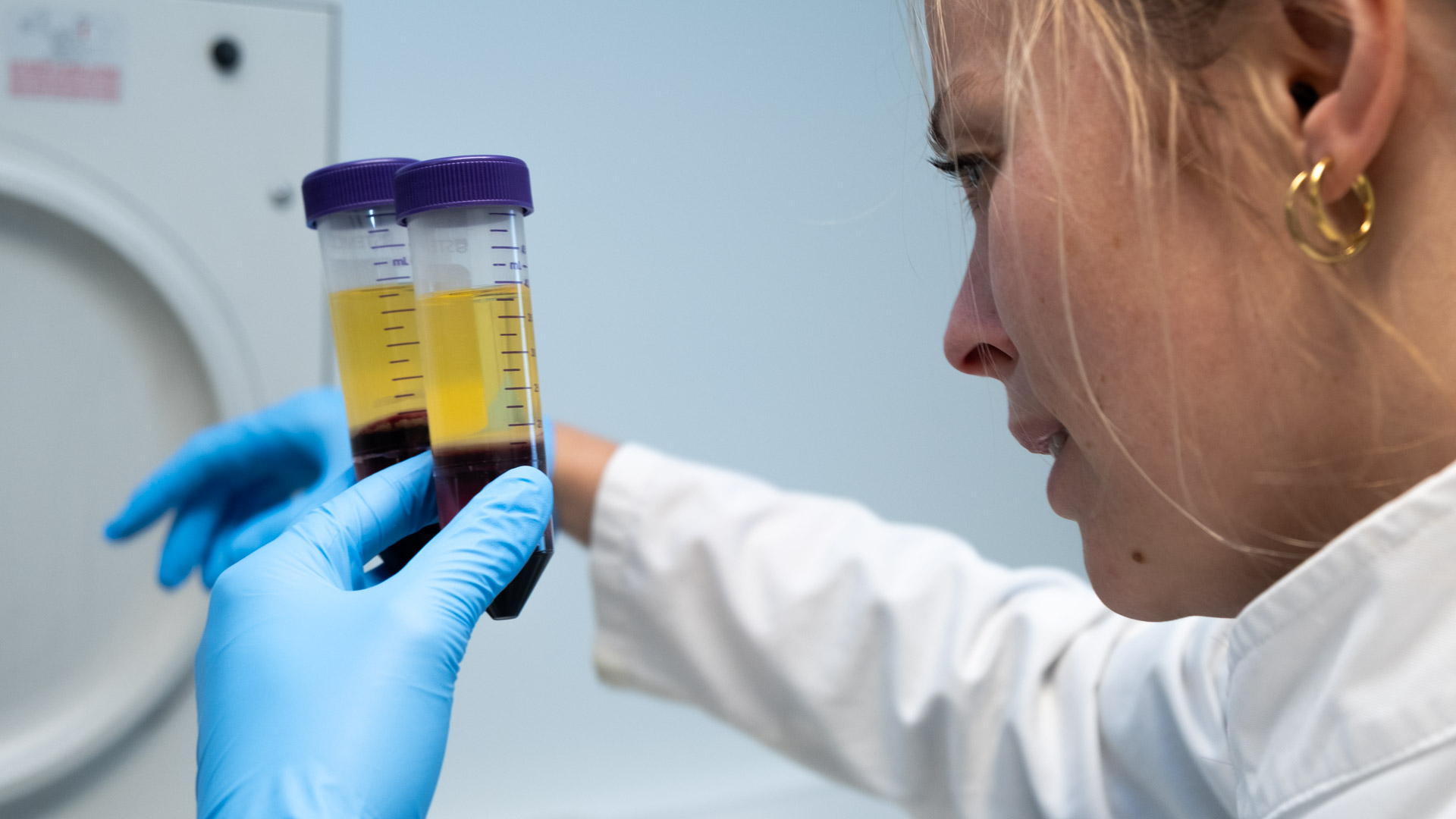
  1. Explicyte technician preparing immune cells for multiplex flow cytometry
    1

    Objectives, samples, and study design

    A PhD-level study director reviews the biological question, samples, cohort and timeline, then proposes a fit-for-purpose panel of up to 17 markers together with the fluorochrome strategy, controls and analysis plan.

  2. Explicyte flow cytometry services
    2

    Sample preparation and QC

    Preparation is adapted to the sample type and can include PBMC processing or thawing, tissue dissociation, cell counting, viability assessment and enrichment or depletion steps where required.

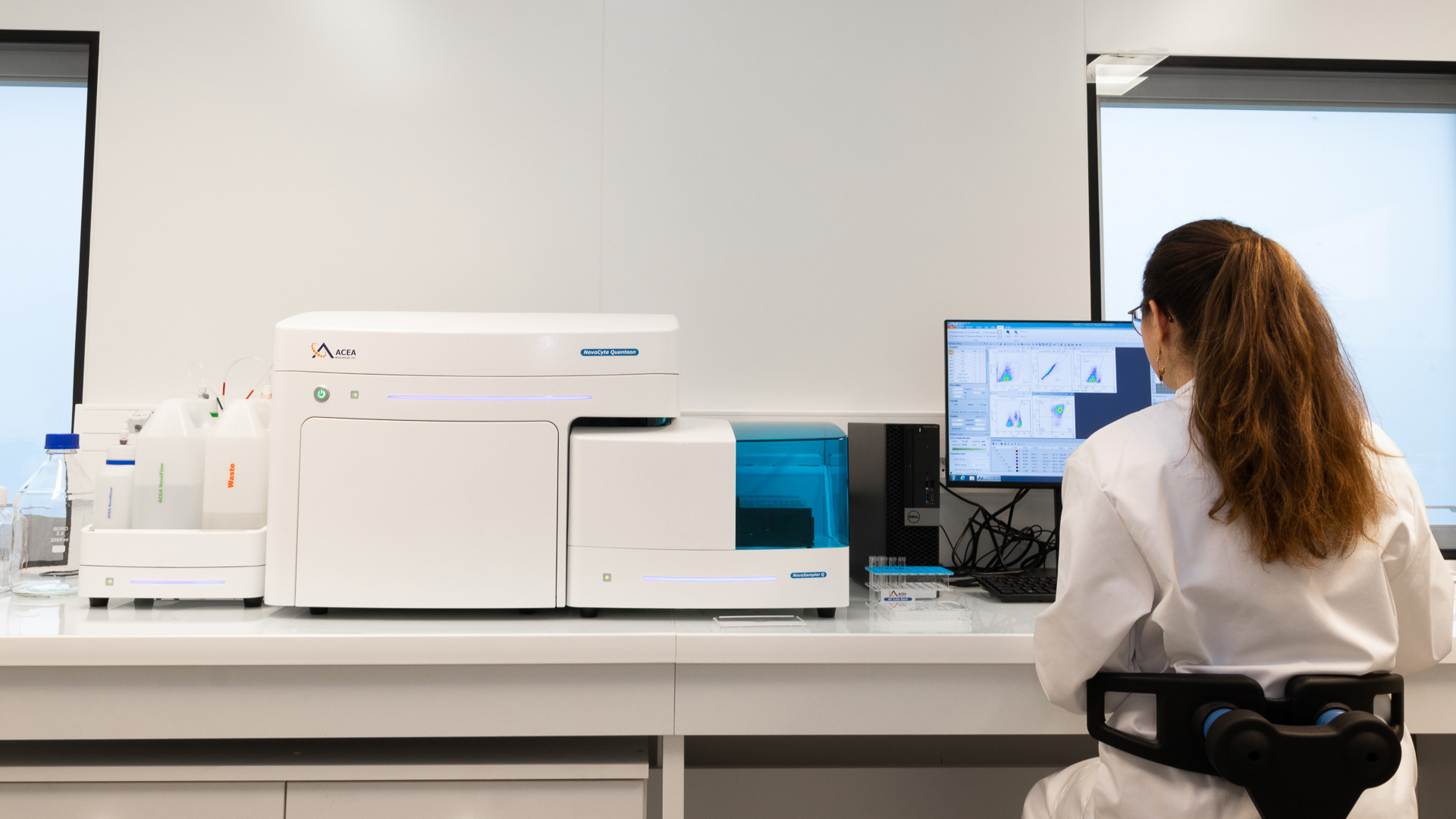
  3. Agilent NovoCyte Quanteon flow cytometer in operation at Explicyte
    3

    Staining, controls, and acquisition

    Samples are stained with the selected panel and acquired with appropriate compensation and assay controls. Single-stain controls and FMO controls are included where required to support reproducible population definition. Current Explicyte workflows support up to 17 parameters.

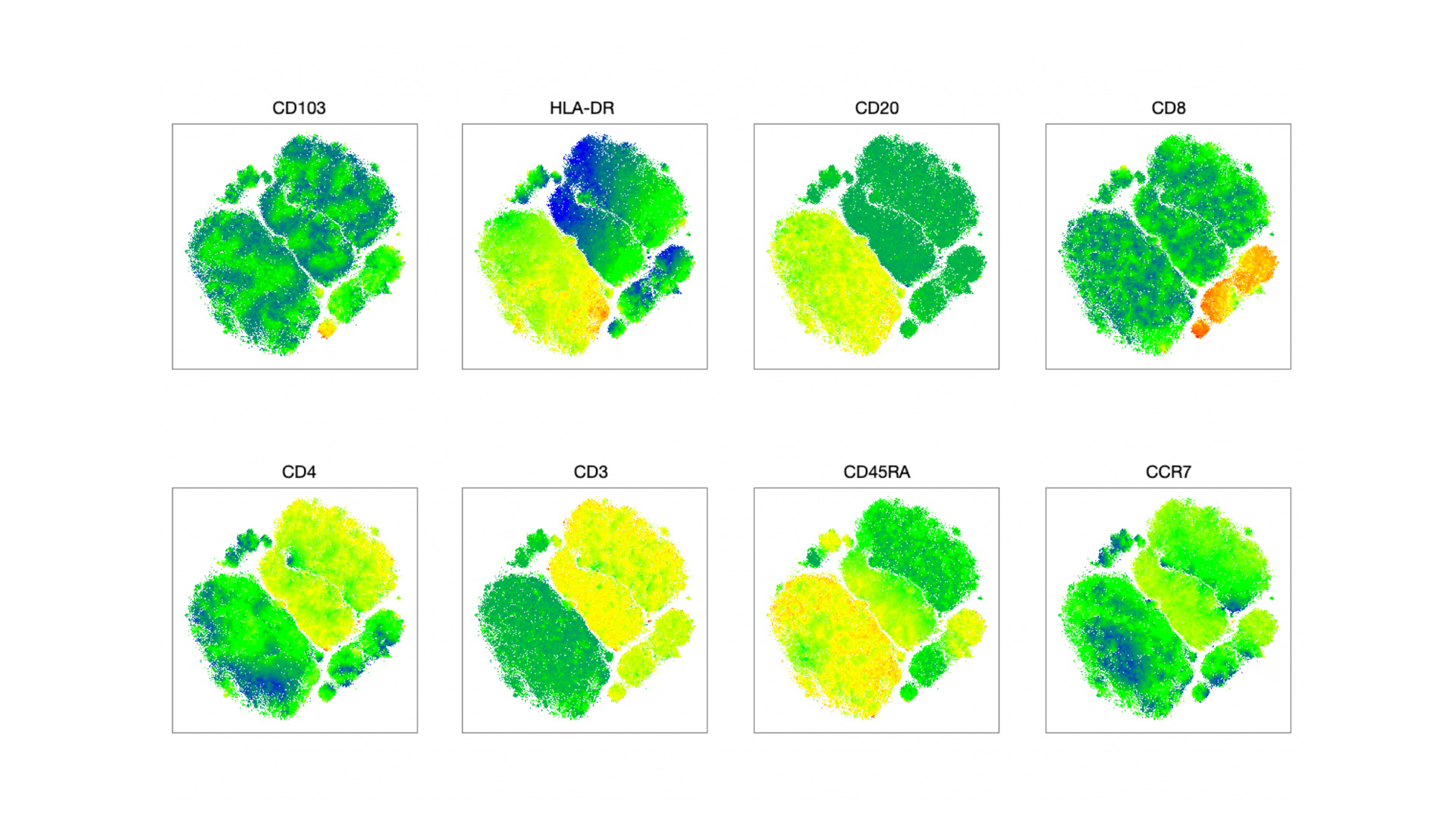
  4. High-dimensional immune-cell visualization from a flow cytometry dataset analyzed by Explicyte
    4

    Data analysis and biological interpretation

    Our in-house team performs compensation review, gating, population quantification and marker-expression analysis, with batch-effect assessment and correction where appropriate. t-SNE or other high-dimensional visualization can also be applied when relevant, with results interpreted in the context of the study question.

Instrument
Agilent NovoCyte Quanteon, a 4-laser flow cytometer. Explicyte currently runs custom flow-cytometry panels with up to 17 markers.
Panel design
Established lymphoid and myeloid workflows plus custom panel design, including surface, intracellular and phospho-markers where compatible.
Sample types
PBMCs and other blood-derived cell preparations, cell cultures, dissociated tumor or normal tissue, and preclinical tumor or organ samples.
Species
Human and mouse. Additional species can be discussed according to antibody availability and study requirements.
Controls
Compensation controls, viability controls and FMO controls where appropriate, with study-specific biological controls defined during panel design.
Readouts
Cell-population frequencies, marker positivity and expression intensity, with absolute counts available when supported by the acquisition design.

Flow cytometry data & analysis deliverables

  • Raw FCS files and acquisition QC
  • Panel, control and gating-strategy documentation
  • Cell-population frequencies and subset quantification
  • Marker-expression analysis (% positive, MFI and related metrics)
  • Batch-effect assessment and correction where appropriate
  • High-dimensional and comparative analyses where relevant
  • Publication-ready figures and biological interpretation

Representative flow cytometry data

Immune phenotyping across peripheral and tumor samples
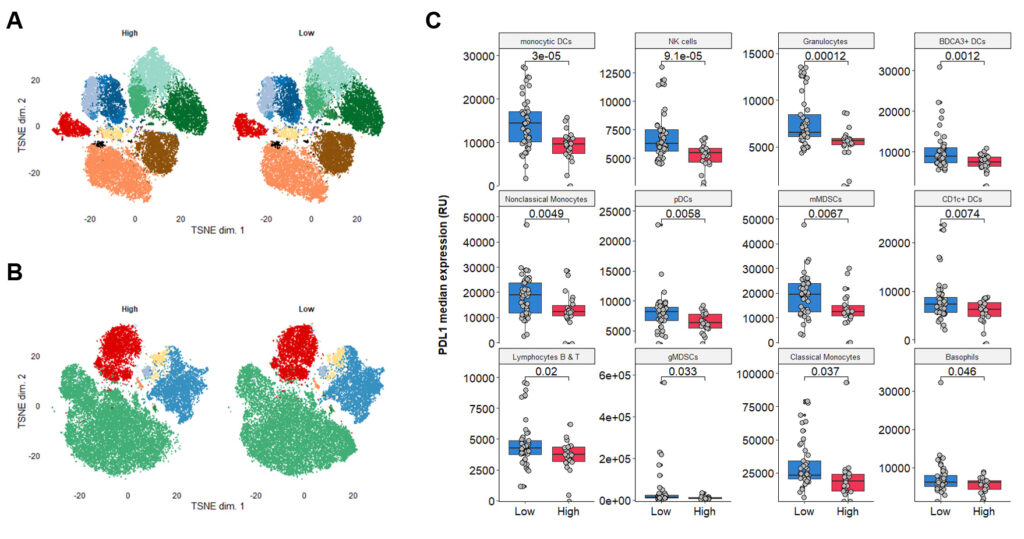
PBMC immune profiling links plasma arginine to ICI outcome

Matched PBMC–plasma analysis associated low baseline arginine with increased PD-L1 expression in circulating myeloid populations.

Cohorts: Discovery cohort: 77 patients. Independent validation cohort: 295 patients treated with immune-checkpoint inhibitors.

Immune profiling: Matched PBMCs were analyzed with lymphoid and myeloid flow panels, including t-SNE visualization and PD-L1 expression by MFI.

Finding: Low plasma arginine was associated with poorer ICI outcome and higher PD-L1 expression across several myeloid-cell subsets.

PBMC immune profiling links plasma arginine to ICI outcome

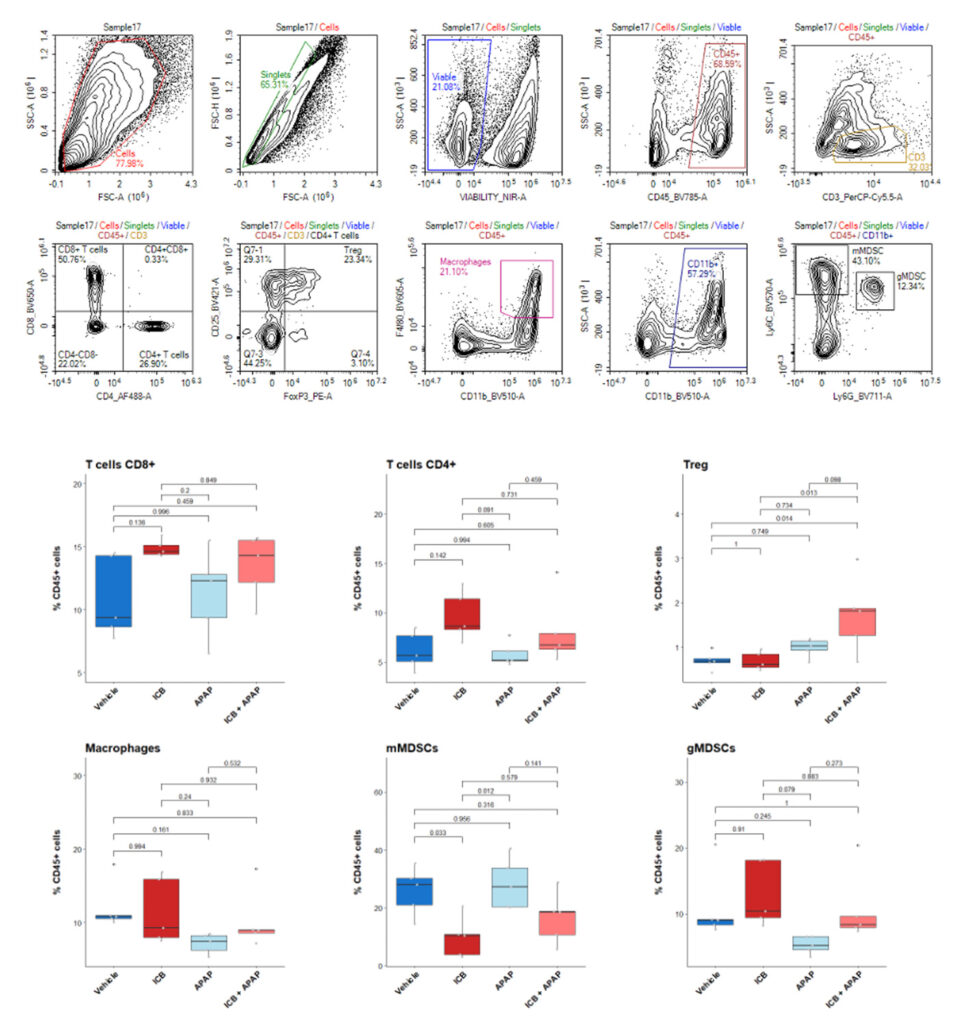
Acetaminophen reshapes the immune response to checkpoint blockade

Multiplex flow cytometry linked acetaminophen exposure to increased regulatory T-cell infiltration and reduced efficacy of immune-checkpoint blockade.

Preclinical model: MC38 tumor-bearing mice treated with immune-checkpoint blockade ± acetaminophen.

Immune profiling: Dissociated tumors were analyzed by flow cytometry to quantify lymphoid and myeloid immune populations.

Key finding: Acetaminophen increased intratumoral regulatory T cells and reduced checkpoint-blockade efficacy.

Clinical link: Detectable plasma acetaminophen was also associated with poorer outcomes in ICI-treated cancer patients.

Acetaminophen reshapes the immune response to checkpoint blockade
explicyte multiomics transcriptomics CRO team

Paul Marteau, PharmD (study director), Imane Nafia, PhD (CSO), Loïc Cerf, MSc (COO), Alban Bessede, PhD (founder, CEO), Jean-Philippe Guégan, PhD (CTO)

Contact our team

Discuss your flow cytometry project

Tell us your biological question, sample type, cohort size and the populations or markers you want to investigate. Our team will help define the panel, controls, acquisition strategy and analysis plan.

Answers about multiplex flow cytometry services

Frequently asked questions

What is multiplex flow cytometry, and when should I use it?

Multiplex flow cytometry measures multiple protein markers on individual cells to quantify immune-cell populations and phenotypic states. It is suited to immunophenotyping, pharmacodynamic monitoring, treatment-response studies and characterization of circulating or tissue-derived immune populations.

Explicyte designs custom flow-cytometry panels with up to 17 markers. The final panel size depends on the biological question, marker expression, fluorochrome compatibility, sample quality and the cell populations that need to be resolved.

A PhD-level study director starts from the biological question, sample type and cell populations of interest to propose a fit-for-purpose panel. We design custom panels with up to 17 markers, including surface, intracellular and phospho-proteins where compatible with the staining workflow. The final panel and control strategy are defined according to marker expression, fluorochrome compatibility and the populations that need to be resolved.

Common matrices include PBMCs and other blood-derived cell preparations, cell cultures, dissociated tumor or normal tissue, and preclinical tumor or organ samples. Feasibility and preparation are assessed according to cell number, viability and the selected panel.

Panel design includes appropriate compensation controls and biological controls, with FMO controls used when they improve definition of difficult or low-expression populations. Gating strategy and QC criteria are defined before cohort analysis.

Typical outputs include population frequencies, marker positivity and expression intensity such as MFI. Absolute counts can also be generated when supported by the acquisition and sample design.

Yes. Flow cytometry provides quantitative protein-level immune phenotyping, Chromium X resolves transcriptional cell states, and Olink Reveal captures circulating protein changes. Matched analyses can connect systemic signals with changes in immune-cell populations.

Yes. Our team can review FCS files and existing gating strategies, perform population and marker-expression analyses, assess and correct batch effects where appropriate, and integrate the results with matched transcriptomic, proteomic or clinical datasets.

Yes. We analyze both human translational samples and preclinical-derived cell or tissue samples. Study feasibility depends on sample preparation, antibody availability, species compatibility and the populations to be measured.

Explicyte Oncology CRO logo

Capabilities

Modalities