
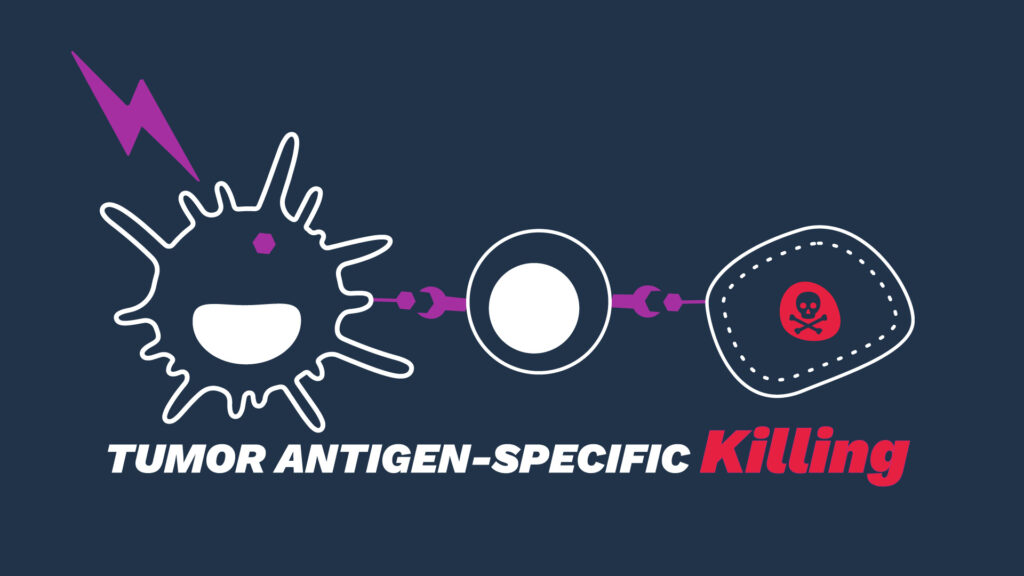
Over the past five years, Explicyte has supported cancer-immunotherapy programs built on inducing or enhancing a specific anti-tumor immune response. This case study covers our capacity for the advancement of cancer vaccines (peptide-, DC-, DNA-, or RNA-based), cytokine therapies, oncolytic virus–based therapies, immune modulators such as STING agonists, and immune adjuvants.
Specific tumor antigen presentation: in-vitro efficacy and mechanism
We designed a cell-based system to assess how well a compound helps antigen-presenting cells — dendritic cells in particular — capture and cross-present tumor antigens, and then prime CD8 cytotoxic T cells against cancer cells. The design flexes to different compound types, modes of action, and treatment schedules, so one platform reads across vaccines, oncolytic viruses, cytokine therapies, STING agonists, and adjuvants.
Enhanced antigen presentation
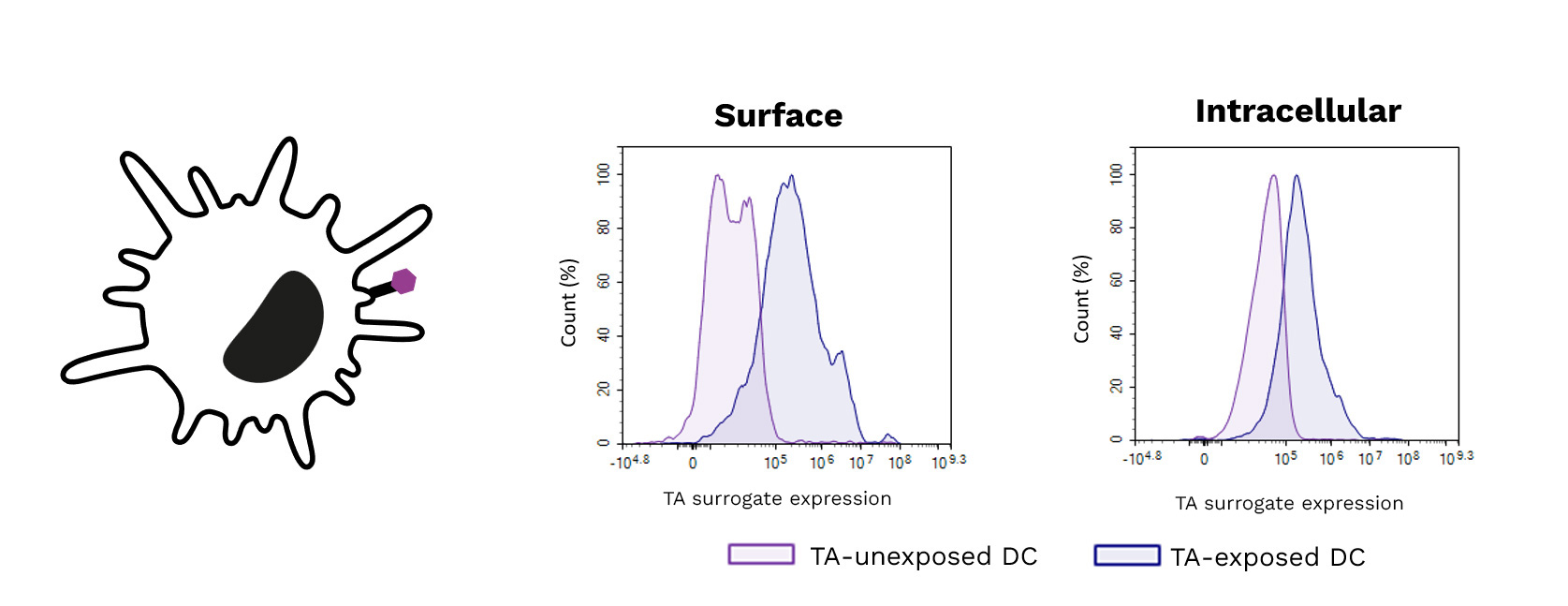
Exposing DCs to a target tumor-antigen peptide raised their antigen presentation, shown by the increase in the surrogate presentation marker — surface (left) and intracellular (right) — using specific antibodies.
Improved CD8 T-cell priming
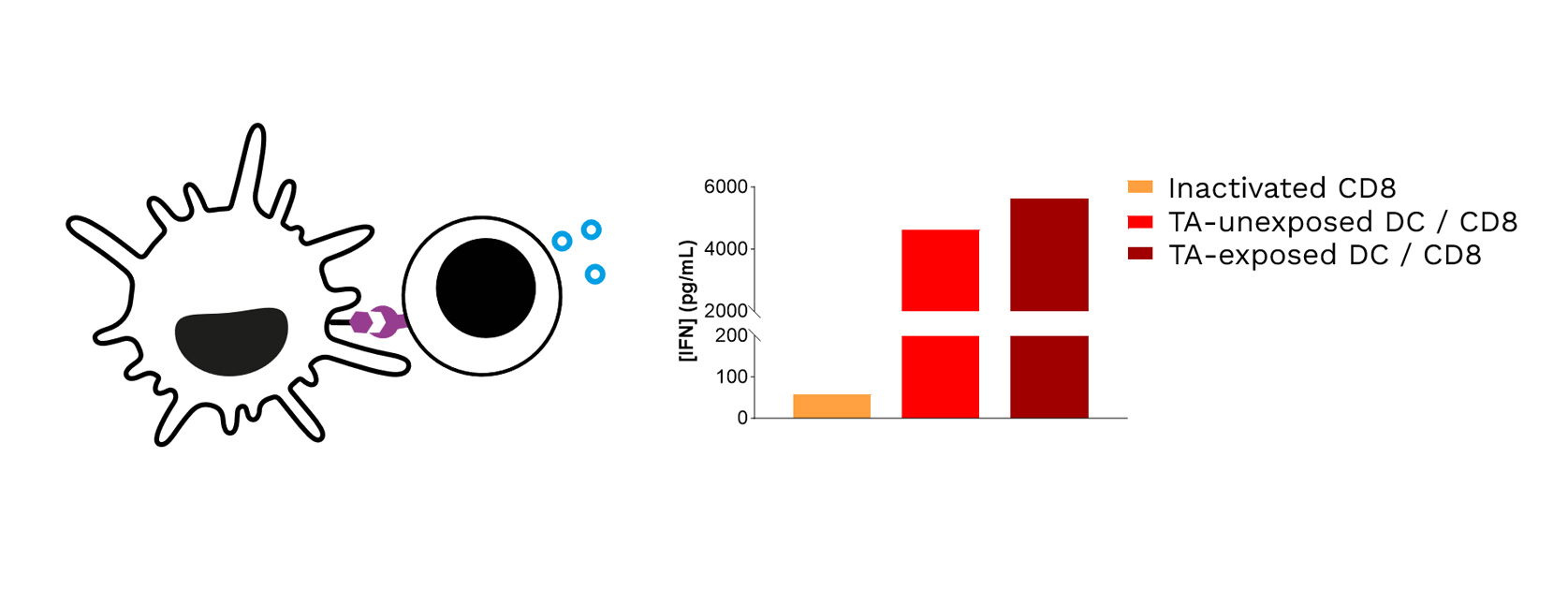
Target-antigen-exposed DCs led to improved priming of CD8 T cells, shown by higher IFN-γ released in CD8 T cell / DC co-cultures.
Antigen-specific tumor killing
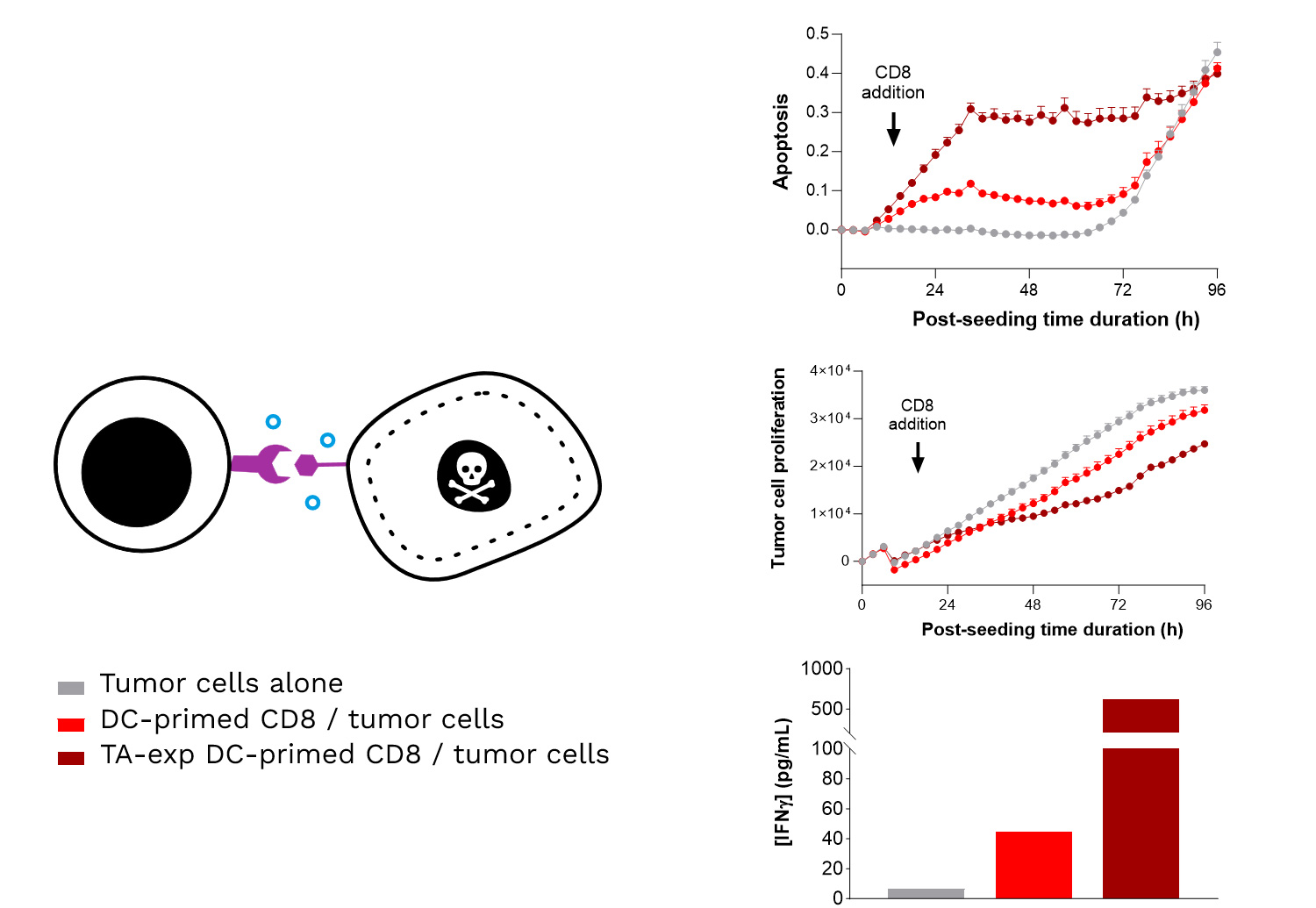
CD8 T cells primed by antigen-exposed DCs induced adaptive killing of SK-MEL-5 (target-antigen-positive) melanoma cells — apoptosis and tumor-cell count monitored over ~4 days — with a matching rise in IFN-γ versus priming by unexposed DCs.
Enhancing DC-mediated tumor antigen presentation induces a specific, optimized, adaptive effector T cell–mediated killing response.
How it works
A step-by-step overview of our tumor antigen-specific T cell killing assay:
- Choose the tumor cell lines — by target-antigen expression and by relevance to the indication of interest (100+ in-house human tumor cell lines).
- Isolate the PBMC-derived populations — monocytes and CD8 T cells for autologous co-cultures.
- Generate monocyte-derived APCs — differentiated and mature dendritic cells.
- Run DC–CD8 co-cultures — for DC-mediated priming and activation of the CD8 cells.
- Run CD8–tumor co-cultures — to capture the tumor-targeted cytotoxic response.
- Set treatment windows — matched to the expected mode of action and any combination strategy under evaluation.
- Read each cell component — DC cytokines and surface markers, CD8 cytokines and surface markers, target-tumor apoptosis and count.
Confirming target-antigen expression in FFPE cohorts
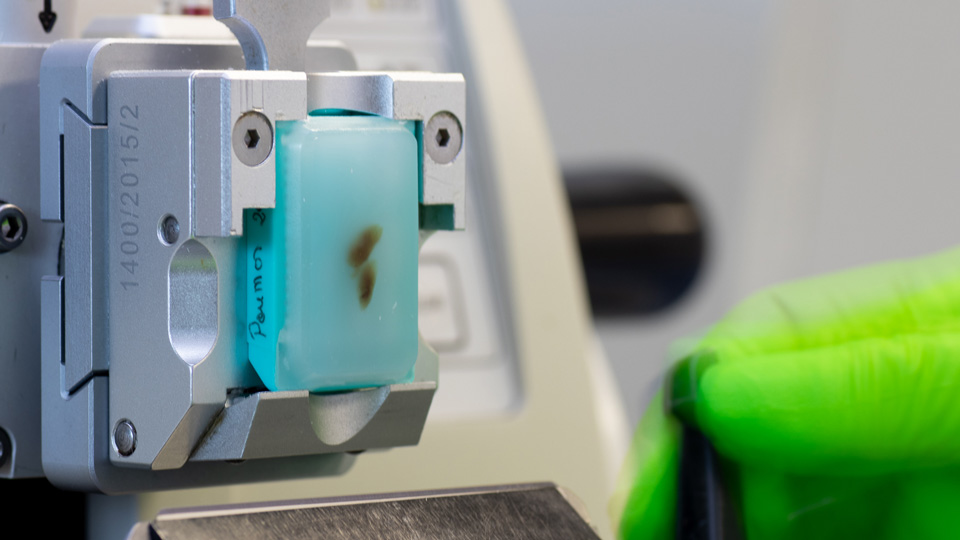
Before the functional work, our translational team can explore or confirm target tumor-antigen expression across cancer indications, starting from FFPE cohorts:
- Single-cell RNA-seq — identify and quantify tumor-antigen expression and heterogeneity, with the immune landscape.
- Xenium single-cell spatial transcriptomics — map antigen patterns and tumor heterogeneity against the immune microenvironment.
- GeoMx digital spatial profiling — antigen mapping within the tumor microenvironment.
- Digital pathology — multiplexed antigen analysis within the tumor microenvironment.