
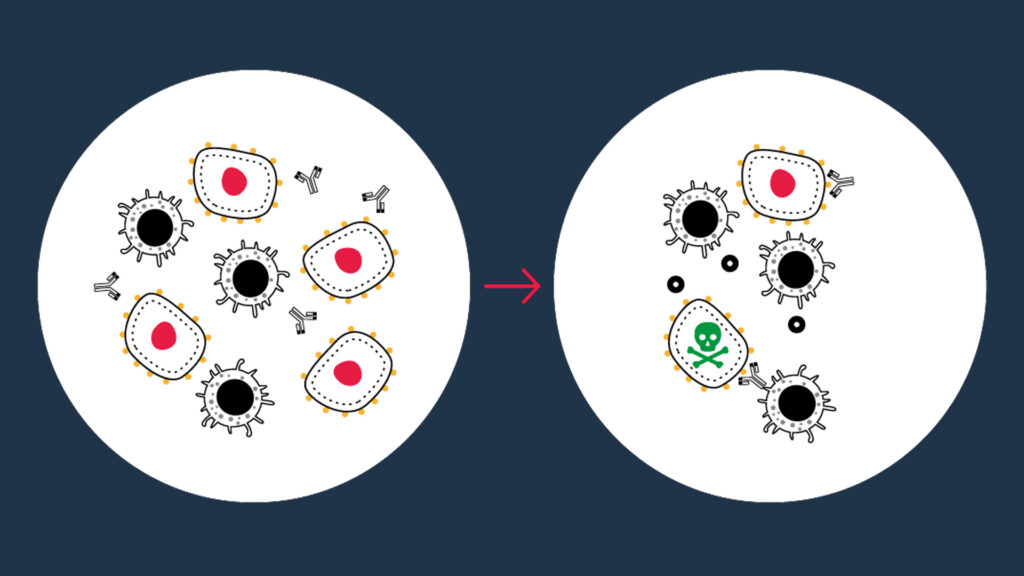
Antibody-dependent cell-mediated cytotoxicity, or ADCC, is a key immune mechanism by which antibody-coated target cells are recognized and eliminated by immune effector cells. Several cells of the innate immune system, including natural killer cells and granulocytes, express CD16, a low-affinity Fc receptor for immunoglobulins. Upon binding to the Fc region of antibodies attached to target cells, CD16 triggers immune cell activation and target cell destruction. This mechanism is central to the activity of several therapeutic monoclonal antibodies used in oncology, where antibody binding to tumor-associated antigens promotes immune-mediated tumor cell killing.
Study objective
The objective of this case study was to evaluate the ADCC activity of two clinically validated therapeutic monoclonal antibodies:
- Trastuzumab, targeting HER2;
- Cetuximab, targeting EGFR.
The assay was designed to assess the ability of these antibodies to enhance primary NK cell-mediated cytotoxicity against SKOV3 ovarian tumor cells expressing HER2 and EGFR.
Assay principle
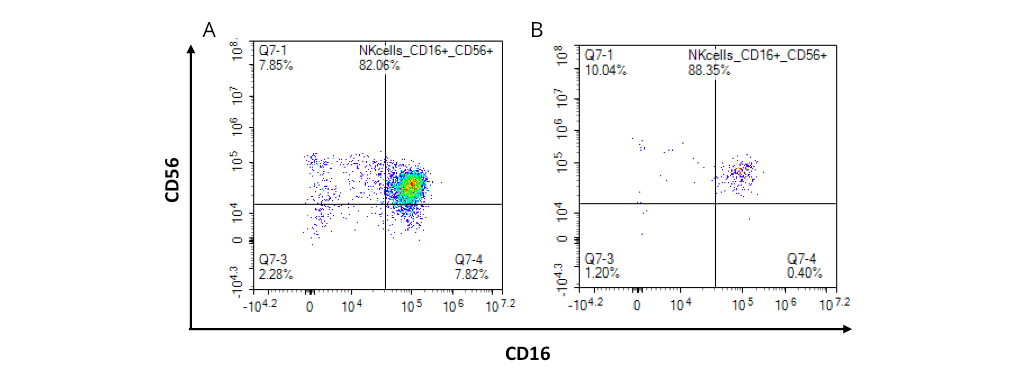
Primary NK cells were isolated from human PBMCs and characterized by flow cytometry based on the expression of CD16 and CD56.
Following isolation and activation, NK cells were co-cultured with SKOV3 ovarian tumor cells pre-exposed to anti-HER2 or anti-EGFR antibodies.
ADCC activity was evaluated using complementary functional readouts:
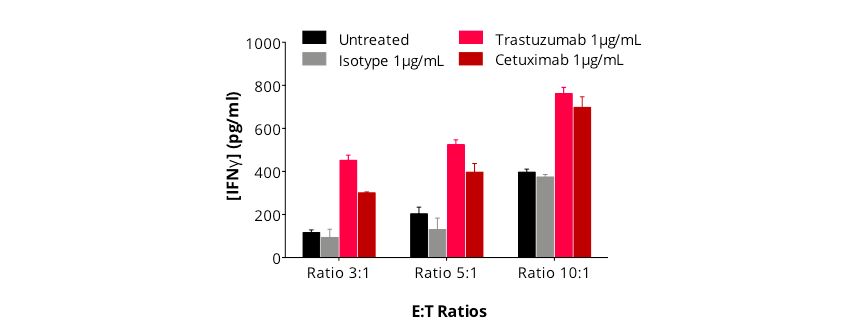
- IFNγ release, measured in culture supernatants as a surrogate marker of NK cell activation;
- tumor cell apoptosis, monitored by live-cell imaging as a direct readout of NK-mediated tumor cytotoxicity.
Experimental model
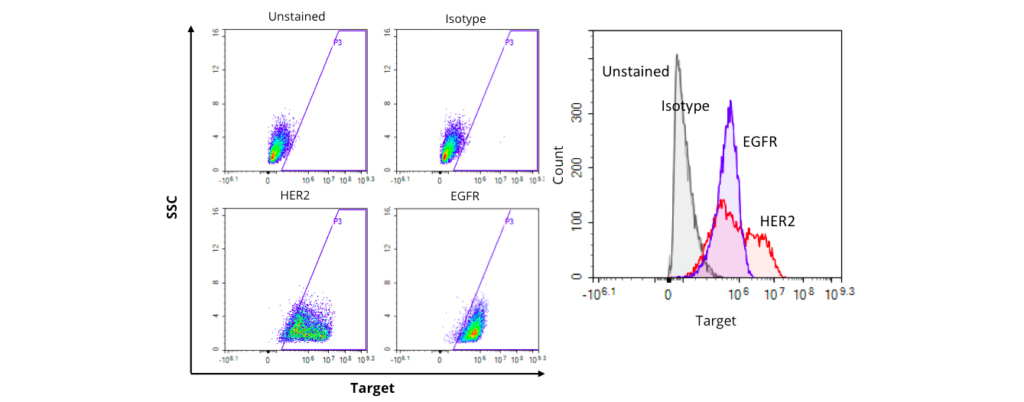
SKOV3 ovarian tumor cells were selected as the target tumor cell model based on their expression of both HER2 and EGFR, confirmed by flow cytometry.
Tumor cells were cultured under control, Cetuximab-treated, or Trastuzumab-treated conditions before the addition of IL-2-activated primary NK cells.
NK cells were added at different effector-to-target ratios to evaluate the impact of NK cell density on antibody-dependent cytotoxicity.
Results
Primary NK cells express key ADCC-related markers
Following isolation from PBMCs, primary NK cells were characterized by flow cytometry for the expression of CD16 and CD56.
This confirmed the presence of NK cells expressing CD16, the Fc receptor required for antibody-dependent engagement of target cells.
After 24 hours of activation, NK cells maintained a phenotype compatible with functional ADCC assessment.
SKOV3 tumor cells express HER2 and EGFR target antigens
Flow cytometry analysis confirmed that SKOV3 ovarian tumor cells express both HER2 and EGFR.
This antigen expression profile supports the use of SKOV3 cells as a relevant tumor target model to evaluate ADCC activity mediated by Trastuzumab and Cetuximab.
Anti-HER2 and anti-EGFR antibodies enhance NK-mediated cytotoxicity
The addition of activated primary NK cells induced cytotoxic activity against SKOV3 tumor cells, as shown by increased IFNγ release and tumor cell apoptosis.
Pre-exposure of SKOV3 tumor cells to Trastuzumab or Cetuximab further enhanced NK cell-mediated cytotoxicity compared with control conditions.
This increase was observed across different effector-to-target ratios, demonstrating the ability of both antibodies to promote ADCC activity and direct NK cell killing toward tumor cells.
Cetuximab induces dose-dependent ADCC activity
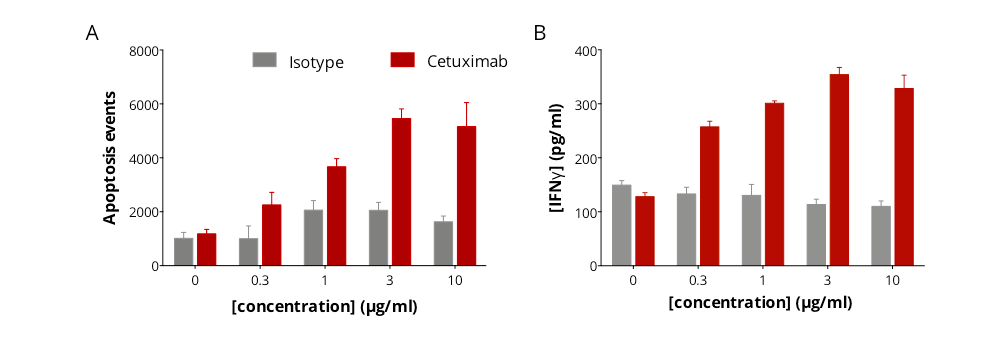
To further characterize antibody-dependent cytotoxicity, SKOV3 tumor cells were treated with increasing doses of Cetuximab before the addition of IL-2-activated primary NK cells at an optimized effector-to-target ratio.
Live-cell imaging showed a dose-dependent increase in tumor cell apoptosis following Cetuximab treatment.
In parallel, IFNγ release measured 24 hours after NK cell addition confirmed enhanced NK cell activation in response to anti-EGFR antibody-mediated tumor cell engagement.
Conclusion
This case study demonstrates the ability of Explicyte’s in vitro ADCC assay to functionally evaluate antibody-dependent NK cell-mediated cytotoxicity against tumor cells.
By combining primary human NK cells, target antigen characterization, therapeutic antibody treatment, IFNγ release measurement, and live-cell imaging of tumor apoptosis, the assay provides a robust platform to assess the ADCC activity of monoclonal antibodies.
This approach can support the preclinical characterization of therapeutic antibodies, antibody variants, and combination strategies designed to enhance immune-mediated tumor cell killing.