
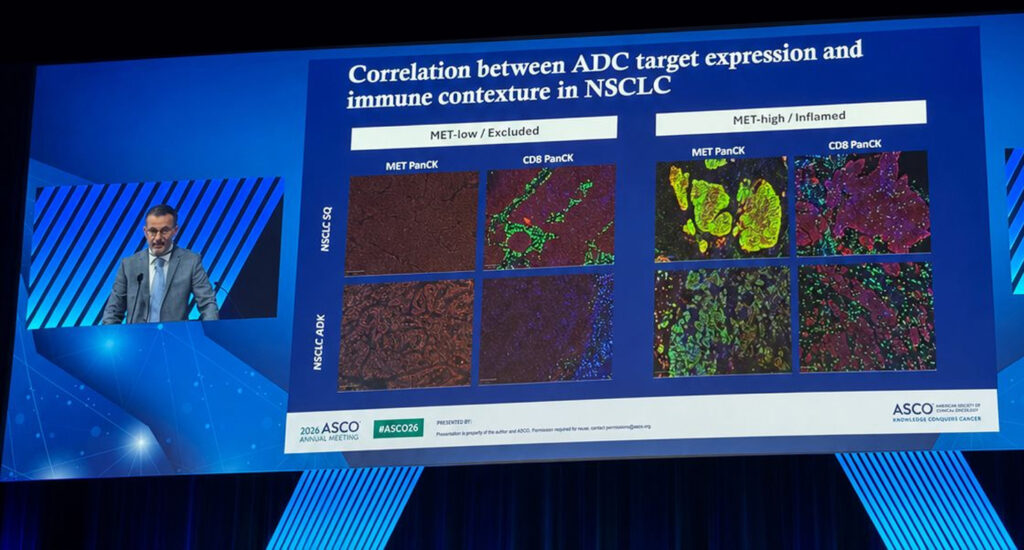
Prof. Antoine Italiano (Gustave Roussy) delivered this oral presentation:
I was honored to present our work on an integrated spatial ADC target atlas across NSCLC, bladder, gastric and endometrial cancers. Using multiplex immunofluorescence, proteomics and immune-contexture analyses, we aimed to move beyond single-marker prevalence and better understand target coverage, co-expression, spatial heterogeneity and immune geography.
A few humble takeaways from this work:> TROP2 appears as the broadest ADC anchor across the tumor types analyzed, but this should not lead to a one-size-fits-all strategy.
> ADC target co-expression is highly heterogeneous, both within individual tumors and between patients.
> Some target pairs may support rational development of dual-target or bispecific ADC approaches.
> Spatial organization and immune contexture may help inform whether an ADC should be developed alone, sequenced with immunotherapy, or combined with immune-based strategies.
> Normal-tissue co-expression will be essential to prioritize combinations with the best therapeutic index.Overall, the session strongly reinforced that the future of ADC development will require integrated biomarker strategies combining target expression, spatial biology, payload biology, tumor context and clinical outcome.