
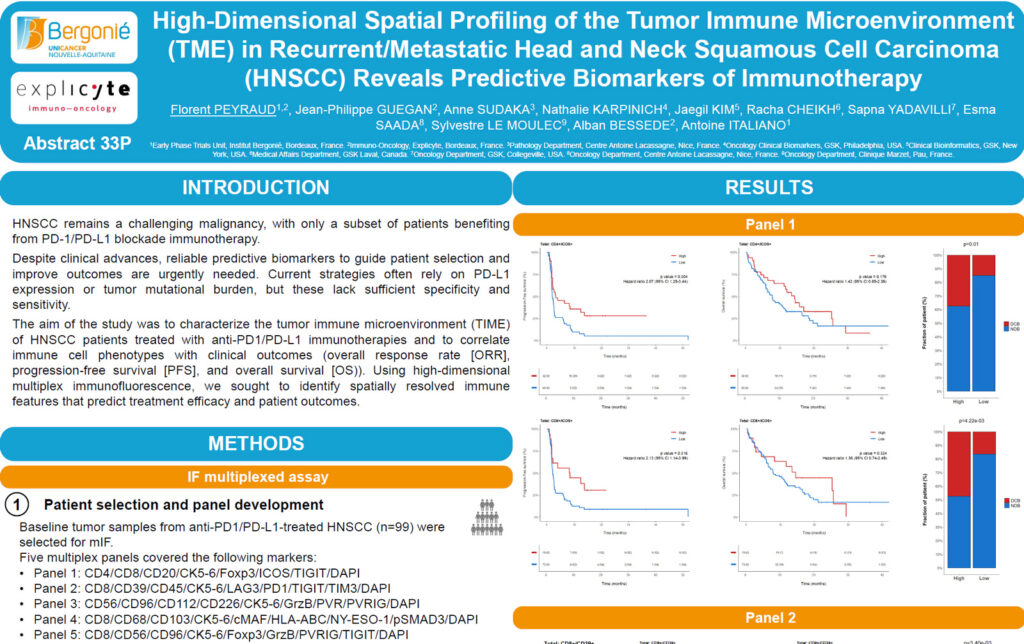
HNSCC remains a challenging malignancy, with only a subset of patients benefiting from PD-1/PD-L1 blockade immunotherapy. Despite clinical advances, reliable predictive biomarkers to guide patient selection and
improve outcomes are urgently needed. Current strategies often rely on PD-L1 expression or tumor mutational burden, but these lack sufficient specificity and sensitivity.
The aim of the study was to characterize the tumor immune microenvironment (TIME) of HNSCC patients treated with anti-PD1/PD-L1 immunotherapies and to correlate immune cell phenotypes with clinical outcomes (overall response rate [ORR], progression-free survival [PFS], and overall survival [OS)). Using high-dimensional multiplex immunofluorescence, we sought to identify spatially resolved immune features that predict treatment efficacy and patient outcomes.