MODALITY-SPECIFIC PRECLINICAL ASSAYS

ADC preclinical assays: target validation, in vitro efficacy and translational profiling

Characterize how target expression, internalization, payload activity and tumor heterogeneity shape ADC response.

Explicyte designs fit-for-purpose preclinical studies for antibody-drug conjugates (ADCs), integrating target-expression profiling in tumor and normal tissues with functional ADC characterization, patient-derived 3D tumor models and translational biomarker analysis.

Target validation · Binding & internalization · Kinetic cytotoxicity · Bystander effect · Patient-derived 3D models

10+ years
of experience in preclinical & translational precision oncology
8 ADC targets
profiled across NSCLC, bladder, gastric and endometrial cancers
ADC programs
supported across preclinical development
100+
Human cancer cell lines available

ADC PRECLINICAL STRATEGY

An integrated preclinical strategy for antibody-drug conjugates

Connect target biology with functional response and translational relevance.

ADC target-expression profiling in human tissues

Establish where your ADC target is expressed — in tumors and normal tissues.

Characterize target prevalence, membrane localization and heterogeneity across human tumor cohorts, and assess expression in relevant normal tissues to support indication selection and early evaluation of on-target/off-tumor risk.

In vitro ADC target validation & functional characterization

Connect target expression with ADC binding, internalization and tumor-cell killing.

Quantify cell-surface target expression across cancer cell lines to select relevant target-high, target-low and target-negative models, then assess ADC binding, internalization kinetics, cytotoxic potency, apoptosis and payload-dependent activity using fit-for-purpose cell-based assays and live-cell imaging.

Mechanistic characterization & translational biomarker profiling

Understand what drives response — and why models respond differently.

Investigate target heterogeneity, bystander activity, treatment-induced cell states and response or resistance biomarkers using patient-derived models and fit-for-purpose molecular profiling.

Imane Nafia, PhD, Chief Scientific Officer at Explicyte

An ADC program is a chain of decisions that only work if each stage understands the previous one. Our clients work with the same scientific team from target-expression profiling through binding, internalization, kinetic cytotoxicity and patient-derived 3D models — with a dedicated study director carrying the biological logic across the full preclinical arc and complementary pathology, molecular and bioinformatics expertise on call when a deeper question emerges.

Imane Nafia, PhD

Chief Scientific Officer, Explicyte

CASE STUDY · ANTI-TROP2 ADC

Anti-TROP2 ADC characterization: from target expression to differential cytotoxicity

Model selection based on TROP2 expression

TROP2 expression identifies relevant models for functional ADC testing

Cell-surface TROP2 expression was characterized across a panel of human cancer cell lines, including SKOV3, T24, MDA-MB-231, PC3 and A549. Profiling target expression before functional testing enables selection of biologically relevant models spanning different levels of antigen expression.
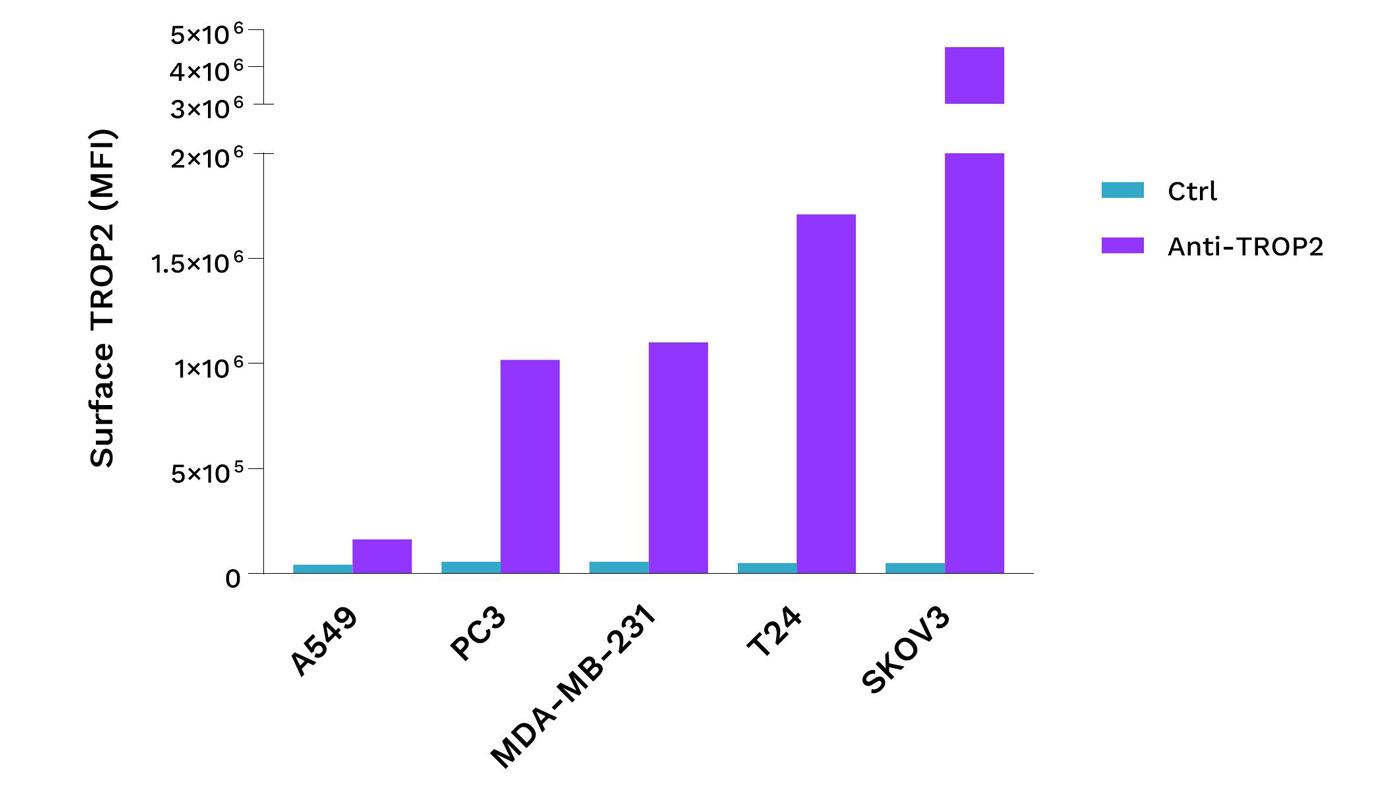
Key outputs

  • Cell-surface target expression
  • Comparison across tumor cell lines
  • Selection of target-positive cell lines
  • Basis for target-expression / response analysis
Selection of cell lines based on TROP2 expression

Real-time ADC cytotoxicity

Sacituzumab govitecan induces differential cytotoxic responses in TROP2-positive tumor models

TROP2-positive SKOV3 and MDA-MB-231 cells were treated with sacituzumab govitecan and monitored longitudinally by live-cell imaging. Kinetic analysis captures treatment-dependent effects on tumor-cell growth and apoptosis and allows comparison of ADC response across models.
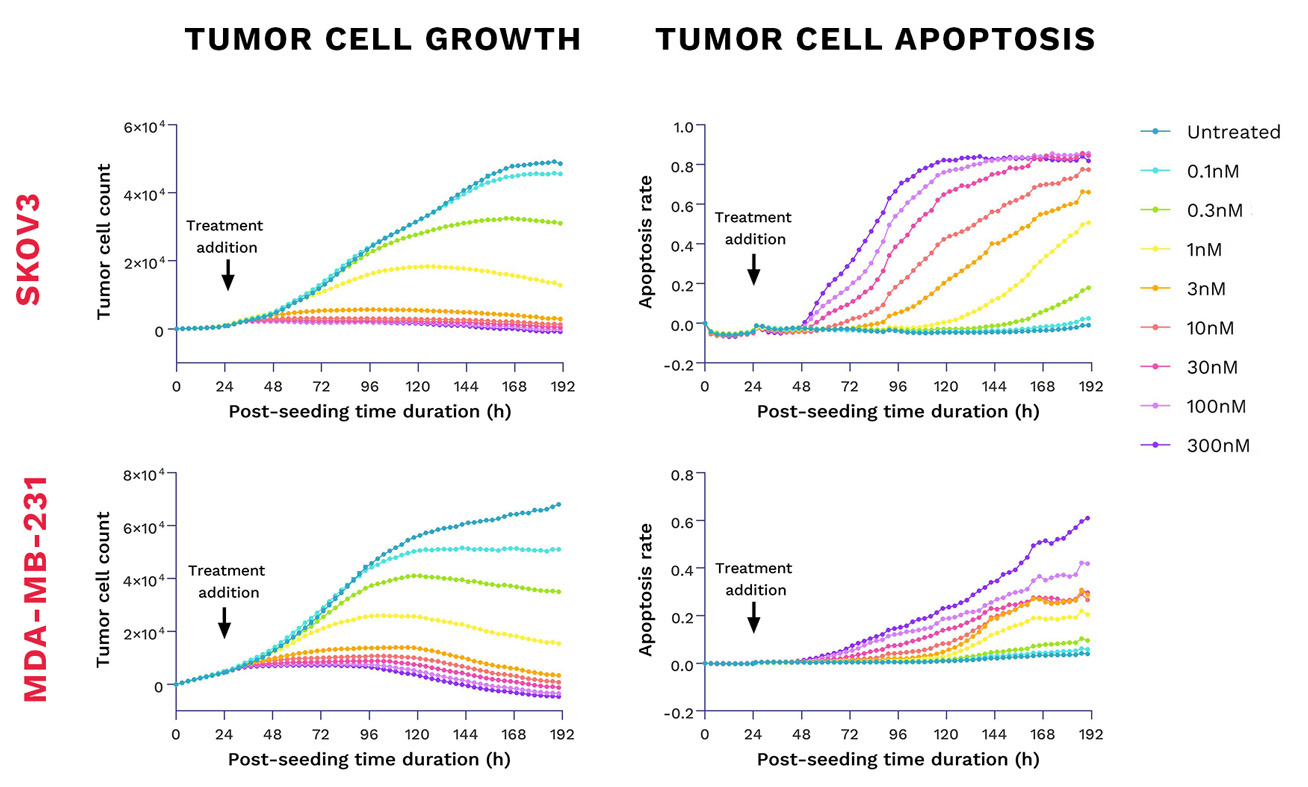
Key outputs

  • Tumor-growth inhibition
  • Apoptosis kinetics
  • Concentration-dependent response
  • Differential sensitivity across tumor cell lines
TROP2-ADC exhibits differential tumor anti-proliferative and cytotoxic activity against TROP2-positive cell lines

ADC VS IRINOTECAN

Comparative cytotoxicity of sacituzumab govitecan and irinotecan

In SKOV3 cells, the activity of sacituzumab govitecan was compared with irinotecan, the prodrug of SN-38, to characterize differences in tumor-growth inhibition and apoptosis kinetics.
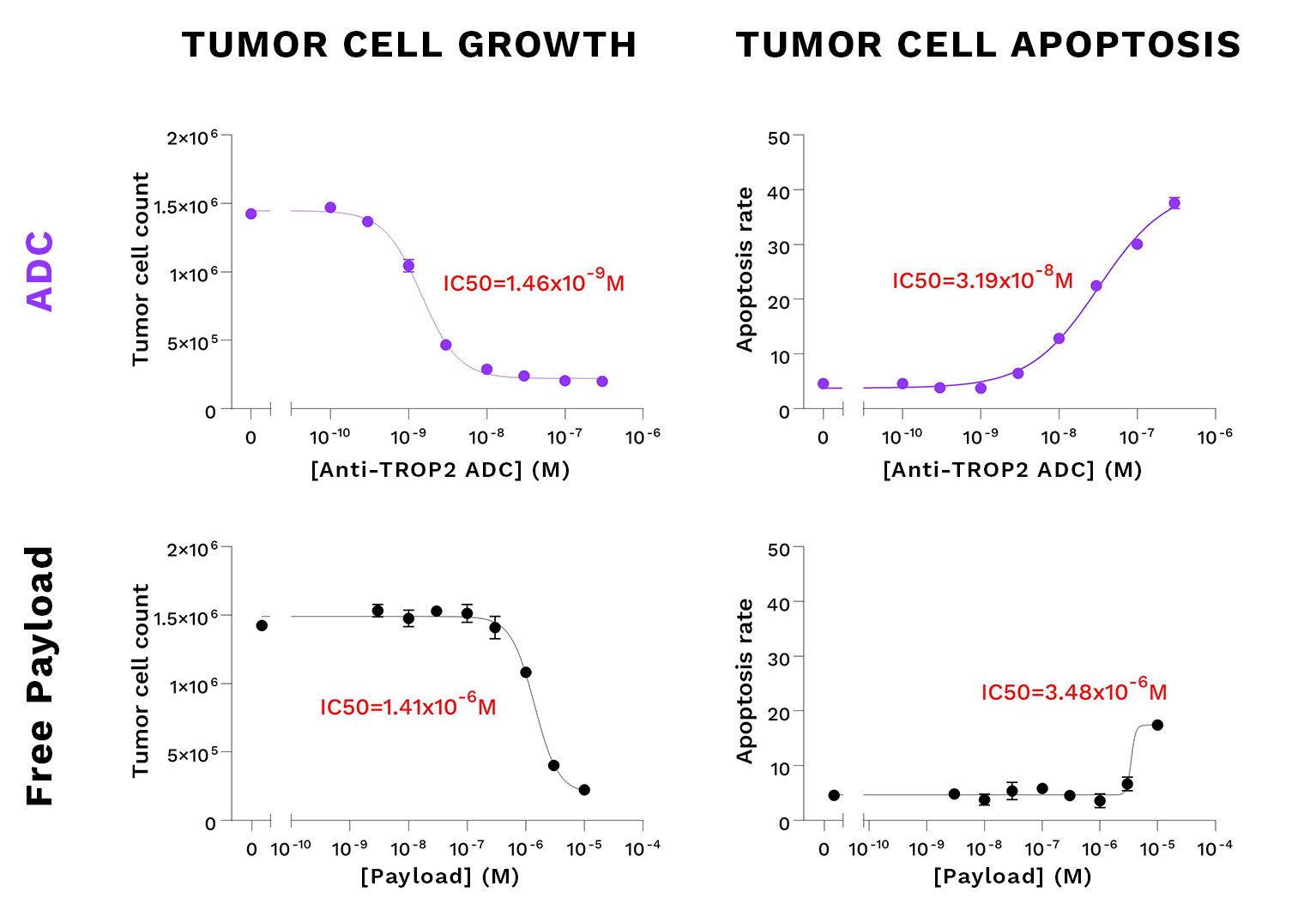
Key outputs

  • Kinetic monitoring of tumor-cell growth and apoptosis by live-cell imaging
  • Dose-response comparison of sacituzumab govitecan and irinotecan in SKOV3 cells
  • AUC-based quantification of growth inhibition and apoptosis over 4 days
  • Differentiation of ADC-mediated activity from the response to a pharmacologically related comparator
Growth inhibition & cytotoxicity on SKOV3 tumor cells: ADC vs payload

ADC PRECLINICAL MODELS

Preclinical tumor models for ADC studies

Progress ADC studies from controlled cell-line systems to patient-derived 3D tumor models to determine how target expression, tumor heterogeneity and native tumor biology influence response.
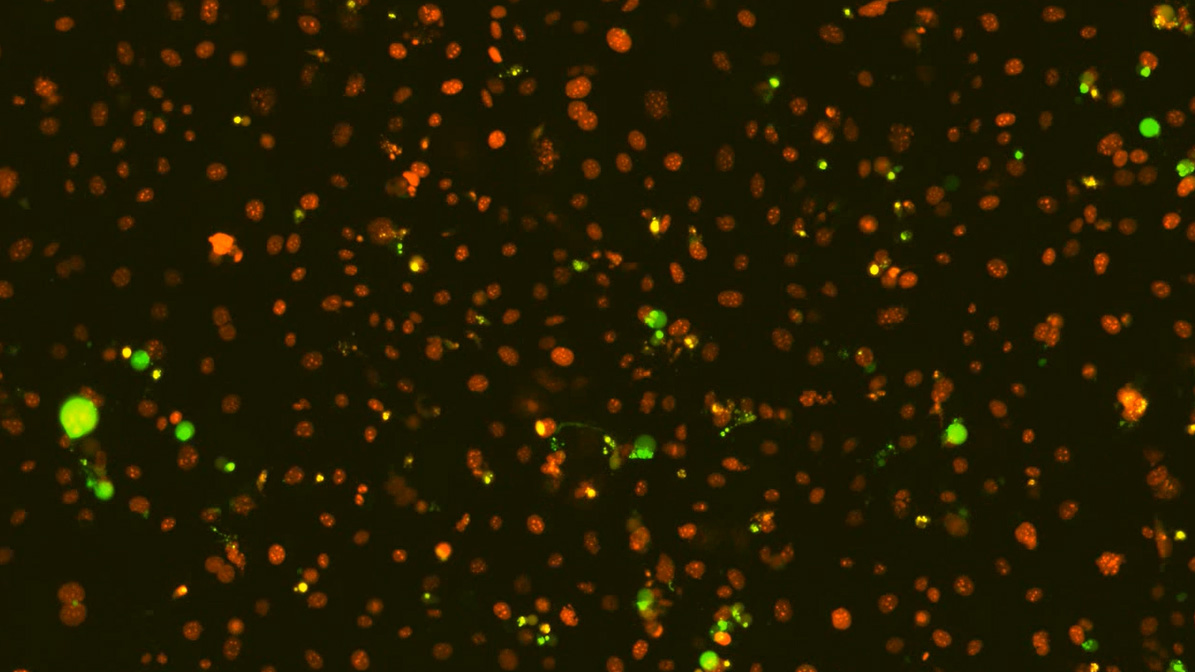
2D tumor cell lines with defined ADC target-expression levels
2D TUMOR CELL LINES

2D tumor cell lines

Controlled tumor models with defined target-expression levels for quantitative ADC characterization.
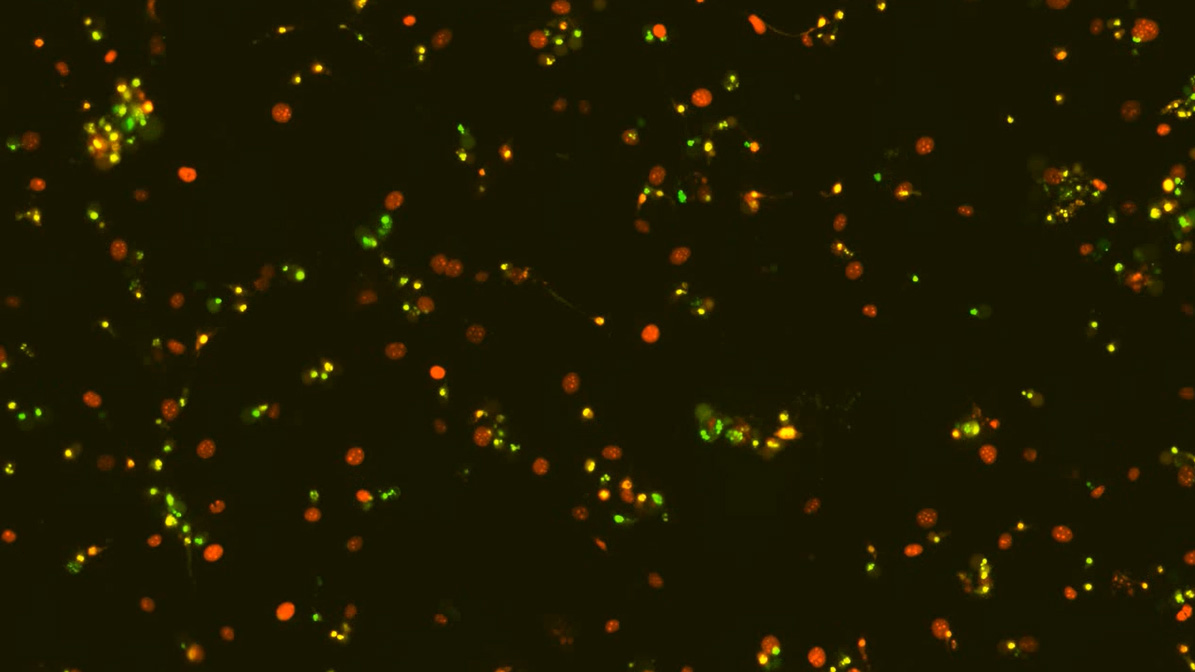
Best for: binding, internalization, potency, target dependence and payload sensitivity.

Mixed-cell co-cultures combining target-positive and target-negative tumor cells
MIXED-CELL CO-CULTURES

Mixed-cell co-cultures

Target-positive and target-low or target-negative tumor cells combined within the same assay.
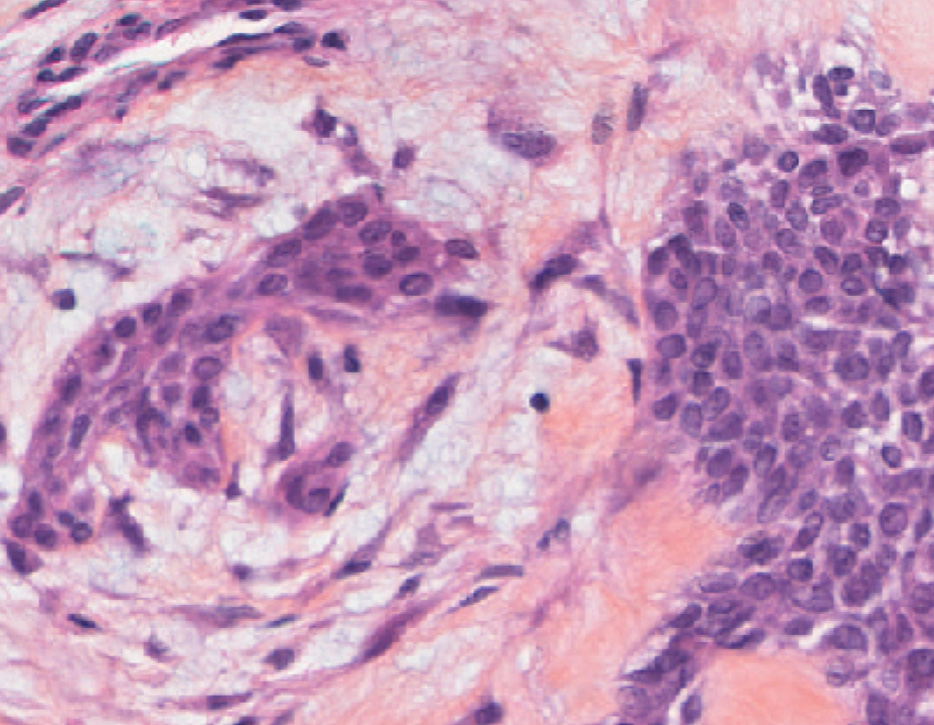
Best for: target heterogeneity, differential sensitivity and bystander killing.

Patient-derived 3D tumor models for ADC efficacy and translational studies
PATIENT-DERIVED 3D TUMOR MODELS

Patient-derived 3D tumor models

Patient-derived organoids and tumor fragments preserving native tumor heterogeneity and clinically relevant target expression.

Best for: translational efficacy, heterogeneous target expression and response across patient-derived tumor populations.

PRECLINICAL ADC CHARACTERIZATION

ADC assays aligned with your development questions

Build a fit-for-purpose ADC study from target qualification to functional efficacy, mechanism and translational biomarkers. Each program can combine the assays and models most relevant to the molecule, indication and stage of development.

01 · ADC TARGET QUALIFICATION & MODEL SELECTION

Is the target expressed in the right tumors and models?

Characterize target prevalence, membrane localization and heterogeneity in tumor and normal tissues, and quantify cell-surface expression across cancer cell lines to select relevant experimental models.

Readouts: target prevalence · localization · heterogeneity · cell-surface expression

02 · ADC BINDING & INTERNALIZATION

Does the ADC bind specifically and internalize efficiently?

Confirm target-dependent binding and quantify ADC uptake over time in models with defined antigen expression.

Readouts: binding intensity · specificity · dose response · internalization kinetics · intracellular uptake

03 · ADC EFFICACY & PAYLOAD CONTRIBUTION

Does the ADC induce target-dependent tumor-cell killing?

Quantify dose- and time-dependent effects on proliferation, viability and apoptosis, with appropriate comparators such as unconjugated antibody, non-targeting ADC and free payload or relevant payload controls.

Readouts: growth inhibition · apoptosis · cytotoxicity · potency · relative comparator sensitivity

04 · HETEROGENEITY & BYSTANDER ACTIVITY

How does target heterogeneity influence response?

Use target-high, target-low and target-negative mixed cultures and, where appropriate, patient-derived 3D tumor models to investigate differential sensitivity and bystander killing. Fc-dependent immune mechanisms can also be evaluated where relevant.

Readouts: bystander killing · target-density dependence · ADCC/immune activation where relevant

05 · MECHANISM & TRANSLATIONAL BIOMARKERS

What drives response or resistance?

Integrate functional data with flow cytometry, transcriptomics, spatial profiling or Xenium STAMP to identify the cellular and molecular programs associated with ADC response or resistance.

Readouts: response biomarkers · resistant populations · cell-state changes · treatment-associated pathways

Discuss a fit-for-purpose ADC study

ADC PRECLINICAL WORKFLOW

ADC preclinical assays at a glance

A snapshot of the models, readouts and platforms we use across each stage of ADC characterization — from target qualification to translational biomarkers. Programs are scoped modularly: combine the stages relevant to your molecule, indication and current development question.

Explicyte's ADC preclinical assay catalogue: models, readouts and platforms mapped to each stage of ADC characterization.
Step Stage & development question Models Key readouts Platforms & technologies
01 Target qualification & model selection Is the target expressed in the right tumors and models? FFPE tumor cohorts & normal-tissue panels; cancer cell-line panels stratified into target-high, target-low and target-negative tiers Target prevalence · membrane localization · intra-tumor heterogeneity · cell-surface expression (MFI) Multiplex IHC/IF, flow cytometry
02 ADC binding & internalization Does the ADC bind specifically and internalize efficiently? Target-high, target-low and target-negative cell lines with isotype-matched controls Binding intensity & specificity · dose response · internalization kinetics · intracellular uptake Flow cytometry, live-cell imaging, pH-sensitive fluorescent probes (pHrodo-style)
03 ADC efficacy & payload contribution Does the ADC induce target-dependent tumor-cell killing? 2D tumor cell lines spanning target-expression range; comparator arms with unconjugated antibody, non-targeting ADC and free payload (or pharmacologically related prodrug) Growth inhibition · apoptosis kinetics · potency (IC50 / EC50) · AUC over treatment window · differentiation from comparator live-cell imaging (Incucyte), dose-response modelling
04 Heterogeneity & bystander activity How does target heterogeneity influence response? Mixed-cell co-cultures (target-positive + target-negative fluorescent reporter); patient-derived 3D tumor models and organoids Bystander killing · target-density dependence · ADCC / Fc-mediated activity where relevant Live-cell imaging with fluorescent tumor reporters; PBMC / NK effector co-cultures for Fc-effector arms
05 Mechanism & translational biomarkers What drives response or resistance? Treated 2D cultures, patient-derived organoids and tumor fragments — pre- and post-treatment matched samples Response biomarkers · resistant populations · treatment-induced cell states · pathway modulation Flow cytometry, bulk & scRNA-seq, spatial transcriptomics (Visium HD, Xenium), Xenium STAMP
Discuss a fit-for-purpose ADC study

WHY EXPLICYTE

Why work with Explicyte as your ADC preclinical CRO?

Fit-for-purpose study design, not a fixed assay menu

Our ADC studies are built around your target, payload, indication and development decision, rather than around a fixed assay catalogue. Experimental models, controls and readouts are selected to answer the biological questions most relevant to your program.

Target biology, internalization and efficacy in one integrated program

Connect pathologist-reviewed target-expression profiling in tumor and normal tissues with cell-line qualification, ADC binding and internalization, kinetic tumor-cell killing and patient-derived 3D tumor models within the same development strategy.

Scientific continuity from study design to interpretation

Your work with a dedicated scientific study director from experimental design through data interpretation, with access to complementary expertise in functional assays, tissue pathology, molecular profiling and bioinformatics when deeper mechanistic analysis is required.

The Explicyte team at their Bordeaux laboratory

Paul Marteau, PharmD (study director), Imane Nafia, PhD (CSO), Loïc Cerf, MSc (COO), Alban Bessede, PhD (founder, CEO), Jean-Philippe Guégan, PhD (CTO)

Contact our team

Discuss your ADC preclinical program

Tell us your target, ADC format, payload, indications and current development stage. We can help define the models and assays needed to characterize target biology, internalization, efficacy, bystander activity and translational biomarkers.

ADC assays FAQ

Frequently asked questions about ADC preclinical testing

What preclinical assays are used to characterize antibody-drug conjugates?

ADC preclinical characterization typically combines target-expression profiling, binding and internalization assays, tumor-cell cytotoxicity, apoptosis, payload sensitivity and bystander-effect studies. Depending on the development question, these assays can be extended to 3D tumor models, patient-derived systems and translational biomarker profiling.

ADC internalization can be quantified using flow cytometry and imaging-based approaches to follow antibody-drug conjugate uptake over time in tumor cells with defined target-expression levels. Internalization kinetics can then be related to target density, ADC exposure and downstream cytotoxic activity.

ADC bystander activity can be studied using mixed cultures containing target-positive and target-low or target-negative tumor cells, as well as heterogeneous 3D tumor models. These assays determine whether payload released following ADC uptake can affect neighboring cells that are not efficiently targeted by the antibody.

Target expression is an important determinant of ADC activity, but it is not the only factor governing response. Target density and heterogeneity, internalization, intracellular processing, payload sensitivity and bystander activity can all influence efficacy. Explicyte therefore combines target profiling with functional testing rather than relying on expression alone.

Yes. ADC efficacy can be evaluated in 3D spheroids, patient-derived organoids and tumor-fragment models to assess activity in systems that better reproduce tumor heterogeneity and tissue architecture than conventional 2D cultures. These models can be particularly useful for studying heterogeneous target expression and translational response.

Yes. ADC studies can include relevant controls such as the unconjugated antibody, non-targeting ADC and free payload, where available and scientifically appropriate. These comparisons help distinguish target-dependent ADC activity from effects driven primarily by the antibody or cytotoxic payload.

For ADCs retaining Fc effector function, mechanisms such as antibody-dependent cellular cytotoxicity (ADCC) may contribute to overall antitumor activity. Explicyte can combine ADC tumor-killing studies with immune-cell co-cultures and flow-cytometry readouts when Fc-mediated activity is relevant to the molecule.

Yes. Functional ADC studies can be integrated with flow cytometry, immunohistochemistry, multiplex imaging, single-cell profiling and spatial biology to investigate biomarkers associated with response or resistance. This can help connect preclinical efficacy with target prevalence, tumor heterogeneity and patient-selection strategies.

Explicyte Oncology CRO logo

Capabilities

Modalities