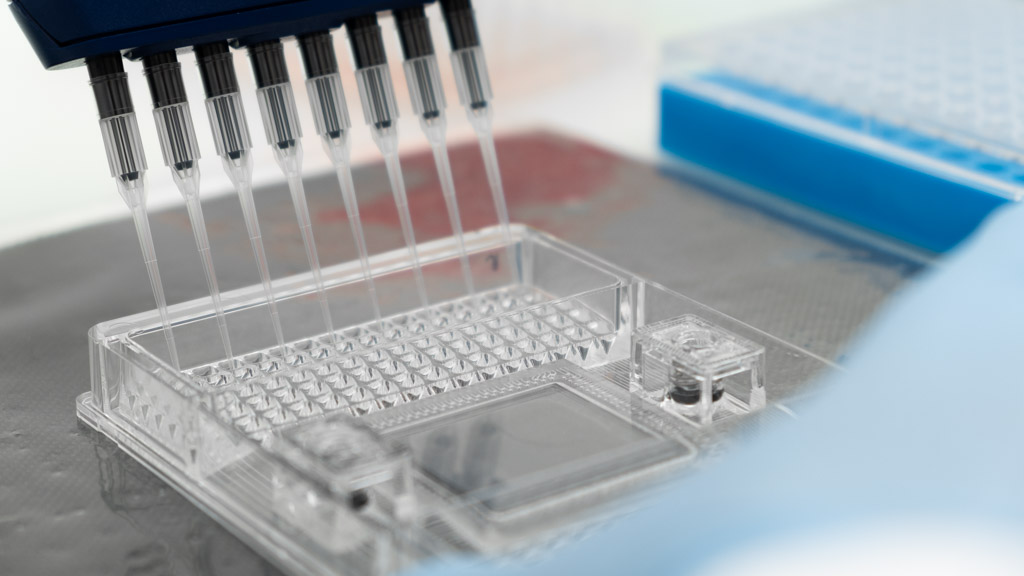
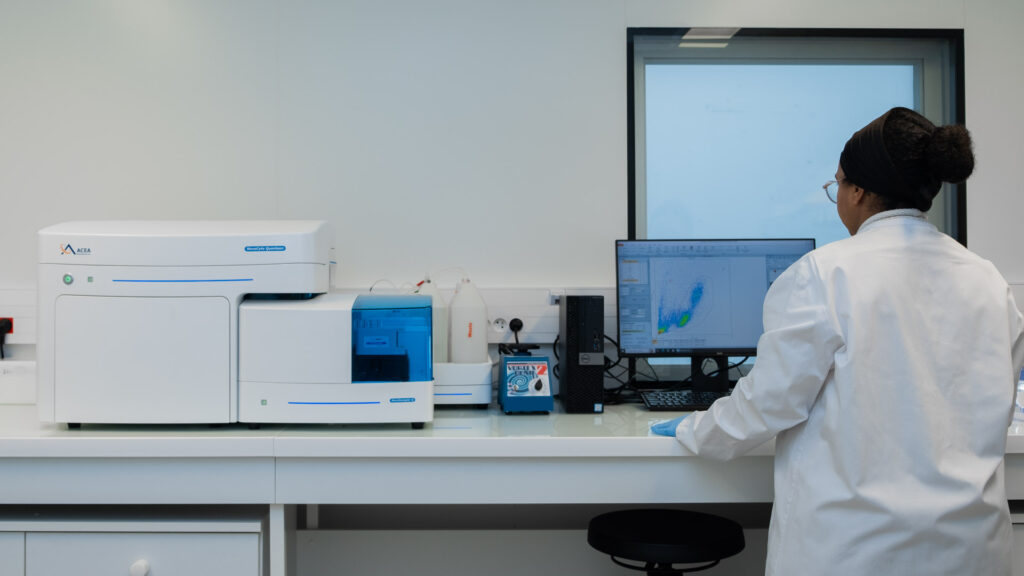
Liquid sample profiling services — scRNA-seq, plasma proteomics, and flow cytometry
Explicyte combines Chromium X single-cell profiling, Olink plasma proteomics and multiplex flow cytometry across blood-derived samples, with in-house analysis. Chromium X can also profile dissociated tissues, isolated nuclei and fixed/FFPE tissue, independently or within matched peripheral–tissue studies.
Liquid sample profiling platforms
Single-cell, proteomic & cytometric profiling
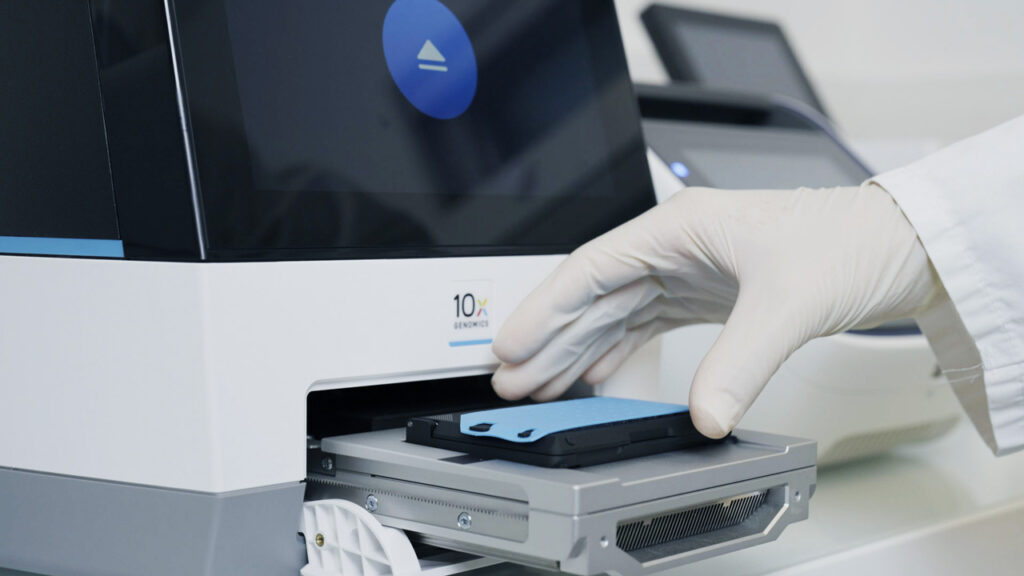
Single-cell · PBMCs & dissociated tissues
Chromium X
Single-cell and single-nucleus profiling across PBMCs, dissociated tissues and fixed/FFPE material, depending on the workflow, to resolve cell populations, transcriptional states and molecular heterogeneity across samples and cohorts.
Plasma proteomics · high-plex
Olink Reveal
High-plex plasma and serum proteomics for circulating biomarkers, immune pathways and systemic molecular responses, with downstream differential and pathway-level analysis.
Immune phenotyping · high-parameter
Multiplex flow cytometry
Multiparameter immune-cell phenotyping of PBMCs, dissociated tissues and other cellular samples to quantify cell populations, activation states and functional phenotypes across samples and longitudinal timepoints.
Applications
From discovery to clinical biomarkers
Liquid and dissociated samples can support complementary biological questions across the development pipeline. We select the combination of single-cell, proteomic and cytometric readouts according to the study objective, sample type and stage of development.
Preclinical
Mechanism of action
Profile immune activation, cell-state changes and soluble molecular responses in tumor–immune co-cultures and other cellular models. Single-cell transcriptomics and multiplex flow cytometry can be combined with appropriate soluble-protein readouts to characterize mechanism of action, resistance pathways and rational combination strategies.
Translational
Biomarker discovery
Interrogate PBMCs, plasma and dissociated tissue samples to identify cell states, circulating factors and candidate biomarkers associated with disease biology or treatment response. These readouts can also be integrated with spatial biology and digital pathology to connect systemic and cellular signals with tissue context.
Early clinical
Pharmacodynamic monitoring
Track on-treatment changes across longitudinal blood samples, including immune-cell subsets, activation and exhaustion states, transcriptional programs and circulating protein signatures. These analyses can provide early evidence of pharmacodynamic activity and biological response.
Clinical trial applications
Planning peripheral biomarker analysis for a clinical study?
Explore our dedicated clinical-trial services for longitudinal sampling strategy, immune monitoring, pharmacodynamic biomarkers and peripheral biomarker implementation.
LIQUID PROFILING PUBLICATIONS
Peer-reviewed studies using peripheral and cellular profiling
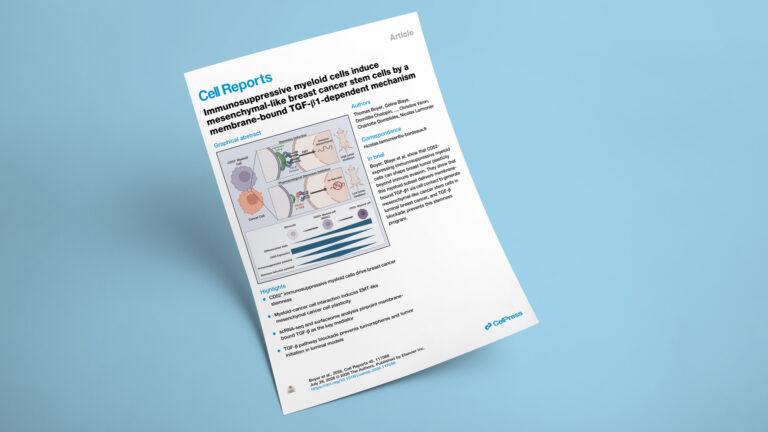
Immunosuppressive myeloid cells induce mesenchymal-like breast cancer stem cells by a membrane-bound TGF-β1-dependent mechanism
GABA promotes resistance to immunotherapy in patients with TLS-positive tumors
Regorafenib plus avelumab in advanced gastroenteropancreatic neuroendocrine neoplasms: a phase 2 trial and correlative analysis
Predictive value of tumor microenvironment on pathologic response to neoadjuvant chemotherapy in patients with undifferentiated pleomorphic sarcomas
Identification of microenvironment features associated with primary resistance to anti-PD-1/PD-L1 + antiangiogenesis in gastric cancer through spatial transcriptomics and plasma proteomics
AT-0174, a novel dual IDO1/TDO2 enzyme inhibitor, synergises with temozolomide to improve survival in an orthotopic mouse model of glioblasto

Faecalibacterium prausnitzii strain EXL01 boosts efficacy of immune checkpoint inhibitors
Reshaping the tumor microenvironment of cold soft-tissue sarcomas with oncolytic viral therapy: a phase 2 trial of intratumoral JX-594 combined with avelumab and low-dose cyclophosphamide
Upregulation of Indoleamine 2,3-Dioxygenase 1 in Tumor Cells and Tertiary Lymphoid Structures is a Hallmark of Inflamed Non–Small Cell Lung Cancer
Phase 2 trial of intravenous oncolytic virus JX-594 combined with low-dose cyclophosphamide in patients with advanced breast cancer
Pembrolizumab combined with low-dose cyclophosphamide and intra-tumoral injection of the toll-like receptor 4 agonist G100 in patients with advanced pretreated soft tissue sarcoma: results from the PEMBROSARC basket study
Randomized phase 2 trial of intravenous oncolytic virus JX-594 combined with low-dose cyclophosphamide in patients with advanced soft-tissue sarcoma
Why Explicyte
From sample strategy
to integrated biological insight
Scientific advice to select the right readouts
We start from the biological question rather than the technology. Our team helps define whether single-cell profiling, proteomics, flow cytometry — or a combination of readouts — will provide the most informative answer for your samples, cohort and study objectives.
One team across complementary platforms
Chromium X, Olink proteomics and multiplex flow cytometry are coordinated within one study framework, allowing sample strategy, metadata and downstream analyses to be aligned across platforms rather than managed as separate experiments.
Connect peripheral and tissue biology
Our workflows extend from plasma and PBMCs to dissociated tissues and isolated nuclei. Combined with Explicyte’s spatial biology and digital pathology capabilities, this enables peripheral, cellular and tissue-level biology to be investigated within the same translational program.
In-house bioinformatics & data integration

Our in-house data science team takes each dataset from QC and preprocessing through cell annotation, differential analysis, pathway and phenotype analysis, and cross-modality integration, with biological interpretation and publication-ready outputs.
Paul Marteau, PharmD (study director), Imane Nafia, PhD (CSO), Loïc Cerf, MSc (COO), Alban Bessede, PhD (founder, CEO), Jean-Philippe Guégan, PhD (CTO)
Contact our team
Discuss your liquid sample profiling project
Tell us your biological question, sample types, cohort and the readouts you are considering. We can help define the most informative combination of single-cell, proteomic and flow-cytometry analyses for your study.
Answers about our liquid sample profiling services
Frequently asked questions
What is liquid sample profiling?
Liquid sample profiling combines molecular and cellular readouts from blood-derived materials such as plasma, serum and PBMCs to characterize circulating proteins, immune-cell populations and transcriptional states. These approaches can provide systemic and longitudinal information that complements tissue-based profiling. Explicyte’s cellular profiling capabilities also extend beyond liquid samples to dissociated tissues, isolated nuclei and fixed/FFPE tissue.
Which technologies does Explicyte offer for liquid sample profiling?
Explicyte combines Chromium X single-cell profiling, Olink plasma and serum proteomics, and multiplex flow cytometry. These technologies can be used independently or combined across matched samples and fractions depending on the biological question. Chromium X can also be used independently for tissue-based studies, including workflows for dissociated tissue, isolated nuclei and fixed/FFPE samples.
When should I use Chromium X, Olink or multiplex flow cytometry?
Use Chromium X when you need cell-resolved transcriptional profiling, cell-population characterization and transcriptional-state analysis across PBMCs or tissue samples, including fixed/FFPE material where appropriate.
Use Olink when circulating proteins and systemic molecular responses are central to the study.
Use multiplex flow cytometry when quantitative immune-cell phenotypes, activation states or longitudinal population changes are the priority.
Can these technologies be combined from the same blood collection?
Yes. Plasma and cellular fractions from the same blood collection can support complementary assays, allowing circulating proteins, transcriptional states and immune-cell phenotypes to be compared across matched samples. However, a matched design is not required: each technology can also be used independently according to the study objective.
Can Explicyte analyze datasets generated elsewhere?
Yes. Where compatible data are available, our in-house data science team can analyze datasets independently of wet-lab execution. Depending on the study, this can include preprocessing and QC, cell annotation, differential and pathway analyses, cohort-level comparisons and cross-modality data integration.
Can liquid sample profiling support clinical trials?
Yes. Chromium X, Olink and multiplex flow cytometry can support peripheral biomarker studies in clinical development, including longitudinal immune monitoring, pharmacodynamic analyses and treatment-response characterization. For trial-focused sampling strategy, biomarker implementation and integration with clinical data, see Peripheral Biomarkers services.
What samples can you accept?
Depending on the platform, we work with plasma, serum, PBMCs, cell suspensions, dissociated tissues, isolated nuclei and fixed/FFPE tissue.
Olink is primarily used for plasma and serum, while multiplex flow cytometry supports PBMCs and other compatible cellular suspensions.
Chromium X workflows can be applied to PBMCs as well as tissue-derived samples, including dissociated tissue, isolated nuclei and fixed/FFPE material.
These tissue studies can be performed independently and do not need to be paired with a liquid sample.
What do I receive?
Deliverables depend on the platform and study scope and can include raw and processed data, platform-specific QC, gene-expression, protein or cell-population datasets, differential and pathway analyses, biological interpretation and publication-ready figures. For multi-platform studies, our team can also integrate readouts across matched samples, tissue and peripheral compartments, and study variables.