
Why do some mature-TLS lung cancers resist immunotherapy? Two CAF subsets that drive primary resistance in NSCLC

Why do gastric cancers resist PD-1 plus antiangiogenesis? Spatial and plasma profiling points to M2 macrophages
Why IDO1 in inflamed TLS-positive lung tumors predicts immunotherapy response — and marks who might benefit from IDO1 inhibitors
TROP2 expression and response to immune checkpoint inhibition in patients with advanced non-small cell lung cancer
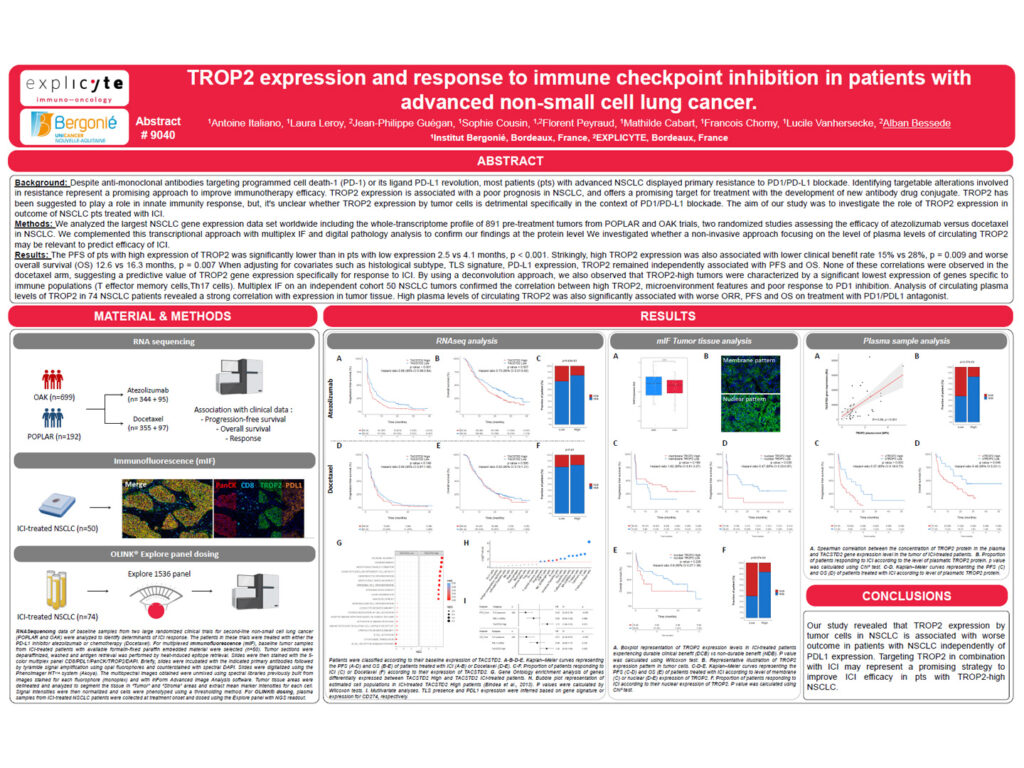
Background Monoclonal antibodies targeting programmed cell death-1, or PD-1, and its ligand PD-L1 have revolutionized the treatment of patients with advanced non-small cell lung cancer. However, most patients with advanced NSCLC display primary resistance to PD1/PD-L1 blockade. Identifying targetable alterations involved in resistance represents a promising approach to improve immunotherapy efficacy. TROP2 expression is associated […]
Cancer-associated fibroblasts promote T-cell exclusion and resistance to immunotherapy in non-small cell lung cancer with tertiary lymphoid structures
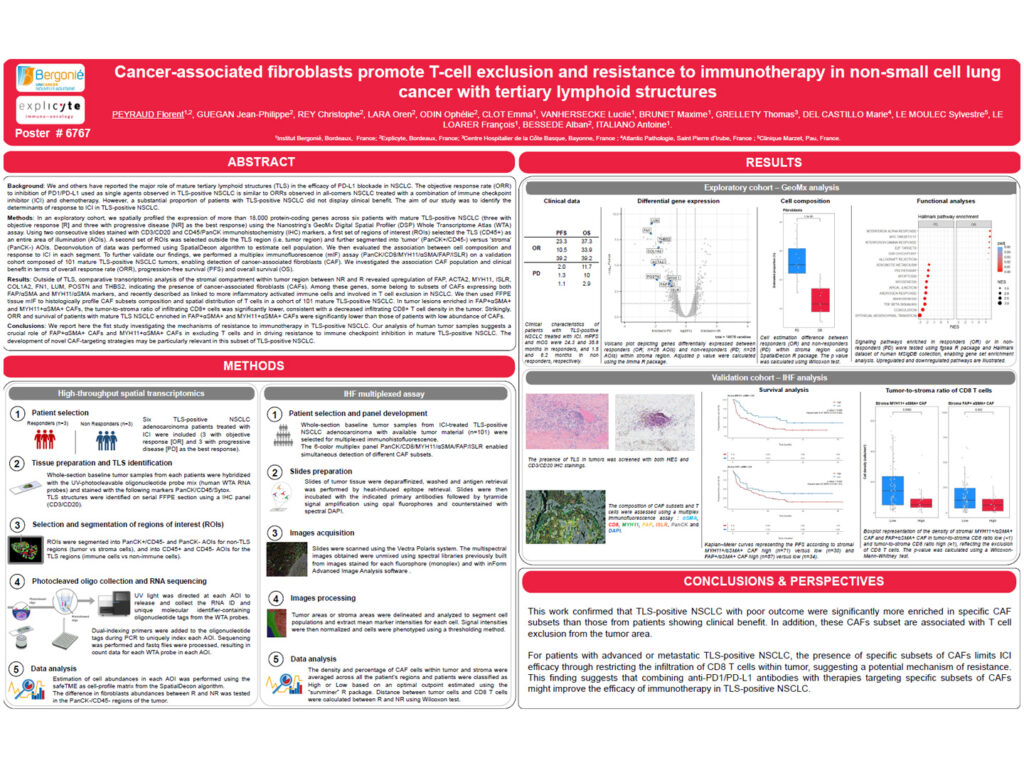
Background Mature tertiary lymphoid structures have been reported to play a major role in the efficacy of PD-L1 blockade in non-small cell lung cancer. In TLS-positive NSCLC, the objective response rate to single-agent PD1/PD-L1 inhibition is similar to response rates observed in all-comer NSCLC patients treated with immune checkpoint inhibitors combined with chemotherapy. However, a […]
Profiling of immune cell components and soluble factors in ovarian cancer ascites highlights impaired immune environment
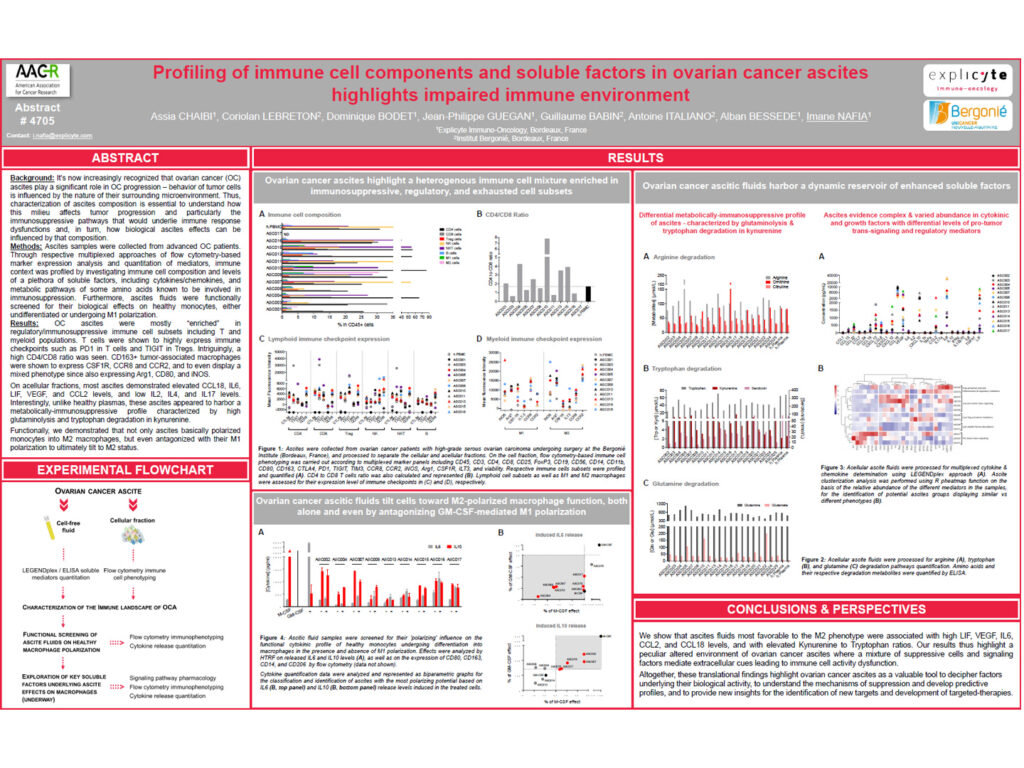
Background Ovarian cancer ascites are increasingly recognized as important contributors to ovarian cancer progression. The behavior of tumor cells is strongly influenced by the composition of their surrounding microenvironment. Characterizing the cellular and soluble composition of ascites is therefore essential to better understand how this specific milieu affects tumor progression. In particular, ascites may contribute […]
Indoleamine 2,3-dioxygenase 1 is expressed in tertiary lymphoid structures and associated with improved outcome in patients with advanced non-small cell lung cancer treated with anti-PD1/PDL1 inhibitors
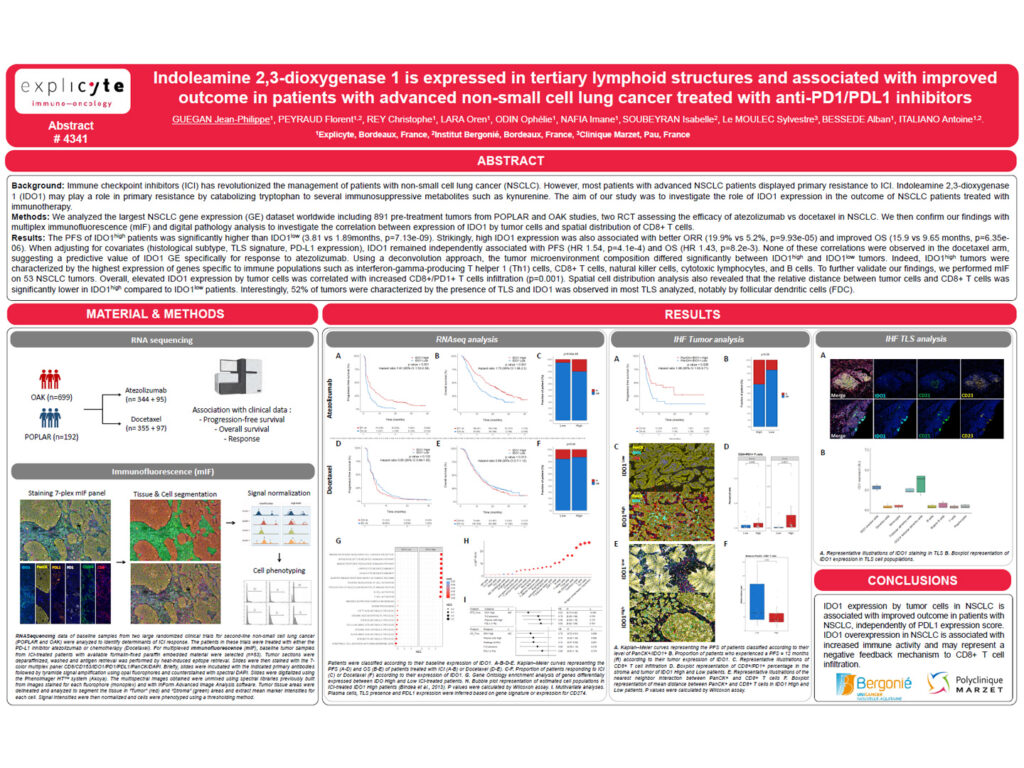
Background Immune checkpoint inhibitors have revolutionized the management of patients with non-small cell lung cancer. However, most patients with advanced NSCLC display primary resistance to these treatments. Indoleamine 2,3-dioxygenase 1, or IDO1, may contribute to immune regulation by catabolizing tryptophan into several immunosuppressive metabolites, including kynurenine. This study aimed to investigate the role of IDO1 […]
Can a simple blood test predict who responds to immunotherapy? Circulating L-arginine tracks checkpoint-inhibitor survival
Does acetaminophen blunt cancer immunotherapy? Plasma evidence links paracetamol to worse checkpoint-inhibitor outcomes

Ovarian cancer ascites display altered immune environment featured by enhanced soluble factors and suppressive cellular context
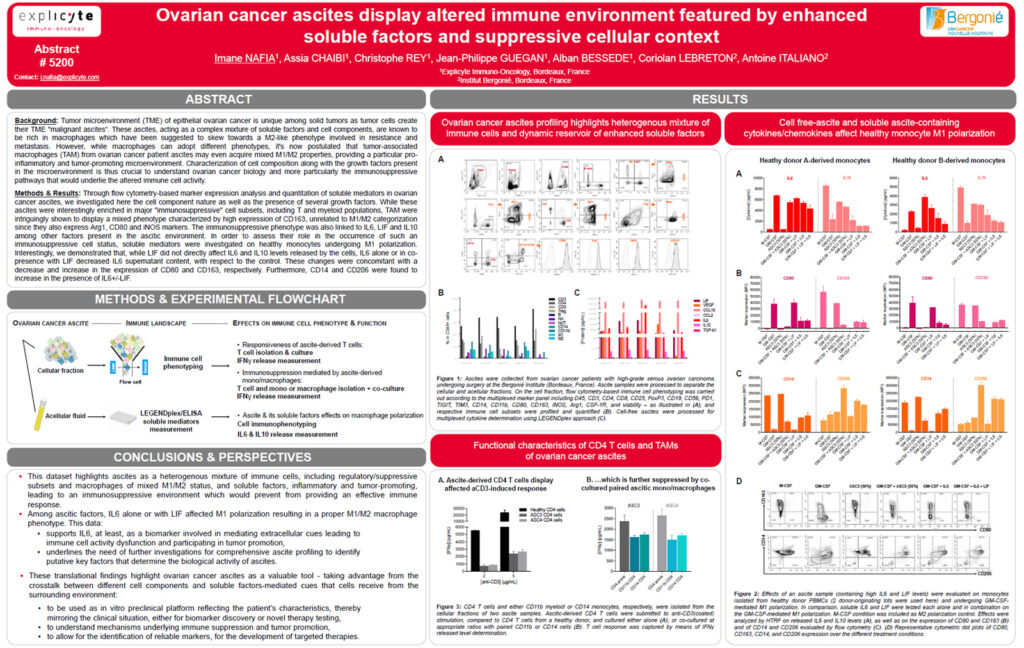
Background The tumor microenvironment of epithelial ovarian cancer is unique among solid tumors, as tumor cells can shape their own microenvironment through the formation of malignant ascites. These ascites represent a complex mixture of soluble factors and cellular components. They are known to be enriched in macrophages, which have been suggested to acquire an M2-like […]